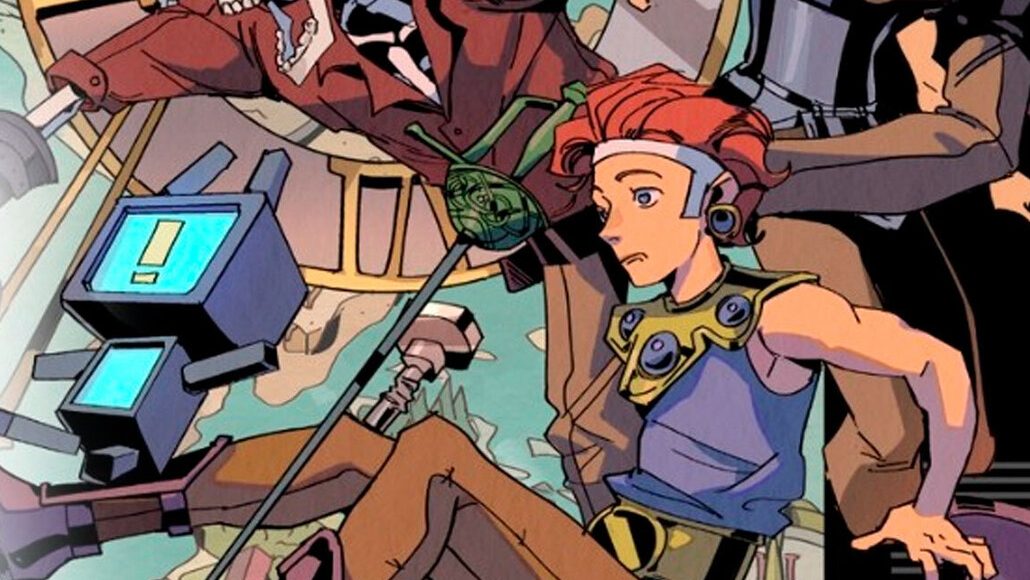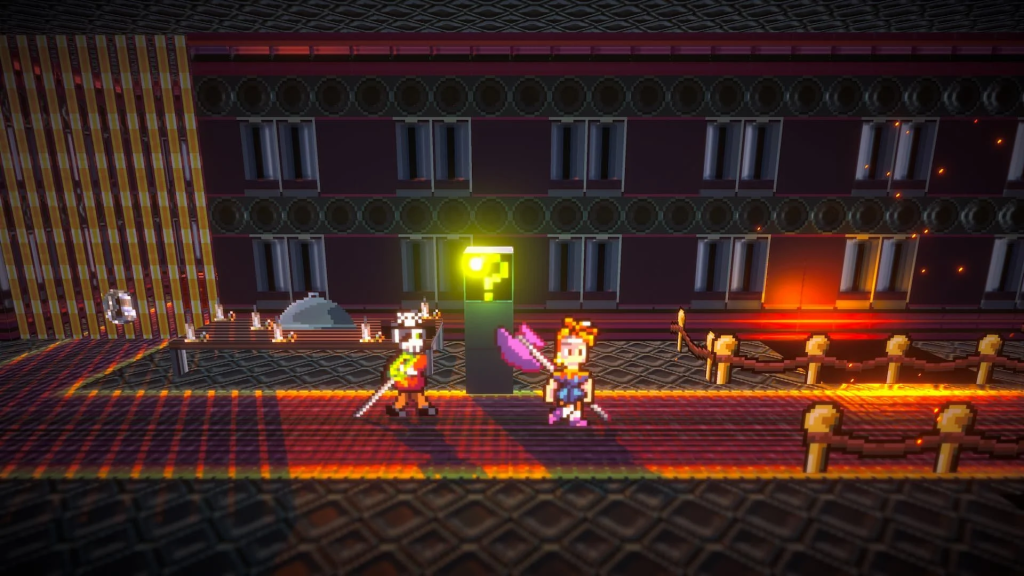
Negative Time Sends You Backward When You Fail. Round Owl Explains Why.

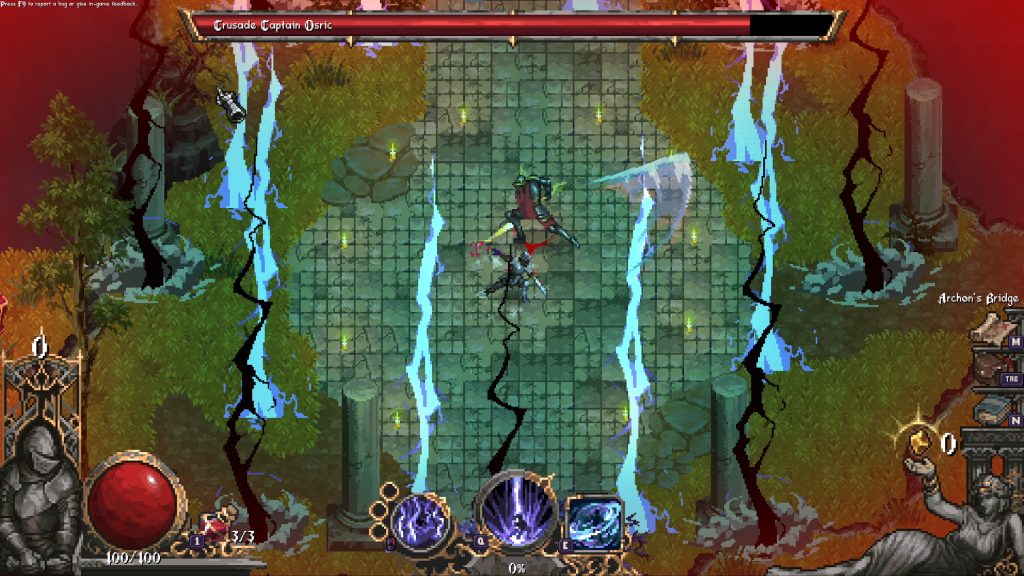
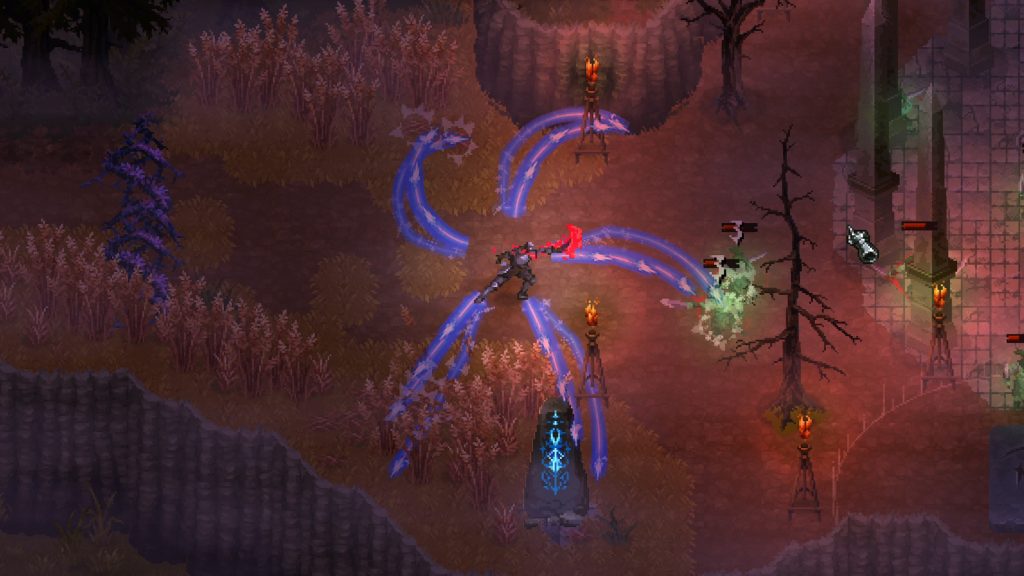
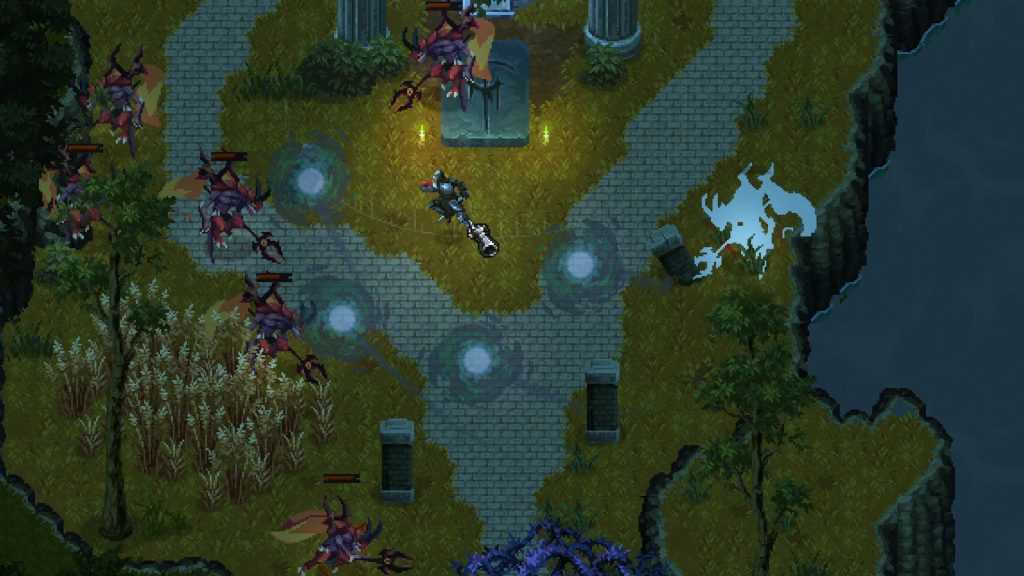
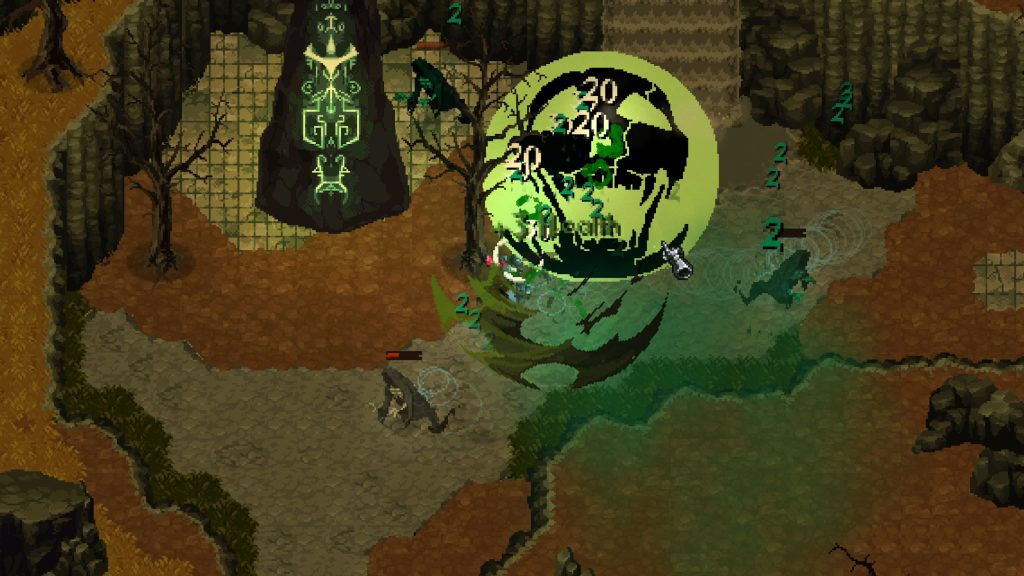
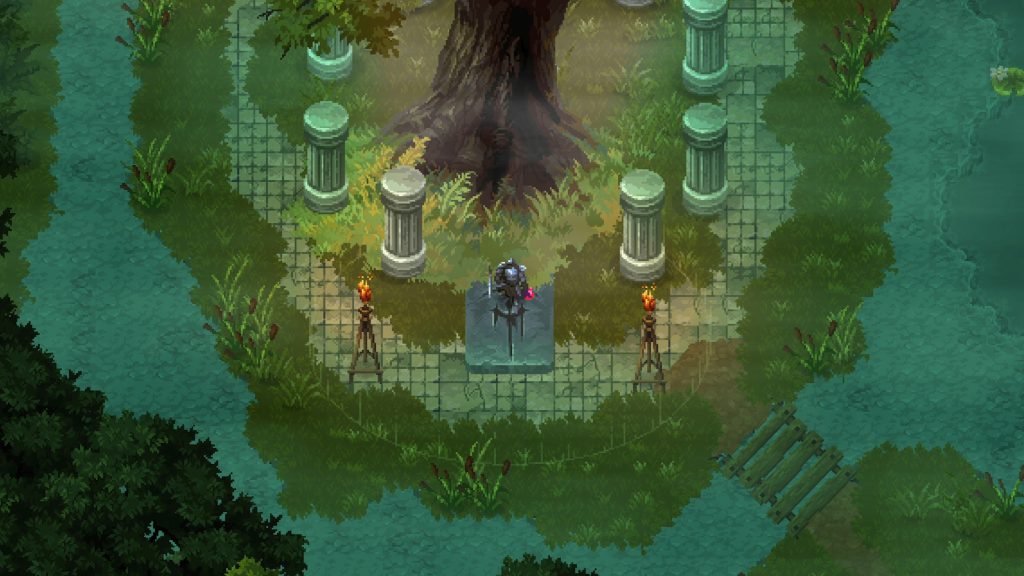
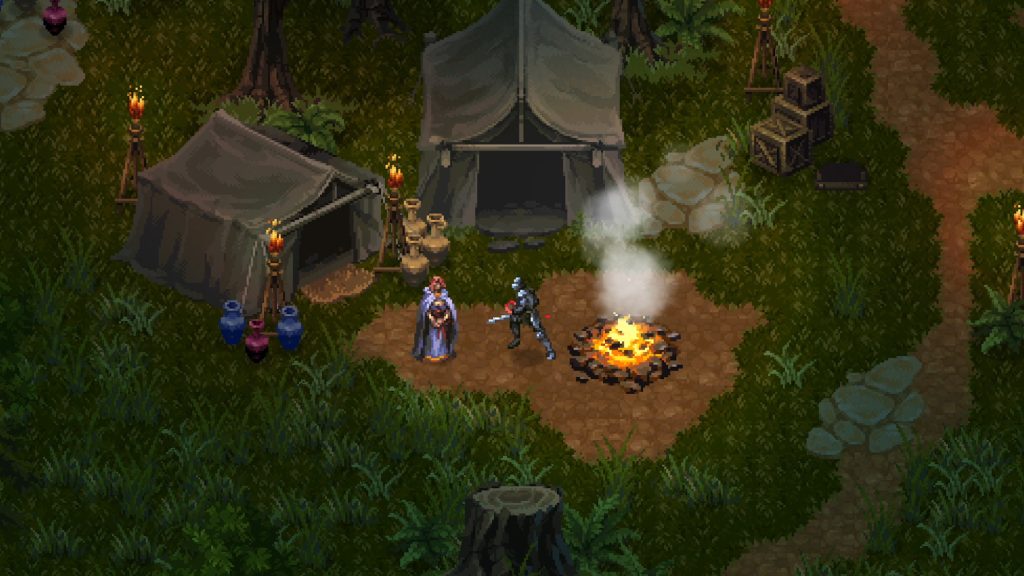
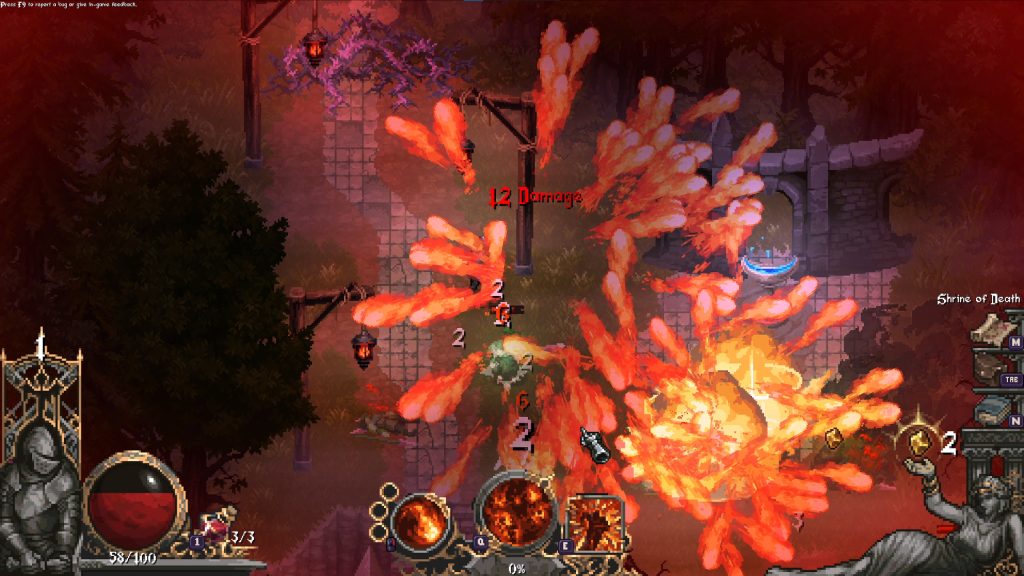
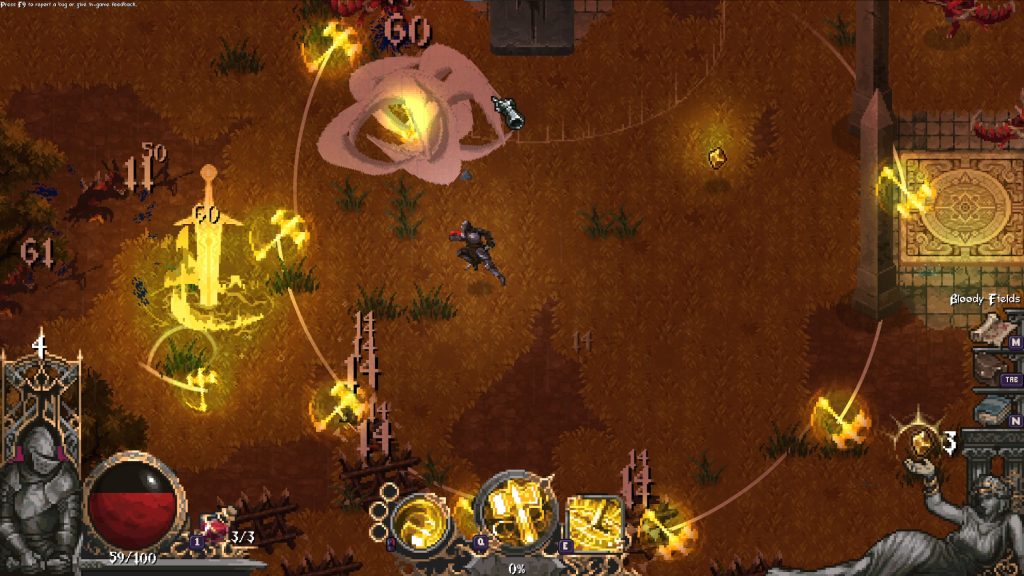
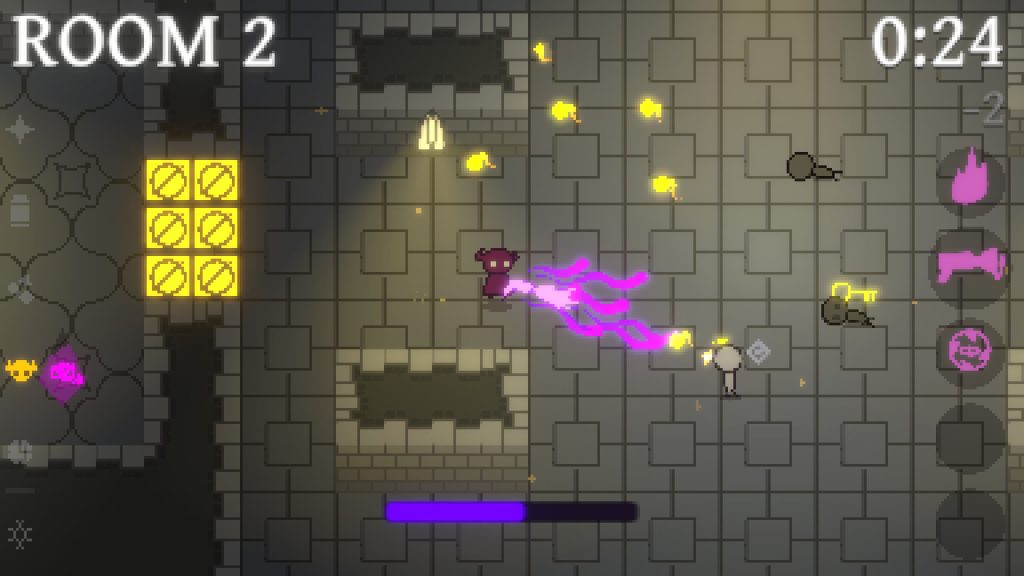
Most bullet hells punish a mistake by ending the run. Negative Time punishes it by dragging you backward. Get hit and the screen pixelates, the clock runs the wrong direction, and you find yourself in rooms numbered below zero, where the enemies are new, the weapons are new, and dying again is the only way back out.

That idea came out of the 2025 GMTK Game Jam, where the theme was Loop and CodeRed and Golden Disguise decided a straightforward time loop would be the most crowded lane in the jam. The two of them make up Round Owl: CodeRed handles the Unity project, Golden Disguise handles the art and, by CodeRed’s own accounting, about 90% of the ideas. What was supposed to be a slightly expanded jam build turned into just over a year of work, picking up a roguelike blessing system, minibosses, a lore archive, and a final cutscene along the way.

Negative Time hits Steam on August 21. For this SDC Highlight, we talked with Round Owl about scope creep, the rewind bug that softlocks the entire game, a balance problem named Wand, and the enduring importance of windows.


What was the original idea that eventually became Negative Time? Was the time-reversal mechanic there from the beginning, or did it emerge later in development?

CodeRed – The original idea for Negative Time came from the 2025 GMTK Game Jam, which is when my dev partner Golden Disguise and I first created the game. The theme that year was Loop, which immediately had us thinking about some kind of time loop situation. However, both of us like making unique interpretations of game jam themes, and having a basic time loop was definitely going to be everywhere in the game jam. We bounced around some other ideas, like a racing game where each time you loop around the track it changes, but eventually I came up with the idea of a bullet hell where each time you die you are sent further back in time, which we both decided to go forward with. So yes, the time-reversal mechanic was there from the beginning.
How long has Negative Time been in development, and how has the game changed during that time? Can you also tell us a bit about the makeup of Round Owl as well?

CodeRed – Negative Time has been in development for just over a year now! The game has grown a lot over the last year, mainly in scope, honestly, lol. Our original hope was to keep Negative Time small. We planned to add just a bit more content to the game jam version and release it around late 2025/early 2026. But instead, we ended up adding a roguelike random upgrade system called blessings, adding minibosses, lore, and more. I’m very happy with the final result, but yeah, scope creep did get the better of us.

And yeah, a bit about us: Round Owl is a partnership between myself (CodeRed, programmer) and Golden Disguise (animator). I’m the one who is in the trenches of the Unity project, while Golden Disguise is the one coming up with 90% of the ideas, while in call watching my shared screen.

What games or other media had the biggest influence on Negative Time? Were there any particular games you looked toward when developing its combat, roguelike structure, or time mechanics?

    Golden Disguise – For combat, I’m not going to act like it isn’t obvious: Enter the Gungeon is a huge inspiration for the moment-to-moment gameplay of Negative Time. In fact, I think I modeled the roll animation directly off of Enter the Gungeon’s.

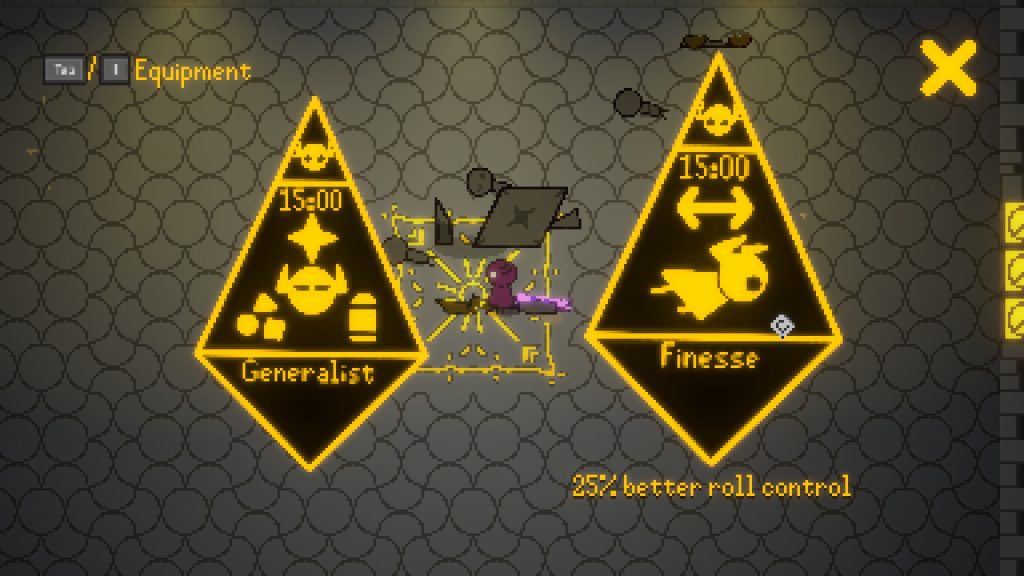
    CodeRed – For roguelike structure, I took inspiration from the way Hades does boons. The different categories of blessings are similar to the different gods who give you their boons, and originally blessing categories were also presented on the ground as items similar to the way boons appear in Hades.
    Playing Negative Time is somewhat reminiscent of classic Flash-era games, particularly its fast-paced top-down action and visual style. Was that era of games an influence at all? Are there any older web or Flash games that had an impact on the game or on you as developers?

    CodeRed – Interestingly, I think Negative Time is one of our games that takes direct inspiration from Flash games the least, at least in terms of visuals with the pixelated look. A lot of our other games, I’d say, look a lot more Flash-like, given Golden Disguise’s art style. However, that doesn’t mean Flash games haven’t affected the game at all. Flash games greatly affected me as a developer, given the fact that my first experience playing video games was through random Flash games. I can’t think of any that directly inspired things in Negative Time at the moment, but some notable Flash games I can think of that I really liked include Ninja Brawl, Lose the Heat, any racing games, and any games on the website Sploder (that’s where I first started making games!).

    The central idea of being sent further back in time every time you’re hit is really unusual. How did you arrive at that mechanic?

    CodeRed – Well, to expand on what I said before, we were originally thinking of doing a bullet hell game where you can save the game, and when you die, the game rewinds to your last save. The lose condition, then, would be effectively getting softlocked due to misplacing a save. I didn’t really like this idea, but I liked the concept of a rewinding bullet hell. I don’t really remember if the idea of going into “negative time” came first, or the idea of being sent further back in time every time you are hit. But either way, one idea naturally led to the other. I instantly loved the concept of a negative area of the game, and the rest is history.
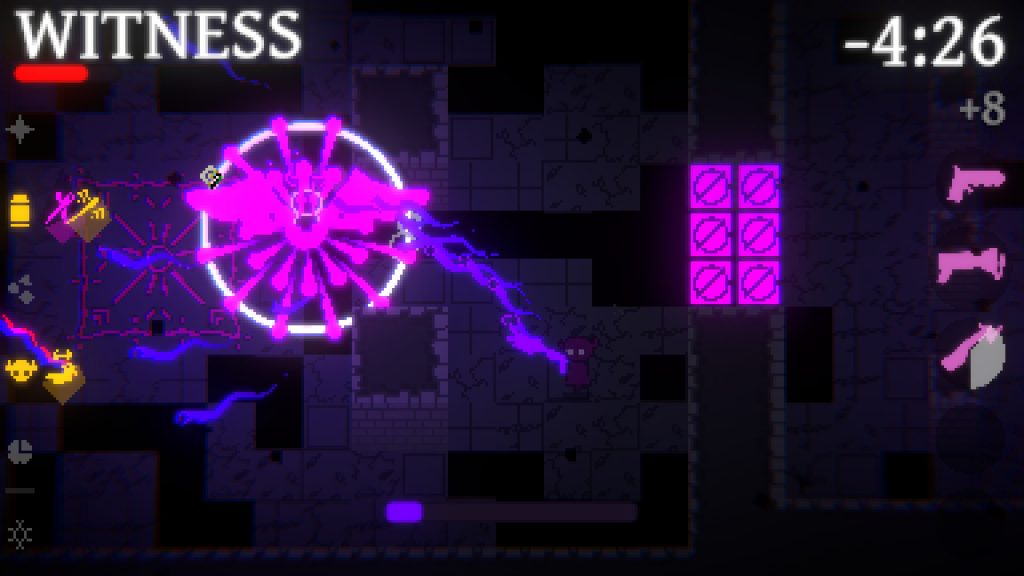
    How difficult was the time-reversal mechanic to implement technically? What challenges came with having the game continually remember and reconstruct previous states?

    CodeRed – It wasn’t too difficult to create an initial working version. The real problem came with expanding it without it becoming a mess (spoiler, it did become a mess). One bug that has plagued the game since its original game jam version involves any error occurring during the frame in which the game rewinds everything. The game goes through and calls functions on any objects with the rewinder component that existed at that time, giving it the state to rewind to. It also calls an OnRewind event. The problem is that if there is any error, like a null reference, in any of these functions, the rest of the rewind coroutine fails to run, resulting in a permanently pixelated screen, since the game has a cool effect where the screen pixelates as you rewind. Obviously, ideally you don’t have any errors to begin with, but it is just really unfortunate that an error that otherwise might not affect anything can cause a softlock because of the way rewinding is structured.

    Did the rewind mechanic create any unexpected strategies or player behaviors during playtesting?

    Golden Disguise – In the initial game jam version of the game, we hadn’t implemented any systems to stop or discourage you from AFKing, and in a game where time is effectively your health, the longer you sit still without risk, the more health you gain, so AFKing was an optimal strategy, which we did not like, because we were intending Negative Time to have a fast-paced escape feel to it.

    Negative Time turns failure into an opportunity to discover new enemies and weapons. How did you approach making failure itself part of the player’s progression?

    Golden Disguise – I wanted to utilize the negative and positive format so that the game never truly has a lose state. If you die in positive time, you go to negative time where you can make permanent progression, and if you die in negative time, you can go to positive time to get more blessings for temporary upgrades, so losing is always a smooth gateway to getting something good.
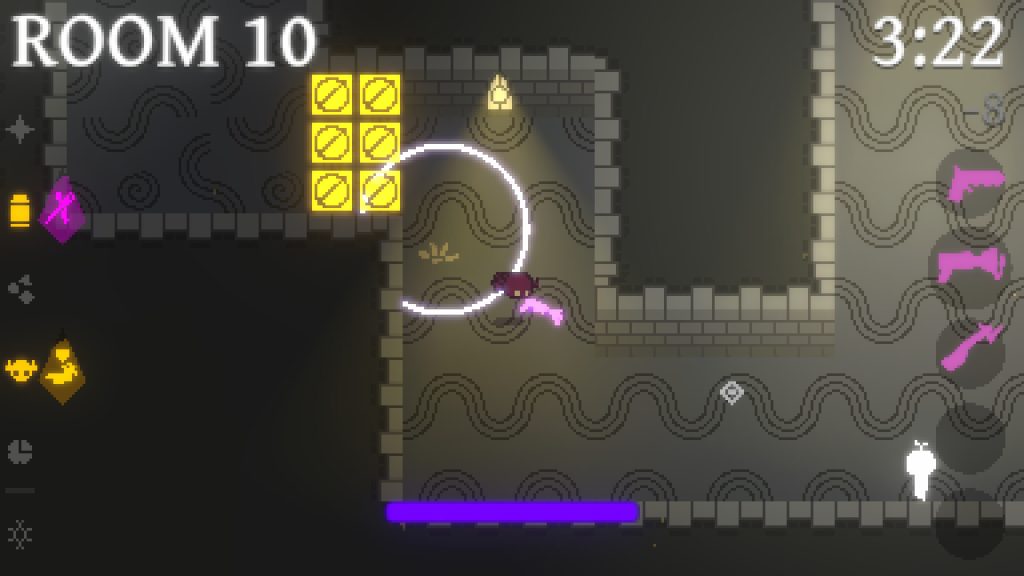
    Were there any weapon, blessing, or other combinations that completely broke the game during development? In a roguelike, how do you decide when an overpowered combination needs to be balanced versus when discovering something broken is simply part of the fun?

    Golden Disguise – Wand. Always wand. It’s one of our favorite weapons, but it has consistently been such a pain to balance. It’s just the way that it interacts so well with every blessing that we had to neuter its base stats just to make it scale worse. Nevertheless, it is still one of the best weapons in the game.

    What changed the most as a result of watching people play Negative Time? Were there any mechanics, encounters, or systems you substantially reworked because of player feedback?

    Golden Disguise – Maybe it’s just me not wanting to change our game based on what other people say. But we haven’t made many alterations due to player feedback. Probably the biggest change is how you used to not be able to roll through the Conductor’s lightning, which made the Conductor a lot harder in a way that I liked but also was poorly communicated and ultimately overly frustrating, so we changed it.

    Was there anything that started as a small experiment or seemingly minor idea that unexpectedly became a major part of the finished game?

    Golden Disguise – Bullet deletion in general. It was originally just something that we added to Big Block so that it could be a more effective defensive tool. But then we just kept adding it in places; eventually, bullet deletion fields became the signature ability of player blessings, and now certain enemies have them too, and suddenly it’s all over the place.

    What part of Negative Time took considerably more work than you think most players will realize?

    Golden Disguise – Lore took so long to make, between actually making the UI, writing the dialogue, and figuring out the mechanical systems to display the lore. Just coming up with the damn thing took so much time. There were multiple nights where we were just staying up effectively theorizing about lore that didn’t even fully exist. And possibly the smallest thing that took the most time was windows. Yep, that little visual element in every room, manually placed for every room preset. We manually chose each type of window for each room. It took so long for such a small feature, but it was worth it. Windows are great.

    After spending so long developing the game, what has the process of actually approaching release been like for the team?

    CodeRed – Very difficult. We’ve consistently underestimated the amount of time stuff would take while developing this game, and the release has been a struggle because of it. I’ve constantly been in a state of feeling like the release is just around the corner, and so finally settling on a release date and sticking to it feels nerve-wracking. We did many playtests over the course of the game’s development, and I would always work until the last minute to get changes done. The problem would inevitably be that I would break something just before the playtest, and so I am currently trying to effectively have the game “done” by August 14th, so if I break anything last minute, we’ll have a week to fix it. The trick will be actually having the game done by the 14th… Here’s hoping!
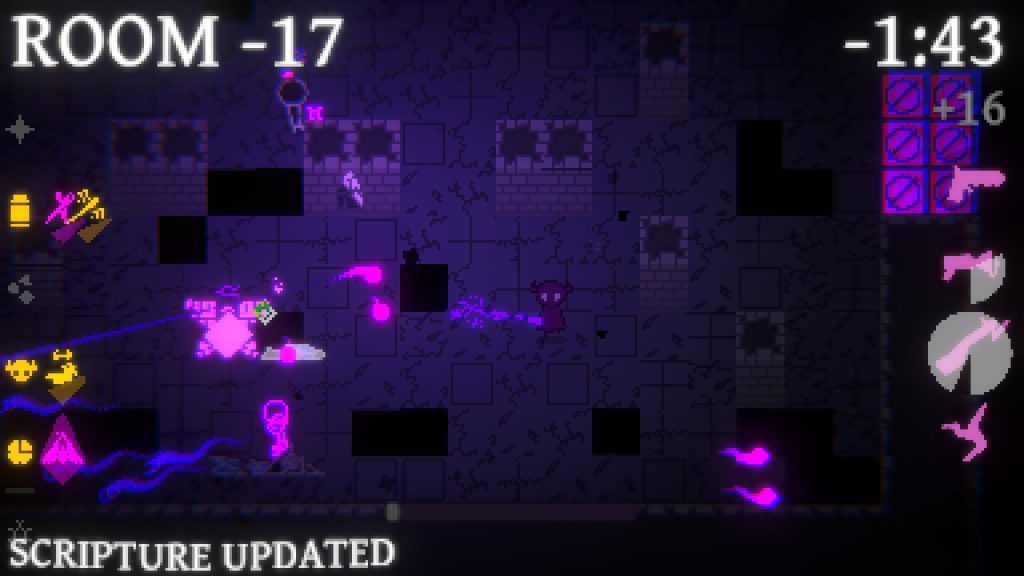
    What is the most memorable bug you encountered while developing Negative Time? Did the time-rewinding system result in any particularly strange ones?

    Golden Disguise – In older versions of the game, whenever you killed a Reclaimer, there was about a 25% chance that they would just revive themselves a few seconds after dying, just deciding to get better. For the rewinding system, the most memorable bug was known as eggnog time. It’s where you would be in negative time, the location, but the timer and how the timer functions would be as if you were in positive time, so we called it negative positive time, which eventually devolved into eggnog time. (There was also the reverse, which is known as Pegnog time.)

    With release approaching, what part of Negative Time are you most excited to finally see players experience?

    CodeRed – The final cutscene. We’ve spent a good portion of the last few months adding lore to the game, which was a completely unnecessary, extra addition I thought of as a high-hopes goal. But we had already taken so much longer on the game than we thought that we figured “why not?” And as with everything else, it took a lot longer than I thought to add, but BOY was it worth it! The final cutscene is only like 30 seconds long, but I LOVED making it. I only hope people will actually get to see it, though, since the game is very, very difficult.

    What do you lean on to keep going when inspiration, excitement, and novelty have all seemed to abandon you?

    Our previous SDC Highlight developer, CLYDE Games of Cursemark (https://store.steampowered.com/app/3219180/Cursemark/), left this question for you.

    CodeRed – It depends, but I’d say a consistent fixation throughout Negative Time’s development that has helped me stay excited about game development is Deltarune. Chapters 3 and 4 came out right around when we first started making the game, and I got SUPER into it. I even got Golden Disguise to play the game for the first time, and some of our friends and I joined in to voice characters. Even though Deltarune is a very different game from Negative Time, it has consistently been a huge inspiration, mainly by just reminding me what I love so much about games, and game creation in general. And I mean… it does have bullet hell elements so there’s that!

    Golden Disguise – I am extremely lucky to not often have to deal with this situation. I am 95% of the time completely obsessed with the game that I am working on, but during the small lows, really, I just tough it out. I know that it will eventually be fun again, and while working on a longer-term project, you aren’t always going to want to work on the project, but sometimes you just have to keep going. (I am not saying that this is a healthy way to handle it, but it is my way.)

    Lastly, what question would you like to ask the next developer featured by SDC?

    CodeRed – I’ll let Golden Disguise figure that out. 🙂

    Golden Disguise – I know that this isn’t a very game dev-related question, but I would love to know what game they have stopped playing yet still hold dear in their heart. For me, that game is Halo.


    Round Owl leaves the next SDC Highlight developer with a question that has nothing to do with game development and everything to do with why people make games in the first place: what game have you stopped playing but still hold dear? For Golden Disguise, it’s Halo. Thanks to CodeRed and Golden Disguise for taking the time this close to launch. Negative Time releases on Steam on August 21, with development updates on CodeRed’s YouTube channel and a Discord that’s open if you find something broken or just want to argue about whether Wand is still overtuned.
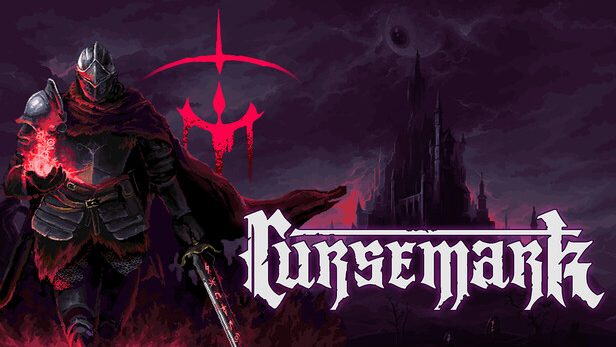
    Building Cursemark, One Cracked-Out Rune at a Time

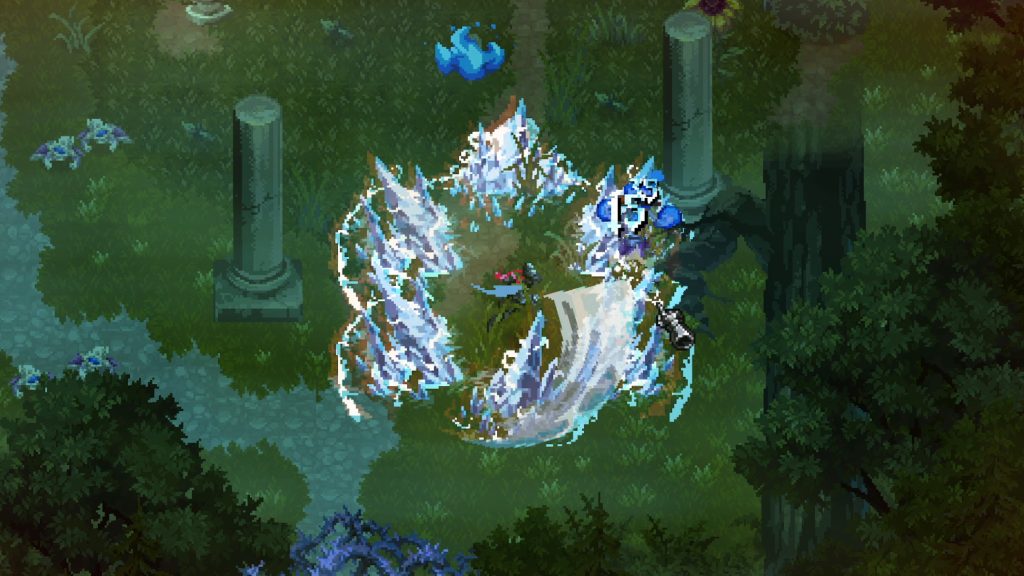
    Cursemark is a roguelike ARPG set in a hand-crafted world, where every run has you forging unique spells and slowly uncovering the layers of history buried in its landscapes. Built at Clyde Games and freshly signed with publisher Mad Mushroom, the project carries forward hard-won lessons from the studio’s previous title, Into the Necrovale. We talked about combat design, run variety, the rune-based melding system, and the National Parks road trip that shaped the game’s world for the latest entry in our SDC Spotlight series.

    How would you describe Cursemark to new players discovering it for the first time?

    It’s a strange brew. A roguelike in a hand-crafted world. In the game, you’re crafting unique spells each run and slowly exploring this world.

    Cursemark recently announced its partnership with Mad Mushroom. Congratulations! Securing a publisher is a huge milestone for any indie project. How did your collaboration with Mad Mushroom begin, and what made them the right fit for the game?

    Thanks! I actually reached out to another dev (the one making To Kill a God) to see if they’d want to bundle, since our games have some overlap. Their publisher, Mad Mushroom, was interested in our game too, so we got to talking. They seemed to really get what we were making, and they have some serious firepower they can bring to promoting the game. So it was a good fit.

    Your previous title, Into the Necrovale, shares some DNA with Cursemark, both top-down pixel-art roguelikes with a combat focus. In what ways did developing Necrovale shape or influence Cursemark?

    My explicit goal is to stay within a genre, explore that space, and evolve my ability to make that sort of game, which is roguelike/ARPG hybrids. I learned a lot of lessons during Necrovale that are coming to bear here, since that game had some fundamental problems I couldn’t fix. I have a much better understanding of resource economies now, and how to allow “broken builds” without letting the game become “solved.”

    Was there any specific community or player feedback from Necrovale that directly informed new mechanics or design decisions in Cursemark?

    Yeah. The coolest mechanic in Necrovale was “melding,” where you could fuse two (and eventually three) items together to make wholly new ones with properties from both. I took that concept even further here with the rune system. Now, on top of your base spells, you can socket in runes that confer new properties, so you’re essentially building new spells each run. It’s a cracked-out melding system.

    The fantasy-meets-heavy-metal pixel art direction is very striking. What is your art workflow like at Clyde Games?

    Honestly, I’m not a great artist. I think I have a good eye for creating atmosphere, but it’s my artists who are actually making something that looks amazing. I was quite lucky to team up with a couple of heavy hitters for Cursemark: Adam Ferguson and David Stuart.

    What were some of the inspirations behind the enemies, weapons, and the protagonist’s look?

    We started by discussing the lore and themes of the world, and tried to grow the types of magic, the protagonist’s look, and the enemies out of that. But we treat most lore as invisible, and try to let it manifest in second- and third-order ways instead of lore-dumping on the player. The goal is to make a world that feels very lived in, with layers and layers of history.

    What were the core pillars you established early on for the combat system?

    The core system I devised goes back to a problem I had in Necrovale, which is that projectile-spam builds nearly always dominated. All roads led to projectile spam. I realized that was because creating projectiles was free and easy, with no cost to it, while there’s a huge cost to melee because you’re risking your hide. So I made a system where you generate energy with melee attacks and then spend that energy on spells (usually ranged). That means you have to get into the thick of combat to charge your spells up.

    Roguelikes can be difficult to balance, especially when combining randomness, progression, and player mastery. How do you approach difficulty tuning and run variety in Cursemark?

    The core solution is in the design of the game itself. Anything that empowers you is a transient resource; you lose it when you die. The goal is for the player to have a transformational experience each run. They start out evenly matched with the enemies, and then begin an arms race with them. So when things go well, you can absolutely trash the enemies. My second method for balancing is fairly detailed gameplay analytics. That helps me find power outliers (in both directions) and see the results of any changes I make in an objective way.

    Are there any new mechanics or systems in Cursemark that weren’t possible during Necrovale’s development due to time, tech, or experience?

    On the theme of sticking with a genre and evolving my abilities, I was able to spend a lot of time improving the visual element of the game. I got into shaders and started learning them so I could give the game a higher level of polish. I was also able to significantly build out my internal tooling, which I see like compound interest. The more I invest in that sort of thing, the more I get back over the long term.

    The game places heavy emphasis on curses, relics, and upgrades. How do you make sure each run feels different while still keeping the experience fair and skill-based?

    It’s tough, and honestly I don’t feel I’ve perfected this yet. But the goal is to have such an insanely deep pool of Runes and Talismans, all interacting in fascinating ways, that people can spend a lot of time discovering the nuances of the system and what’s possible within it. And going back to design accommodating balance, ideally the game doesn’t need to be perfectly balanced. Break the game! That’s sort of the goal. But the overall design has to accommodate that breaking without breaking itself.

    What’s one mechanic or feature you’re especially excited for players to discover once they get deeper into the game?

    In Necrovale, players took the systems I built way farther than I ever imagined. They were making builds that released swarms of hornets, turning themselves into a V2 rocket and shooting around, getting their DPS into the trillions. I want similar things here. I’m trying to create a play space that’s vastly larger than the design space.
    Many roguelikes lean heavily on systems over story. How do you strike the balance between strong gameplay and a compelling world?

    In my opinion, melding story and gameplay was figured out decades ago by Myst. The formula is that 95% of the story has already occurred. In playing, you’re seeing environmental clues to reconstruct and understand what has happened. Then, when your understanding comes together, you are the X factor in completing the last 5% of the story. Dark Souls took this formula and used it perfectly. I want to do similar things here. The act of playing and witnessing the world is to relive the story of the world.

    How long has Cursemark been in development so far, and how has the project evolved compared to your early prototypes?

    About a year and a couple of months, I think. It took about six months of tinkering to find the right formula; I tried a huge number of different ideas. At first the game was about alchemy, and discovering secret properties of objects by combining them. Then it was a game where there was just a big infinite plane that you explore. Eventually I started leaning more toward an exploration element, because my heart was really drawn in that direction. I started thinking about Zelda 1, and how it achieved a great sense of exploration without amazing vistas or anything, just a great sense of possibilities and good design.

    As a team, how do you divide responsibilities at Clyde Games? Is Cursemark a solo-heavy project or more of a team collaboration?

    I do the core programming and design, and I kind of keep final say on things to try and keep everything coherent. But my artists really bring the visual direction, and a lot of great design ideas as well.

    Now that you’re partnered with a publisher, how has it changed your day-to-day workflow or long-term planning?

    It’s basically let me actually breathe and refocus on what I do. In making indie games, the “peripheral” tasks just keep building up more and more: marketing, communicating, organizing, and so on. With some funding and support, I can bring the actual design of the game back into focus. In the end, that’s the only thing that really matters: is the game fun or not.

    Have you received any early feedback from playtests or closed demos? What surprised you the most about how players interacted with the game?

    Yeah, I get tons of feedback. I built a feedback system into Necrovale that I use here as well. It’s a massive help for seeing what players are thinking and frustrated by. I’m always surprised by how in-depth players come to understand a game, and all the little quirks of its mechanics and world.

    What does the current roadmap look like? Upcoming features, planned content, milestones, or things you’re especially excited to reveal later?

    Now that I have the publisher deal, my current goal is to really get into the core combat experience and improve it. It’s not my strength (I like making crazy systems players can experiment with), so it deserves more time here. I’m pretty excited about that, though it’s not exactly very sexy.

    What’s the best way for players to follow development, support the project, or get involved with Clyde Games’ community?

    If it looks cool, wishlist it and follow it on Steam. I’ll keep everyone updated there. There’s a demo you can try now.

    Before we wrap up, here’s the final question passed forward from the previous SDC Spotlight developer, The Wacy, developers of Beat, Heart, Beat: Has a real-life experience or piece of non-game media influenced or inspired your work in some significant way? If so, how do you think your design philosophy, aesthetics, etc. have changed as a result?

    Awesome question. A few years ago I built out a camper van, and my wife and I traveled all across the US visiting the National Parks. The world design in Cursemark is very inspired by those beautiful places. For instance, the swamp is inspired by the Everglades. The Badlands are inspired by Death Valley (wait, why does the real place have a cooler name than my fantasy place?). The desert area is inspired by Zion National Park. An urge to share that sense of beauty with people in some form has really shaped this project.


    Cursemark is on Steam now. You can play the demo, wishlist the game, and follow along for development updates straight from Clyde Games. Thanks to the team for taking the time to talk with us, and stay tuned for the next SDC Spotlight, where we’ll be passing this developer’s question forward to the next studio in the series.

    SDC Spotlight: Coin Drop Games on The Remake of the End of the Greatest RPG of All Time

    There are games with bold premises, and then there is The Remake of the End of the Greatest RPG of All Time. Developed by Coin Drop Games, a team of college students led by developer and director Lucas Immanuel, this deduction puzzle game drops players into the final hour of a fictional lost 90s JRPG, armed with a physical manual, director commentary, and fragments of an unreleased amateur documentary. The central question the game asks: What is the Greatest RPG of All Time?

    With the game releasing today, we sat down with Lucas to talk about the project’s unusual origins, the challenges of building a mystery around a game that never existed, and what it’s like shipping something this ambitious right before graduation.


    For anyone hearing about the game for the first time, how would you describe it?

    “It’s a deduction puzzle game set in the last hour of a lost, nonexistent, 90s JRPG, where players must use the game’s manual, director’s commentary, clips of unreleased amateur documentary and more to answer the question at the core of it all: ‘What is the Greatest RPG of All Time?’ It’s a long sentence.”

    So we have to ask about the title. Where did that magnificently absurd name come from?

    The title was actually the starting point for the entire project. Lucas had just come off two RPGs that required major cuts before shipping, one of which never shipped at all. Both had planned epic finales that never got made.

    “When I took a games capstone class at my university, and they said ‘don’t make a hundred-hour RPG,’ my first thought was ‘what if I did anyway?’ So, having this idea to make the ending I never got to, I figured the joke would be way funnier if I pretended it was everyone’s favorite RPG.”

    The reference point was Tenacious D’s Tribute, and the logic followed quickly from there: if it was everyone’s favorite RPG, it obviously had to be from the 90s. But Lucas had been doing art in the HD-2D style and wanted an excuse to use it, which meant the game needed to be a remake of that fictional classic. The full title locked in over the course of about a minute. TGRPGoAT beat out TGRPGEM on both humor and syllable count.

    The game revolves around a “lost, nonexistent 90s JRPG” complete with manuals, director commentary, and documentary footage. What drew you to that concept of gaming archaeology?

    “In the English-speaking world, JRPGs are a perfect ground for mystery, especially pre-mainstream internet JRPGs. There’s this language barrier between us and these original creators, there’s often very few interviews or sources of information from them, and the more legendary the creator the more awash with rumor and speculation a game’s development is. There’s something inaccessible and unknowable about the arcane magics that create a JRPG.”

    But the feeling Lucas was really chasing wasn’t the schoolyard rumor era specifically. He was too young for that firsthand. Instead, the game is built around the emulator generation experience: pressing your nose to old games like aquarium glass and wondering not what they contain, but what it would have felt like to be there on release day.

    The game has a strong meta-narrative structure. What were your biggest influences?

    The list runs wide. The core RPG aesthetic draws from Chrono Trigger, Dragon Quest 3, and the Octopath games, with heavy inspiration from the RPG Maker scene and offbeat modern RPGs like In Stars and Time. The multilayered, fourth-hand storytelling structure came directly from reading Pale Fire and House of Leaves, though Lucas is quick to note the tonal differences are significant.

    The FMV and documentary elements pull from early YouTube devlog culture and Angry Video Game Nerd-style reviews, with some DNA from The Rehearsal, This Is Spinal Tap, and Nirvana the Band the Show. Puzzle design draws from Tunic, Fez, Animal Well, and Return of the Obra Dinn.

    “And of course we must pay tribute to our meta videogame forefathers, The Beginner’s Guide and UFO 50.”

    There was also a brief, not entirely unserious discussion about scheming to get Jack Black to let them use Tribute as the end credits song.

    The archival materials are a huge part of the experience. How much went into building those?

    The manual was the hardest piece. It serves four functions simultaneously: carrying puzzle information, telling the in-game story, telling the story of the people who previously owned it, and fitting authentically alongside the real history of JRPG manuals. The team read through physical manuals sourced from friends and mentors and combed through the Internet Archive.

    “There’s a few things that don’t line up quite with the era, but I feel very happy that we got close.”

    How do you approach puzzle design when players are working across a manual, commentary tracks, videos, and live gameplay simultaneously?

    “It’s all about pacing. The game starts very slow with enemies that you can kill just by guessing and checking, then asks you to kill an enemy with a combo and gives you only one combo, then asks you to select from among a set of combos, then figure out how to make new combos, etc.”

    The design philosophy was largely emergent. Lucas describes an approach similar to Lucas Pope’s “doll-house” method: build a scene, write a script, record a commentary node, then work backwards to find the puzzle inside it. The puzzles built this way often ended up more clever than the ones designed puzzle-first, because they felt naturalistic to the genre.

    Playtesting drove everything from there. If players solved it, it worked. If they tore their hair out, the team tightened or added information. And occasionally, a playtester would come up with a solution that was better than the intended one, which then became a valid solution.

    One puzzle, involving MSPaint-style pages and combat rules as math operations, was cut after a playtester’s reaction made the call for him.

    The game blurs fiction and reality throughout. How do you manage that as a designer?

    “It’s a little scary unleashing the full might of the internet’s investigative power onto a game that has my real name in it.”

    Lucas draws a firm internal line between himself and the fictional version of himself within the game. He refers to that character in the third person even when their histories intersect, and has tried to keep the mysteries carefully contained within the software and curated online spaces.

    Most of the team is still in college. What has that balance looked like?

    “Yeah, I’m graduating two weeks after we ship.”

    The answer is that it has been genuinely hard, and the team has leaned on friends and family to make it work. Lucas also credits the separation between school life and development with keeping him sane throughout.

    What has been the hardest part of developing the game?

    “Unity.”

    What has surprised you most from conventions and playtests?

    “That there was feedback. My last game had 5 reviews on Steam, and this one has been seen by millions of people, wishlisted by tens of thousands. Insanely grateful and lucky to have been a part of this.”

    The game was also nominated for an award at BitSummit during development, which Lucas describes as “pretty wild.”

    Are you excited to see players theorycrafting online once the game is out?

    “I’m so scared.”

    Any advice for other indie developers on getting their game seen?

    “We’ve done a ton of festivals. I think your job as an indie dev is not to market your game to players but to market it to those who will market it. Unless you’re already popular you’re not convincing the world to buy your game, you’re convincing the guy with the megaphone to do it.”

    The breakdown he offers: funny or interesting premise means apply to festivals, because juries will enjoy it. Frenetic and energetic means post on social media constantly and optimize for virality. Multiplayer means get on TikTok and push social clips so players drag their friends in.

    And finally, what is the Greatest RPG Ever Made?

    “That’s a spoiler.”


    The Remake of the End of the Greatest RPG of All Time is available now on Steam. Follow Coin Drop Games on their Steam developer page, and follow Lucas Immanuel at @lucasimmanuel on Bluesky and @bsmproductionsHD on Twitter.

    Progressive Game Jam – Season 12

    The Progressive Game Jam (PGJ) is back for its twelfth season — and we’re more excited than ever to help local developers build awesome games and connect with a thriving community of creators.
    Whether you’re a beginner or a seasoned dev, PGJ gives you the tools, time, and team to actually finish a game. Each month on the third Saturday, we’ll gather for structured, supportive in-person jam sessions where you’ll:

    Set development goals and track your progress
    Get feedback from other local developers
    Learn from guest speakers and industry pros
    Showcase your game at public events like CCS
    PGJ Season 12 is your chance to bring your game to fruition — with the support of the Sacramento game dev community behind you. Returning games are welcome!

    Capital Creative Showcase 2026 Celebrates Sacramento’s Game Dev Community With Its Biggest Year Yet

    The Sacramento Developer Collective closed out Capital Creative Showcase 2026 with an awards ceremony celebrating the creativity, dedication, and talent behind the local game development scene. Hosted by SDC President Thomas Ruiz, the ceremony highlighted not just the award winners, but every developer, student, exhibitor, and attendee who helped make this year’s event special.

    Before announcing the winners, Thomas took a moment to recognize how much work goes into making a game. Game development pulls together programming, animation, art, design, writing, sound, music, production, and countless hours of testing, problem-solving, and persistence. Every project on the show floor represented a major achievement, whether it walked away with an award or not.

    That spirit is what Capital Creative Showcase is all about. The event gives Sacramento’s creators a place to share their work, connect with players, meet other developers, and celebrate the growing game development community in the region.

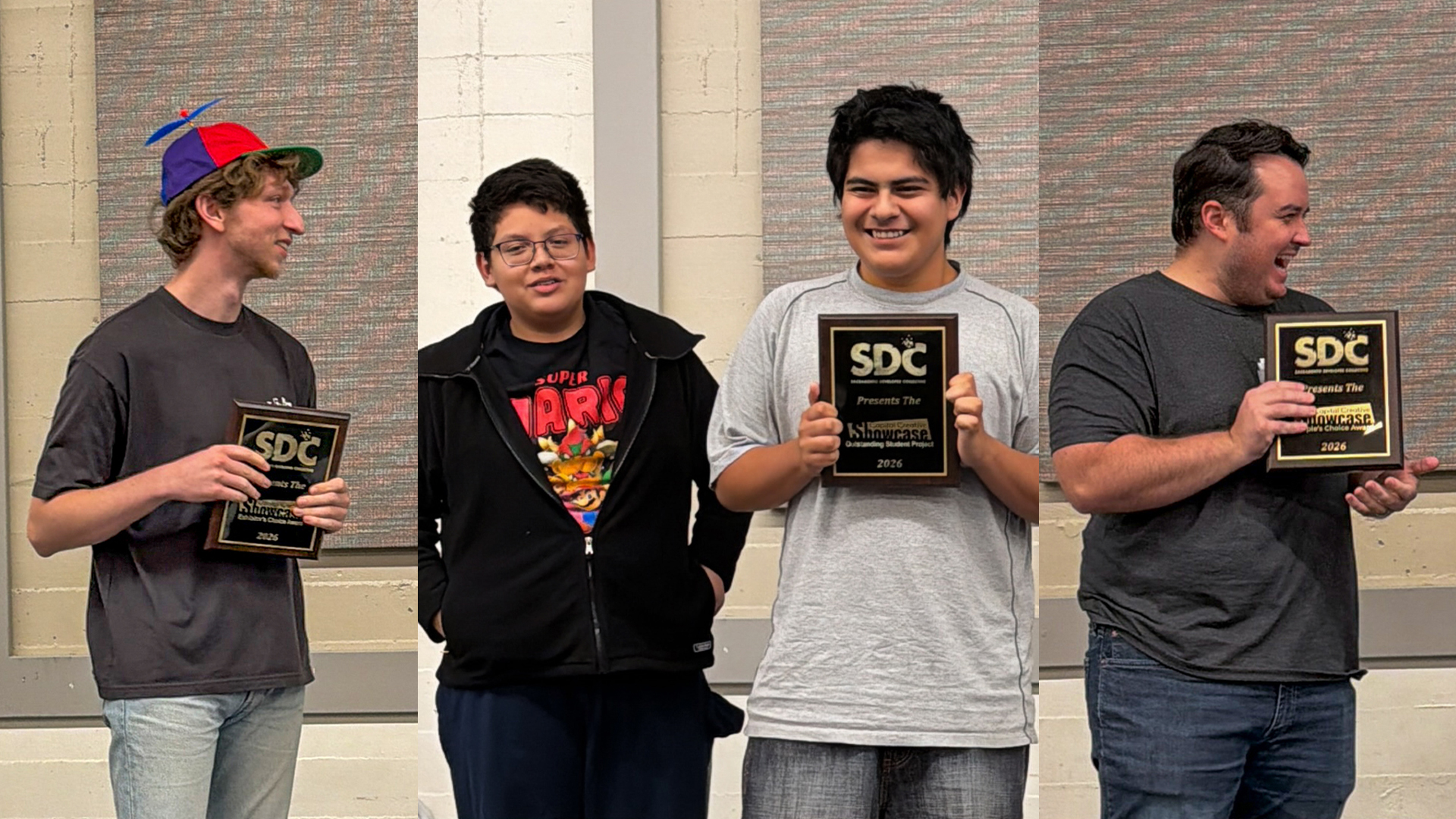
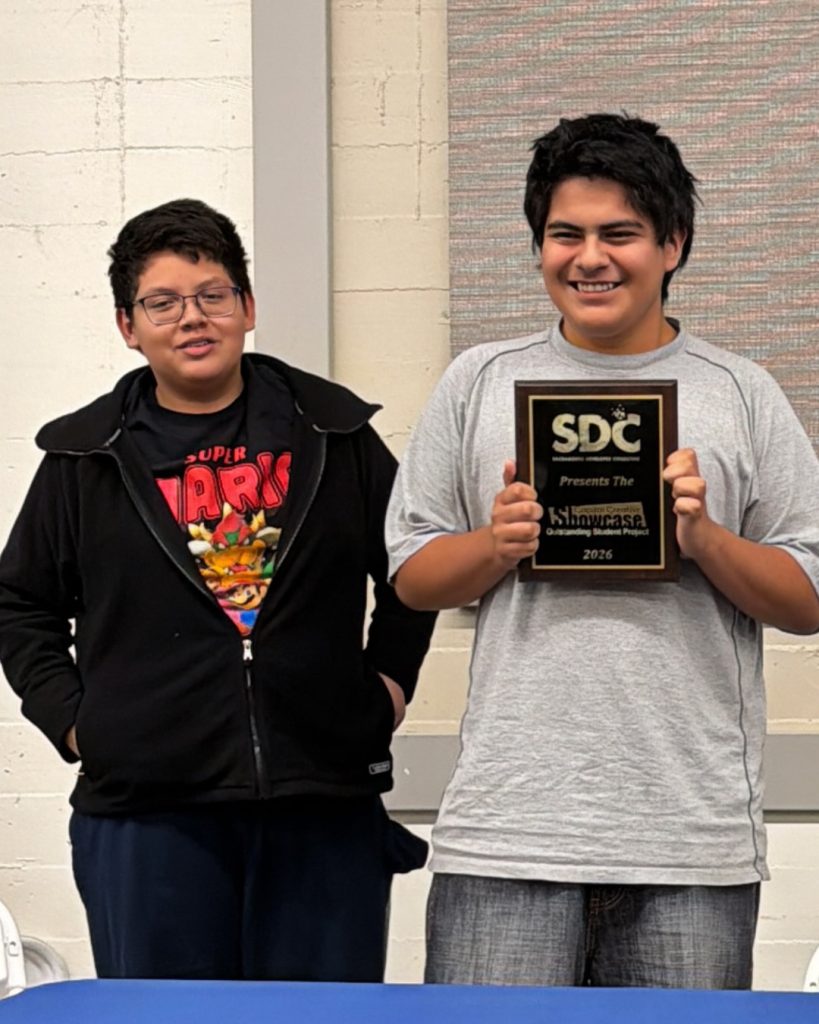
    The first award of the night was Outstanding Student Project, recognizing the impressive work being done by young developers. After a strong showing from the student projects, Bear With Me took home the award.

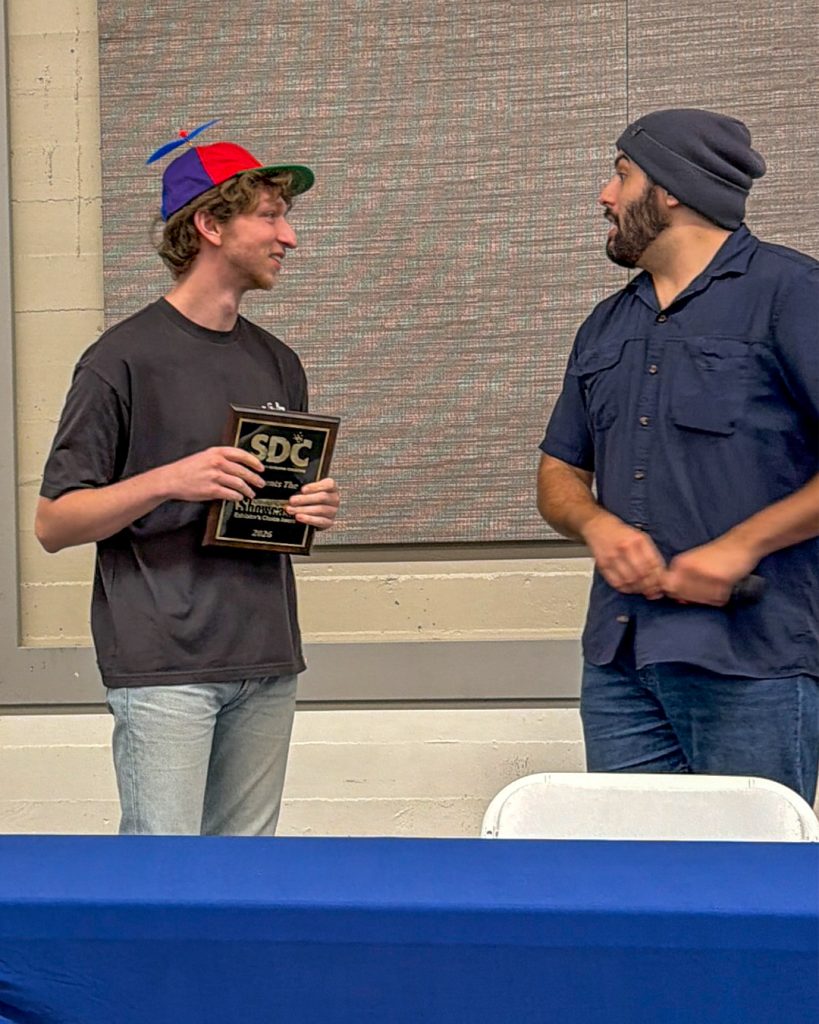
    Next up was the Exhibitor Choice Award, voted on by the developers and exhibitors at the event. Thomas noted that developers often see games through a unique lens, noticing systems, mechanics, and design choices that might stand out differently to fellow creators. The nominees were The Lost Frog, Blocks for Babies, and Giga Turtles, with Blocks for Babies winning the award.

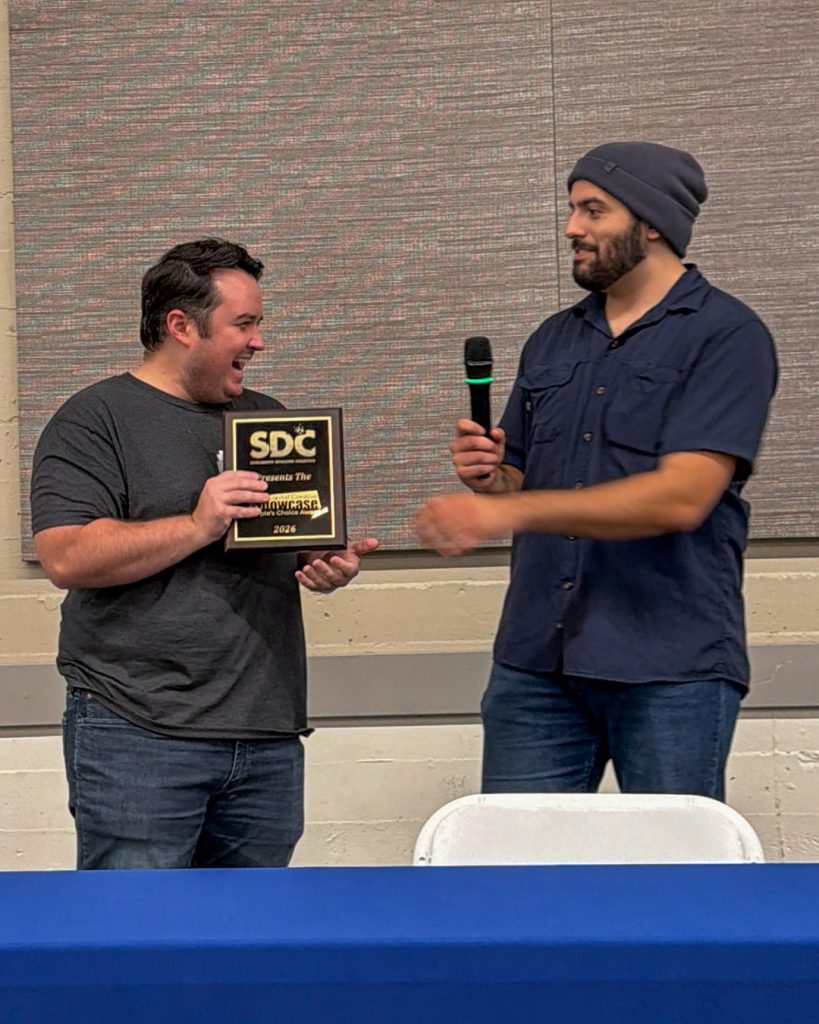
    The final award of the night was the People’s Choice Award, voted on by attendees. This category was especially competitive, showing just how much the crowd connected with the games on display. The nominees included My Wizard Doesn’t Feed Me So I Tarnish His Room, Now He’s Sending Buckets of Water on My Head, Cardboard Cowboy, and Goat Game. Goat Game took home the People’s Choice Award, earning the top audience honor of the night.

    Thomas closed the ceremony by thanking everyone who helped make CCS 2026 possible, calling it the biggest and most successful Capital Creative Showcase in SDC’s ten-year history. For Sacramento’s game development community, the night was more than an awards ceremony. It was a reminder of how much creative work is happening locally, and how important it is to give developers a space to be seen, supported, and celebrated.

    Capital Creative Showcase continues to grow as a home for Sacramento’s game creators, and CCS 2026 made one thing clear: this community has a lot to be proud of.

    SDC x GDC Partnership

    Sacramento Developer Collective x GDC: A Major Step Forward for Our Community

    SDC is proud to announce an official partnership with the Game Developers Conference — and it’s going to directly benefit Sacramento developers.

    For years, the Sacramento Developer Collective (SDC) has worked to create opportunities for indie developers, students, and small teams to learn, connect, and grow.
    This partnership with GDC is a huge milestone — not just for SDC, but for the entire Sacramento game development community.

    GDC is the premier professional gathering for game creators, and this collaboration gives our community a stronger presence on the show floor, more visibility with industry leaders,
    and more meaningful pathways for local developers to share their work with the world.

    Why This Partnership Matters

    • Visibility for Sacramento developers: More eyes on the incredible projects being built here in our region.
    • Real opportunities for teams: Showcasing, networking, and connecting with publishers, funders, and collaborators.
    • Community uplift: SDC exists to help developers succeed — this partnership amplifies that mission at the biggest industry stage.

    SDC Will Have a Booth at GDC

    As part of this partnership, SDC will have an official booth at GDC where we’ll be showcasing games currently being made in the Sacramento community.
    Our goal is simple: help developers get discovered, help projects gain traction, and help talented teams connect with the people who can support them.

    10 Sponsored Developer Will Be Coming To GDC

    We’re excited to share that SDC will be sponsoring 10 developers to attend GDC and show off their games.
    These sponsored passes are a direct investment into our community — helping teams who might not otherwise be able to attend take a major step forward.

    We also want to recognize how incredibly generous GDC has been in making this partnership possible.
    Their support isn’t just symbolic — it materially helps developers get access to the world’s most important industry gathering.
    We’re grateful, and we’re committed to making the most of this opportunity for Sacramento creators.

    SDC Community Discount Code (GDC)

    In addition to the sponsored passes, we’re also providing an SDC community discount code for anyone planning to attend GDC.
    If you’re considering going, this is a great way to reduce the cost and join us on-site.

    CODE: SDC10

    Where to use it: Apply the code during GDC registration checkout here: https://gdc.informafestivals.com/2026/registrations/Attendee?_mc=barter_gdcsf_gdcsf_le_x_partner_2026?

    What’s Next

    Over the coming weeks, we’ll be sharing more updates — including future blog posts highlighting members of our community who receive sponsored passes,
    as well as the games we’ll be showcasing at the SDC booth.

    This partnership is about uplifting developers — especially indie teams and emerging creators — by giving them real opportunities to be seen, supported, and celebrated.
    We can’t wait to share what’s next.

    Why GDC Is a Great Opportunity for Indie Devs and the SDC Community

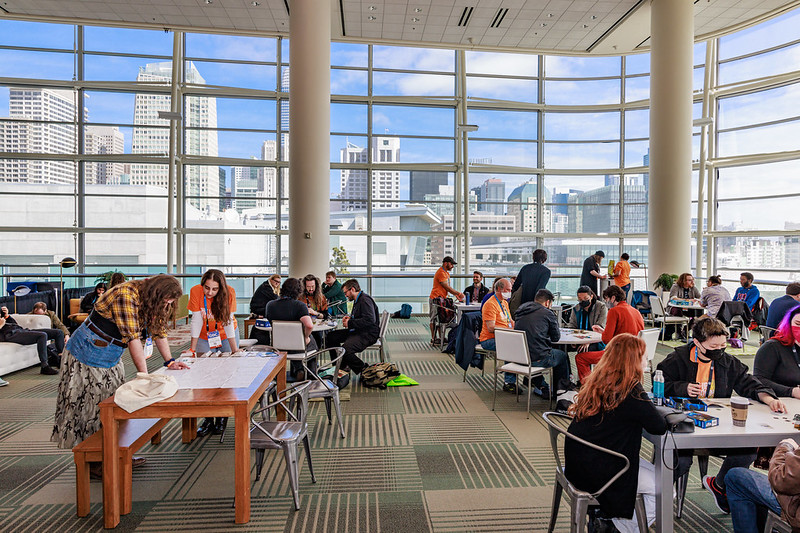
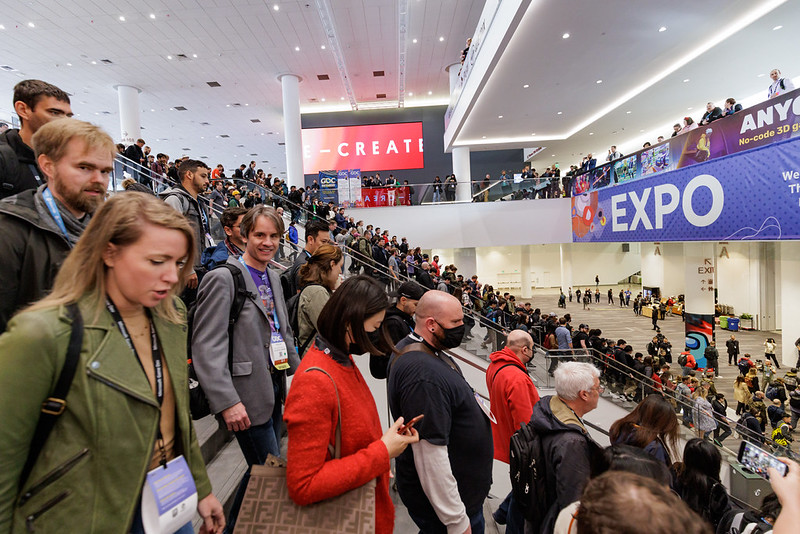
    Every year, the Game Developers Conference (GDC)is the place where the game industry gets unusually accessible. It’s a week where the people who build games, fund games, publish games, market games, and support development all show up ready to talk shop. For indie developers, that’s rare. For the Sacramento Developer Collective community, it’s even better because it’s close enough to feel doable, and big enough to genuinely change what your year looks like afterward.

    GDC 2026 runs March 9–13 at Moscone Center in San Francisco, and it’s leaning hard into a “Festival of Gaming” approach that blends conference sessions with meetups, show floor discoveries, and nightly events that make it easier to actually meet people instead of just sitting in talks all day.

    You Get Real Answers From People Who Have Shipped

    Indie teams are always solving problems under pressure. Technical challenges, scope issues, marketing confusion, funding uncertainty, community building, hiring, production planning, you name it. GDC is useful because it puts practical knowledge in one place, across the whole lifecycle of making a game. The 2026 program is structured around 14 tracks, including independent development, design, narrative and performance, discovery and marketing, business strategy, production, and tools and tech topics.

    It also includes “Summit Communities” that are meant to give you a home base during the week. If you’ve ever felt like your discipline gets lost in the shuffle at big conferences, these communities are designed to solve that. Independent Games is one, but there are also communities around things like UX, narrative, tools, game AI, level design, and more.

    Networking Is Built In, Not Left to Luck

    People joke about networking, but at GDC it’s not just “talk to strangers and hope it works out.” The event is intentionally structured around connection, with curated matchmaking, lounges, and meeting formats that make it easier to talk with purpose.

    For SDC folks, this is where going together becomes a superpower. You can split up and cover more ground, compare notes at the end of the day, and introduce each other to people instead of doing everything solo. Even a small group makes the whole experience less intimidating and more productive.

    The Festival Hall Is a Cheat Code for Getting Oriented

    If you’re an indie dev, the show floor is not just for playing demos. It’s where you can see the ecosystem up close. Tools, services, platforms, partners, and communities are all represented, which makes it a great place to get clarity on what’s worth your time and money this year.

    GDC is also calling out a dedicated Indie and Education neighborhood in the Festival Hall, with its own stage for microtalks, fireside chats, and community meetups. For newer studios, that kind of focused space matters. It makes it easier to find your people and easier to learn in smaller, more approachable formats.

    The Independent Games Festival is part of what makes GDC feel indie-friendly. In 2026, the IGF Pavilion runs from March 11–13, and the IGF Awards happen on March 11. Even if you are not submitting a game this year, IGF brings a real spotlight to independent work and attracts attendees who are specifically there to discover new games and new teams.

    It’s More Affordable Than Ever

    GDC has always had a “big conference price tag” reputation, but the 2026 structure offers more entry points than people realize.

    There’s a Festival Pass with an early rate price, and there are also application based passes that are clearly aimed at small teams and students. The Early Stage Indie and Start up Pass is designed for studios and self employed professionals that have been operating less than five years, and the Academic Pass is available for verified students and faculty. There’s also a Digital Pass for people who cannot make the trip but still want the content and some networking access through the event app.

    On top of that, SDC members can take 10% off using our discount code SDC10, which helps take some of the sting out of pass pricing.

    For SDC specifically, the group discount is also worth paying attention to. If you can get 10 people going, there’s a discount on current Festival or Game Changer pricing, which is the kind of thing a community can actually pull off.

    Why This Matters for SDC, Specifically

    A lot of communities talk about “building connections,” but SDC is already doing the hardest part. People are making things, sharing work, showing up, and helping each other improve. GDC is a multiplier on that energy because it plugs a local scene into the wider industry for a week.

    It also fits the practical reality of Sacramento. You are not flying across the country; you are making a short trip to San Francisco, and you can come back with fresh relationships, clearer plans, and new ideas you can share with the rest of the community.

    If you want this to have maximum impact, the move is simple. Go in with a plan, and come back with a debrief. Pick a few focus areas, decide what “success” looks like for your week, and then share what you learned with other SDC members afterward. That’s how a conference trip turns into a community upgrade.

    Tearing a Path to the Withered Heart: A Deep Dive into Beat Heart Beat’s Rhythm-Combat

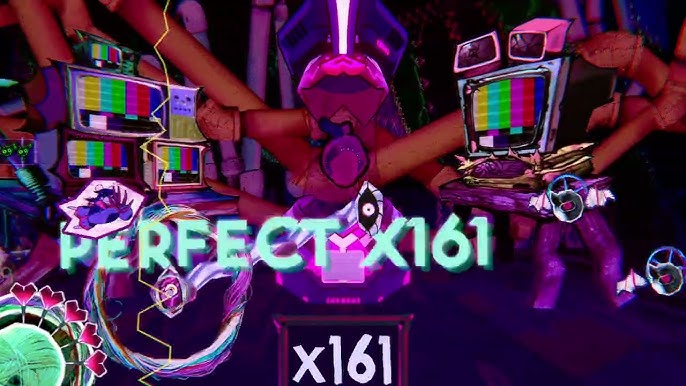
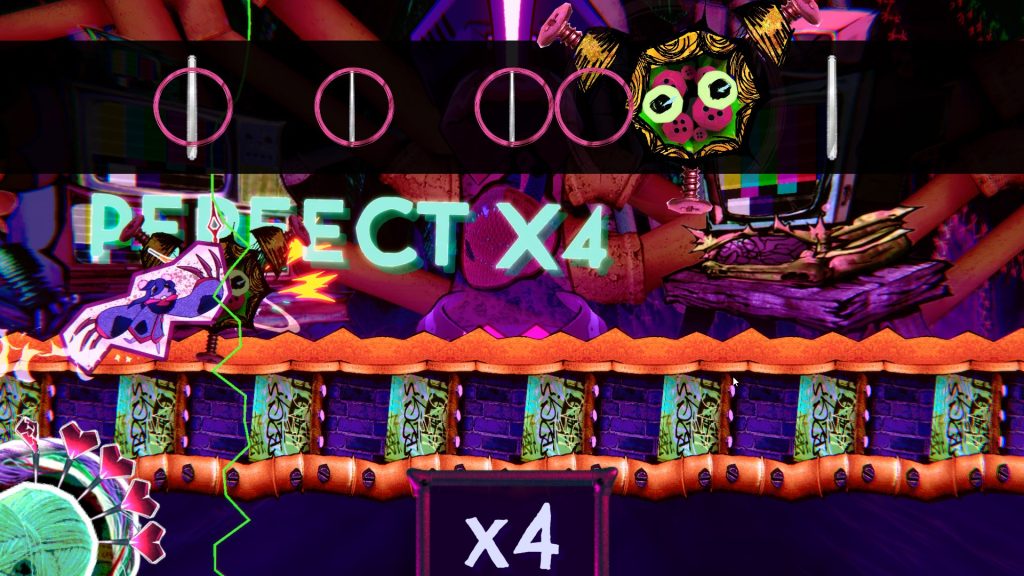
    Ever wondered what goes into making a rhythm game that breaks the mold? We sat down with the developer of Beat Heart Beat, the upcoming absurd rhythm-platformer that challenges you to slash your way towards your withered Heart. This game immediately stands out with its bold, collage-like visuals and a distinct alt-rock soundtrack, steering clear of the genre’s usual electronic dominance. In this interview, the developer dives into the surprising inspirations behind the game—from the frenetic action of Katana Zero and the flow of Rayman Legends to the unique aesthetics of shows like Madoka Magica —and reveals how they tackled the challenges of merging rhythm with physics-based action. They also share the development journey, the crucial impact of playtesting, and the exciting roadmap leading up to the Early Access release in early 2026.


    Describe Beat Heart Beat in one sentence for someone who’s never heard of it.

    Beat, Heart, Beat is an absurd rhythm-platformer about tearing a path towards your withered Heart.

    One of the first things I noticed about Beat Heart Beat is its striking visuals—the mix of 3D and 2D elements, the expressive character designs, and the collage-like aesthetics are all incredibly bold. It vaguely reminds me of the work of Yugo Limbo. What were some of your inspirations for the art direction?

    I’m incredibly humbled by the Yugo Limbo comparison; I’m certain they’ve subconsciously affected my direction—especially their character design! I’ve always been drawn to mixed media for its capability to highlight uncanniness and dissonance as something beautiful and appealing in its own right. The work of Sodikken, Joel Guerra, and Felix Colgrave comes to mind as the biggest inspirations, as well as Madoka Magica‘s witch scenes, Coraline, and the HBO show Crashbox.

    On a related note, what does the workflow or production pipeline look like for art creation in Beat Heart Beat?

    As for the pipeline, I’ll be fully transparent and say that I am NOT an artist in any formal capacity, so production usually consists of a cycle of concept, iterate, rough asset, iterate, until we have something that we all like. My art direction could be described as “vibes-based,” or in other words, “a disaster”, so I’m very thankful my artists Benji, Annalivia, Annie, and both Andrew(s) can transform the junk in my brain into what you see on the screen.


    Musical Inspirations & Production

    Another standout element of Beat Heart Beat is its soundtrack. The rhythm game genre is often dominated by electronic music, but The Wacy took a distinct alt-rock approach. What inspired this musical direction? And building on that, how is the music in Beat Heart Beat produced? Is it commissioned, licensed, or created in-house?

    It’s a little embarrassing but fun background, but during quarantine and being pretty miserable for several reasons, I found myself listening to a lot of super sappy alt-rock, grunge, and Midwest emo. Those genres continued to stick with me long after, and arguably led to the creation of Beat, Heart, Beat. In general, I also felt as though there were so many underrepresented genres in rhythm games, and I wanted to showcase something new. As for references, Glass Beach, Bedroom, Surf Curse, and Car Seat Headrest come to mind.

    As far as sound production, our lead composer Sophie quite literally does it all—SFX, in-house composition, and pulling from her own personal albums. A lot of our guest artists were gracious enough to permit us to use their tracks, and a few friends have composed specifically for us.

    Haha, that’s awesome! I am a huge Surf Curse fan, saw them in Reno a few years back, was a great concert! I got to say, I’m really looking forward to the soundtrack. When I first heard the main trailer, I was immediately hooked, and the song in it, “Did it Hurt When You Fell From Heaven?” was in my playlist for a while after!

    When settling on the game’s visual and audio aesthetic, were there any alternate styles or directions you experimented with but ultimately moved away from?

    Finding a balance between a maximalist, multimedia visual style and a legible gameplay scene is very tough and has required lots of iteration. We’ve leaned very hard into collage at times, and very hard into line art in earlier drafts. You could even say we’re still trying to strike a balance! Luckily, the style and tone of BHB were nailed down quite early, so it was less about what it would look like and more about how far we could push each aesthetic.

    As I mentioned before, the audio aesthetic predates the game itself in many ways, so the direction was pretty clear to us from the start. I’d say the biggest change is actually that, over time, I opened myself up to other genres being in the game. I originally wanted an entirely grunge soundtrack, but we have some bonus tracks like Sivee’s “Loser Girl” and Allen Cai’s “See the Sun” that explore different genres like electronic and pop!


    Core Mechanics & Design

    The demo lets players chain attacks together, soaring through enemies and building momentum to the beat. How did you land on that as the game’s core mechanic?

    It’s actually a pretty wild story. The first doc written for BHB dates back to February 2021, two years before it actually began development! At the time, the game was a pure platformer where, every beat of the song, a Heart would drop obstacles onto you, and you’d try to chase it. I shelved the idea as I finished up college, but I distinctly remember flying home for the holidays one time, listening to a pre-downloaded Spotify playlist, and reimagining a little guy platforming through a level and just slashing through enemies with crazy air combos to the music. I could see it vividly enough to the point where I wrote a preliminary doc on my notes app that I would then propose to my co-lead after graduation. The mechanics themselves were deeply inspired by Rayman Legends’ music levels, the combat of Muse Dash and UNBEATABLE, and the call-and-response mechanics in Rhythm Heaven.

    I noticed that Rayman Legends’ influence when I played the demo. There is a sense of speed, responsiveness, and enemy placements that’s very reminiscent of it. How do you design enemy encounters, level layouts, and movement systems to keep that sense of rhythm and flow alive rather than breaking it?

    Through blood, sweat, and playtesting. I mean, in all honesty, it’s largely thanks to my co-lead, Andrew, for developing a preliminary version of the in-game level editor within the first month of development. Which is nuts to do, by the way. Most of my ideas wouldn’t have come to life without his help, so I’m especially lucky for his contributions.

    After that, I remember taking whatever songs I was listening to at the time, dropping them into the game, and charting tons of “fan levels,” I guess you could call them. I was a bit indulgent in how many I made, but it let me test the high-end potential of difficulty, discover my own charting principles, and let me tweak a lot of physics values to make it feel right. For charting specifically, I’ve found that pattern repetition and variations are your best friend, and a lot of the time it’s more important to find the “feeling” of the chart than making it as objectively accurate as possible. I will also note: a lot of my early charts were HOT garbage. I don’t have a charting background, so most of it was lots of practice and playtesting from family members and friends of different skill levels. Thanks, Mom!

    Were there any surprising influences—musical, cinematic, or mechanical—that shaped how you approached those systems?

    I think the most surprising influence that comes to mind is probably Katana Zero. I really wanted to capture that visceral feeling of seeing a group of enemies, forming a plan, and just executing something crazy. My favorite rhythm games are ones that incorporate context and character into their mechanics, where it feels like you’re actually interacting with the game world and not just clearing notes on the screen, like in Hi-Fi Rush or Patapon. While those games hybridize 3D action-platformers and RTS, respectively, I suppose the subconscious pitch of BHB was a personal take on seamlessly combining Devolver Digital-style action with rhythm.

    When developing the rhythm-combat mechanics, were there any prototypes or ideas you loved conceptually but found just didn’t work in practice?

    I originally really wanted the up and down slashes to be momentum-based, where instead of traveling to the note, you follow through it. This would’ve added more interesting physics gameplay, but it was unbelievably annoying for sightreading since there was so much variation in where Peccori would travel when slashing. While it wasn’t the right fit, the pogo and launcher enemies are a few spiritual successors to the idea that try to add a bit of physics-based movement. Oh, there’s also the Dasher enemy. We recently showcased the Tinktonk enemy, which is an improvement on the idea, but there is an evil, unused enemy lurking in our project files. Maybe one day I’ll throw a rogue one into a chart, who’s going to stop me?


    Development, Tech, and Roadmap

    For players looking ahead to the full release, what new mechanics, boss fights, or musical moments are you most excited for them to experience?

    I’m very, very excited to see people react to the Story Mode. We’re planning on introducing new mechanics, enemies, characters, and a ton of weird nonsense that we think players will love. I think I’m most excited to see how people react to the party members that help Peccori along the way and how they might affect gameplay. Perhaps you’ll be able to meet them pretty soon!

    How long has Beat Heart Beat been in development, and how has your vision evolved from the early prototypes to what players see today?

    We started development in late 2023 and just released our second demo as of September 2025! I think the biggest change between the early game and now is the physics. Peccori used to have this REALLY awkward jump that stalled it in the air by default at a fixed height, and it wasn’t doing the platforming part of our rhythm-platformer any favors. Another major addition is slopes, where our levels used to be tile-based and completely flat. We really want to obfuscate that what you’re playing through is a “chart” and add more natural height and movement, and we have plans to push that even further in the future.

    Has player feedback from demos or playtests led to any major design changes or surprising insights?

    Yes! Player feedback is just about the most helpful thing out there. I think one underlooked thing that meant a lot was hearing about ways we could improve accessibility, especially since our game is visually, sonically, and technically pretty intensive at times. We just did a massive bugfix patch using the Discord bugs list as a basis, too—if you voluntarily report bugs as a player, you are my hero.

    Some of my favorite player insights come from in-person tests, too. It always feels oddly affirming when people really clock my inspirations, like the Heart and Peccori’s rapport resembling the King of All Cosmos and The Prince from Katamari Damacy, or asking us if we’ve heard Glass Beach or seen Madoka Magica or something. When someone compares your work to something that you, as a creator, deeply respect, it feels especially rewarding.

    From a technical standpoint, what does your development pipeline look like? What tools, engines, or plugins do you rely on most to bring your ideas to life?

    We develop in Unity with GitHub for source control and FMOD, an audio middleware that allows us to sync music and do some fun dynamic music/SFX stuff. Andrew works on the backend, like the level editor, cutscene system, etc., and I do technical frontend design, like enemy implementation, creating environments and levels, and other random bits of scripting. I am the de facto producer on this project (and de facto many other things), which has been a great learning experience, but our pipeline is pretty informal and changes based on our needs for an upcoming milestone. I use Figjam, Evernote, and Milanote for my documentation and production, which I really enjoy, but I think my teammates are going to kill me if they have to create another account.

    What’s the roadmap moving forward—upcoming features, release goals, or new levels and tracks you’re excited about?

    I am super excited to announce that Beat, Heart, Beat will be entering Early Access in early 2026, featuring a user-level editor and the next chapter of the Story Mode. Expect new songs, backgrounds, enemies, characters, and more!!

    Our penultimate question comes from the Born in Reverie developer, Axial Escape. They asked: What is your favorite part of developing your project, and what aspect do you most dread having to work on?

    I think I’ll start with what I dread to not end on a bummer. I think marketing and project management can be really stressful at times, and it’s one of those things you don’t really even think about when you’re going into indie development. If I had to pick something from specifically the development process, I think I personally struggle knowing when to refactor old code or redo a level environment or something—basically anything that pokes at my perfectionism and OCD.

    My favorite part of development has to be the process of crafting mechanics that recontextualize gameplay, like new enemy types or hazards. I think that’s my favorite part of design in general: once the framework is there, you can twist and push different parts of the design in ways you hadn’t originally anticipated. Outside of design, I’ve had a surprising amount of fun with creative writing for the Story Mode and designing modular systems on the programming end. There’s something satisfying about finally seeing the moving parts of a script click nicely, which is something that I could attribute to writing or programming!

    What would you like to ask the next SDC Game Spotlight recipient?

    Has a real-life experience or piece of non-game media influenced or inspired your work in some significant way? If so, how do you think your design philosophy, aesthetics, etc., have changed as a result?

    Finally, how can players follow your progress, support the game, or get involved in the Beat Heart Beat community?

    Beat, Heart, Beat has a demo on Steam that you can play and wishlist RIGHT NOW!! Sharing the game in general is so, so helpful and very much appreciated. If you want to chat about the game or give feedback, you can check out our Discord as well!

    Here’s all of our links: https://linktr.ee/beatheartbeatgame

    Thanks so much! Nik


    From physics tweaks to story design, this conversation provided a fantastic look at the passion and iteration driving Beat Heart Beat‘s development. We learned about the happy accident that led to its core air-combo mechanic, the importance of finding the “feeling” over objective accuracy when charting levels, and the ongoing evolution of the game’s visuals. As the team finalizes the Story Mode and prepares to launch into Early Access in early 2026, players can look forward to new content, party members, and a user-level editor. If you’re excited to see this unique blend of action and rhythm come to life, be sure to check out the demo on Steam and connect with the community via their Discord to share your feedback.

    Top 5 Cozy Games To Play On Thanksgiving Weekend

    Thanksgiving is the perfect excuse to slow down, grab a blanket, and play something low-stress while the leftovers cool. Cozy games are ideal here. They are gentle, colorful, and built around simple goals like tending crops, decorating a home, or caring for characters instead of chasing high scores or sweating through ranked matches.

    The best cozy games for Thanksgiving work in short bursts between family moments, but can also quietly turn into “whoops, we just played for three hours.” They are also easy to share, whether that means couch co op, passing the controller, or just watching someone else build the cutest farm on the planet.

    Here are five cozy games that fit the Thanksgiving mood and are great picks for Nintendo Switch, PC, PlayStation, and Xbox.


    1. Stardew Valley

    If you only pick one cozy game for Thanksgiving, it should probably be Stardew Valley. You inherit a rundown farm in a small town and rebuild it at your own pace. You plant crops, raise animals, go fishing, mine in the nearby caves, and slowly get to know the villagers.

    The magic of Stardew Valley is how flexible it feels. Want to zone out on the couch after dinner while you water crops and pet chickens? It works. Want everyone to play together? Local co op and split screen let multiple players share the same farm and divide chores, which is perfect for siblings, partners, or cousins who all want in.

    It also hits that Thanksgiving vibe in a subtle way. You cook with ingredients you grow, share gifts with your neighbors, and watch the town change with the seasons. It feels like spending time in a tiny holiday town where nothing too bad ever happens and everyone remembers your birthday.

    Best for: Families or friend groups who want a low pressure co op game that can fill the whole weekend.


    2. Animal Crossing: New Horizons

    Animal Crossing: New Horizons is comfort food in game form. You move to a quiet island, set up a tent, and slowly turn that island into a small, personalized paradise. There is no real “win” state. You decorate, collect furniture, catch bugs and fish, and chat with your animal neighbors.

    New Horizons is especially cozy on Thanksgiving because of how gently it moves. The game runs in real time, so your island has its own soft little version of autumn. It is easy to hand the controller to someone who does not play games much and let them pick fruit, talk to villagers, or rearrange furniture.

    If you have multiple people with their own islands, visiting each other is a great couch activity. One person plays, everyone else shouts opinions on where to put the next pumpkin patch. It is a chill way to hang out when everyone is full and half asleep.

    Best for: Mixed age groups and anyone who wants something gentle and zero stress.


    3. Disney Dreamlight Valley

    If your household includes Disney fans, Disney Dreamlight Valley is a very easy win. It is a life sim and adventure game where you live in a shared valley with classic Disney and Pixar characters. You cook with Remy, fish with Goofy, go on quests with Moana, decorate your house, and help restore the valley after a mysterious event called the Forgetting.

    Compared to Animal Crossing, Dreamlight Valley puts more emphasis on character quests and storylines. There is always another mission to help a familiar character, another area to unlock, or a new seasonal event to check out. That makes it a nice “let’s keep this running in the background all weekend” type of game, because you can always hop in for one more quest before dessert.

    It is also very watchable. Younger kids can run around and talk to favorite characters while adults help with tougher tasks or steer the story. The result feels like an interactive Disney special running quietly in your living room.

    Best for: Disney and Pixar families who want cozy vibes plus story and familiar faces.


    4. Fae Farm

    Fae Farm is what you get if you blend cozy farming with fairy tale fantasy. You move to the enchanted island of Azoria and build up a homestead, but you also use magic, craft potions, and explore dungeons filled with whimsical creatures. The game is built as a farm sim RPG for one to four players, which means co op is a core feature rather than a tacked on extra.

    This is a great Thanksgiving choice if you like the idea of Stardew Valley but want more spells and exploration. Everyone can take a role. One person farms and decorates, another dives into dungeons, another focuses on crafting, and so on. It feels like running a magical little commune together.

    It also looks exactly like a cozy game should look. Soft colors, friendly characters, and lots of customizations for outfits and home design make it easy to get attached to your world.

    Best for: Groups who want that farm sim feeling with a little more magic and exploration.


    5. Spiritfarer: Farewell Edition

    Spiritfarer is the most emotional game on this list, but it is also one of the coziest. You play Stella, a ferrymaster to the deceased, sailing a hand-drawn boat across peaceful seas. You build cabins, cook meals, garden, and craft while you care for spirit passengers and help them come to terms with their lives before they pass on.

    On the surface, Spiritfarer is a management game about building and upgrading your boat. Underneath, it is a story about grief, memory, and the small acts of care we offer the people around us. It is surprisingly comforting, especially around a holiday that already revolves around food, stories, and family.

    Local co op lets a second player join as Daffodil the cat and help with chores. That makes it a nice choice for a quiet late night session when most of the house has gone to bed and you are down to just one or two people still awake.

    Best for: Solo players or pairs who want something cozy with a bit more emotional weight.


    Choosing The Right Cozy Game For Thanksgiving

    Each of these cozy games brings a slightly different flavor to the table, so it helps to match them to your group.

    • If you want one game to leave running all weekend, Stardew Valley or Fae Farm are both perfect long-haul options.
    • If you are playing with kids or non-gamers, Animal Crossing: New Horizons or Disney Dreamlight Valley are friendly and approachable.
    • If you are mostly playing solo and want a meaningful story, Spiritfarer: Farewell Edition delivers a cozy experience with real emotional depth.

    However you spend the weekend, cozy games are a great way to keep the room relaxed, connected, and just a little bit magical while everyone works through that second plate of leftovers.

    Bottom-Up Beatdown: Building A Monster Mash Brawler From The Ground Up

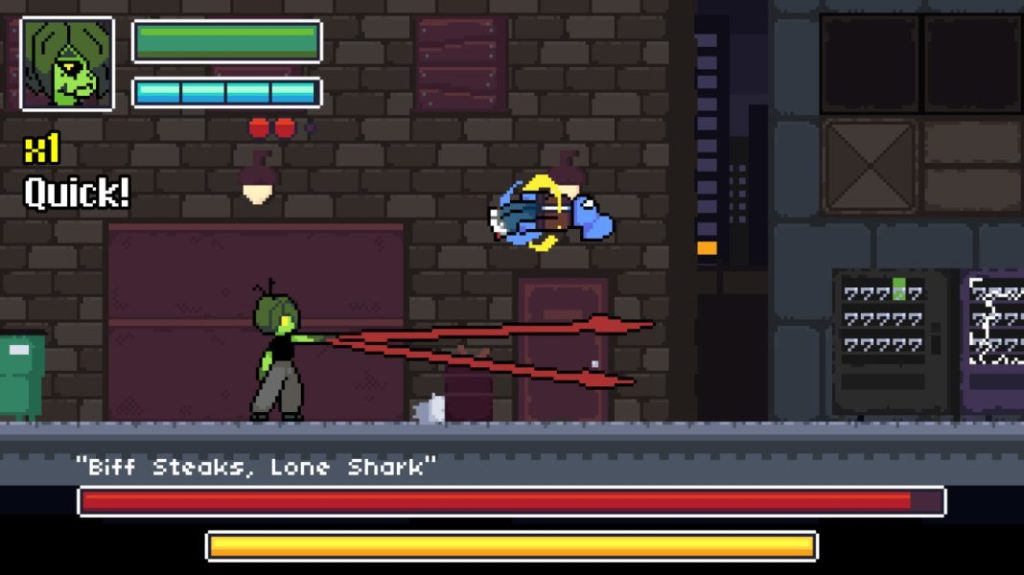
    Bottom-Up Beatdown: Hostile Takeover feels like it was ripped straight out of a hyperactive Saturday morning lineup and dropped into a modern character action game. It is a fast, combo-heavy beat ’em up set in a world overrun by monsters, built with the crunchy impact of arcade brawlers and the expressive flair of Nintendo DS era sprites. Behind it all is a solo developer who took post-college boredom, a love of No More Heroes and Castlevania, and a deep appreciation for tokusatsu weirdness and turned it into a full-on project.

    In this SDC Spotlight, we talk with the creator of Bottom-Up Beatdown about where the game came from, how classic fighting games and action titles shaped its combat, and why making bosses feel like anime rivals is just as important as making them challenging. We also touch on the realities of building a game mostly alone, what early playtesters are asking for, and how the dev is trying to balance personal artistic goals with making something people will actually want to buy.


    For readers who haven’t yet tried out the demo, how would you describe Bottom-Up Beatdown: Hostile Takeover in one sentence?

    Beat ’em up meets character action in a modern world filled with monsters!

    Where did the core inspiration for Hostile Takeover come from?

    To be honest, I was half a year out of college and I was extremely bored. I figured I was only getting older, so making a dream project before I found a full-time job or the world ended would be nice. After playing No More Heroes, the idea stirred in my head for a couple of years, so that’s probably where the core inspiration comes from.

    When I was playing the demo, I was reminded of early Nickelodeon shows and Game Boy Advance games from my youth. Were there particular games, comics, or films that influenced the tone, art style, or combat feel of this project?

    Actually, before I started on the game I got really into Castlevania, so there’s a lot of influence there. Specifically, after playing Portrait of Ruin and seeing how amazing that looked, I wanted to design the game as if I were creating it for the Nintendo DS.

    Art style and tone wise, the game is heavily inspired by Astro Fighter Sunred, a parody show about a washed-up sentai hero. That show was life-changing and really got me into traditional tokusatsu like Kamen Rider and the Godzilla series. While many of the monsters in the game are inspired by classic Hollywood movies, I wanted to take that and put a silly spin on it similar to what games like Darkstalkers did.

    Gameplay-wise, it’s really hard to pick just one influence, as I blended a lot of ideas from different games into this one. Devil May Cry and God Hand stand out as big influences, but mechanics like the juggling system are more Tekken or King of Fighters.

    How did you settle on that aesthetic, and were there any visual styles you experimented with but decided against?

    The DS aesthetic was the perfect resolution for the game I wanted to make, as it offered just enough sprite detail to make really expressive sprites, but not so much that I’d be spending a year animating one character. The original Bottom-Up Beatdown had a much higher resolution, and while I’m definitely proud of the work I did back then, I think the art quality was a little scuffed, and animating took way too long. Also, I would’ve loved to go 3D, but my protagonist, Biff, kinda looks funky in 3D. I’ll try again one day.

    How long has the game been in development, and how has your vision for it evolved?

    The game’s been in development for a little under a year now, but the original idea came to me years ago while I was still in school. I ended up making the very first Bottom-Up Beatdown three years ago, and that game was just a boss rush with more traditional beat ’em up elements. I found that the way I designed bosses for that game really didn’t need that third dimension, so I cut it out for this game.

    Is this a solo project or a small-team effort?

    Solo project, but I’ve had a ton of support from friends. I’ve also hired some composers for the music. Maybe in the future I’ll have a team of voice actors as well.

    What have been some of the biggest lessons you’ve learned during development?

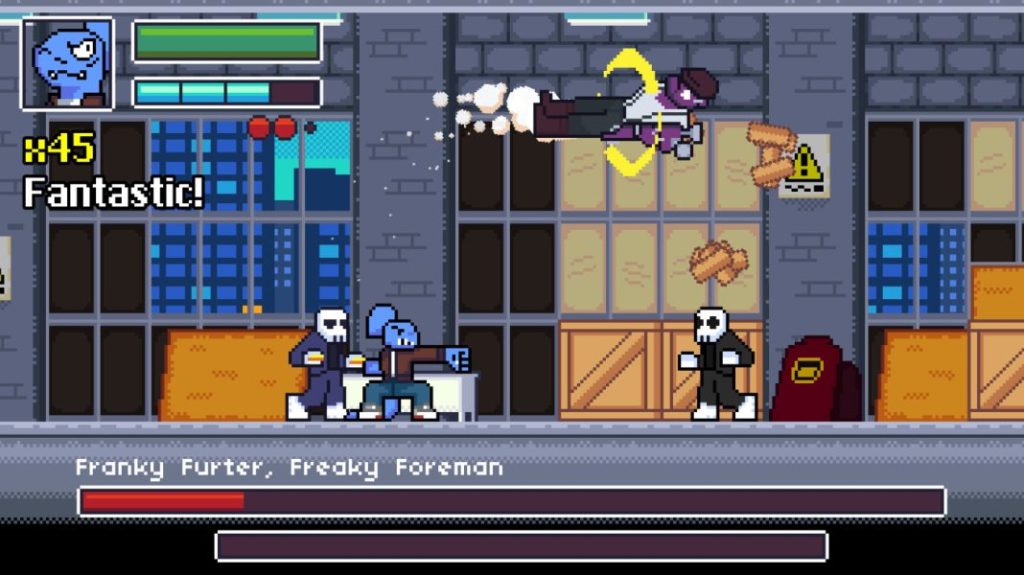
    The game is always twice as difficult as you think it is. I’m always playtesting bosses and I’m extremely familiar with their movesets (especially after animating all their moves), so it’s pretty easy for me to perfect bosses. Because of this, I’ll end up raising their health or increasing their speed, but then watch as players lose to Franky, or even just the bat goons, way too many times. Playtesting early and often is definitely the biggest lesson I’ve learned so far. Also, gamers will make it their mission to never read any tutorial prompts, even if you put pictures.

    Blending classic 2D beat ’em up style with “character action” mechanics like wall-bouncing and juggling sounds tricky. What was the biggest design challenge in making that work?

    I think the key to adding these character action mechanics in a beat ’em up is to put less focus on the combo game and more on what makes these options meaningful outside of combos. Abilities like wall bouncing reward players for cornering enemies with a longer stun, and juggling removes the potential for counterattack from enemies like the bat or sword goon. That way, while these features help with creating stylish combos, their purpose isn’t just combo filler but enemy management.

    Combo-heavy gameplay can be tough to balance. How did you fine-tune the difficulty so both casual players and score chasers could have fun?

    Doing sweet combos is nice, but I made sure that even button mashers have a lot of fun. The combo game is there for players who have mastered the system, but casual players can pull off moves like the reversal pretty easily. I’m hoping there’s a low barrier to entry and a high skill ceiling.

    For players looking forward to the full game, what are two or three mechanics you’re most excited for them to discover?

    Though it’s not in the demo yet, there’s going to be a sweet grappling system that’s an iconic part of any beat ’em up and will help with those crowds of enemies. Also, I hope players can enjoy the progression system, where you’ll be able to chill at your friend’s house between missions and train with Sue Flay to unlock new abilities.

    Bosses like Franky Furter are pretty memorable. How do you design boss fights that reflect personality and theme?

    I’ve played a lot of fighting games and watched a ton of anime, so making characters with strong personalities is really enjoyable for me. I like to think about their fighting style, special moves, and especially how they’d taunt you mid-battle. Mainly, I’m just thinking about how it would look if it was a shonen anime.

    For you personally, is there a particular level, mechanic, or moment from development that stands out as your favorite?

    I love the Sue Flay boss fight, because I love rival battles in action games with characters like Vergil or Henry Cooldown. Since it’s the first one, her moveset’s a little limited, but I can’t wait to work on her fights later in the game.

    What’s the most broken combo or bug you discovered during playtesting that secretly made you laugh before fixing it?

    If you press dash and jump on the same frame as Biff, you do a crazy fast super jump. It’s pretty fun, and to be honest, I haven’t even patched it out.

    What kind of early player feedback from the demo or playtests has surprised you the most?

    A lot of people have told me they want a versus mode, which isn’t that surprising, but the number of folks who have requested it was a lot higher than I anticipated. It’s on the way.

    Looking ahead, what does the roadmap for Bottom-Up Beatdown look like? Are you planning more levels, characters, or post-launch updates?

    The full game will have at least nine full levels, with bonus levels and co-op available for all of them. It will also include multiple game modes like Overtime Mode, Boss Rush, and Versus Mode. By the end, it would be great if all the bosses were playable in some form as well, even if with limited movesets. Finally, after launch I would love to continue working on the game, especially by adding a full campaign for Sue Flay in the future.

    If you could have any other video game character join as a guest fighter in Bottom-Up Beatdown, who would it be and why?

    I’ve thought about this a lot even before this interview because I love crossover characters in games. While I’d love to put one of my idols in like Travis Touchdown or Dante, I think they’d look a little out of place. If I had to seriously choose just one, I’d put in Nemesis from Resident Evil 3, because I love playing him in Ultimate Marvel vs. Capcom 3 and he’s just such a cool monster.

    We’ve got one more question for you, coming from the devs of our previous SDC Spotlight, A La Card: How do you balance the art you want to make with the product you want to sell? And finally, what question would you like to ask the next SDC Highlight developer?

    This question is tough because this is the first game I’m planning on selling for real money. I definitely have had to sacrifice some ideas in order to make completing this game viable, but I’m honestly just happy to finally put these thoughts in my head out in the open as something legible. However, I absolutely want to make the game a lot more difficult, so balancing that with being an accessible game for all ages is extremely tough.

    For the next developer, I’d like to ask how their level design process goes.


    As Bottom-Up Beatdown: Hostile Takeover heads toward a full release, it already feels like the kind of passion project that could turn into a cult favorite. There is a clear love for fighting games, anime rivals, and old handhelds baked into every choice, from the DS-style sprites to the “broken but fun” tech the dev secretly hopes players will find.

    If you want to keep up with development, share feedback, or eventually lab your own wild combo routes, you can follow along on X, hop into the Discord, and watch for future devlogs. And in true SDC Spotlight fashion, we will pass the torch with the dev’s question for the next highlighted creator: how does their level design process work, and what does it reveal about the kind of game they want to make?