
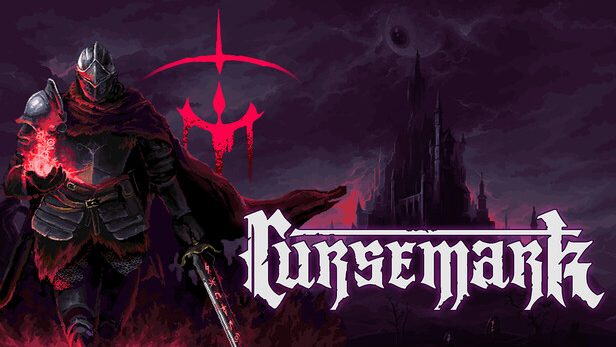
Cursemark is a roguelike ARPG set in a hand-crafted world, where every run has you forging unique spells and slowly uncovering the layers of history buried in its landscapes. Built at Clyde Games and freshly signed with publisher Mad Mushroom, the project carries forward hard-won lessons from the studio’s previous title, Into the Necrovale. We talked about combat design, run variety, the rune-based melding system, and the National Parks road trip that shaped the game’s world for the latest entry in our SDC Spotlight series.
How would you describe Cursemark to new players discovering it for the first time?
It’s a strange brew. A roguelike in a hand-crafted world. In the game, you’re crafting unique spells each run and slowly exploring this world.
Cursemark recently announced its partnership with Mad Mushroom. Congratulations! Securing a publisher is a huge milestone for any indie project. How did your collaboration with Mad Mushroom begin, and what made them the right fit for the game?
Thanks! I actually reached out to another dev (the one making To Kill a God) to see if they’d want to bundle, since our games have some overlap. Their publisher, Mad Mushroom, was interested in our game too, so we got to talking. They seemed to really get what we were making, and they have some serious firepower they can bring to promoting the game. So it was a good fit.
Your previous title, Into the Necrovale, shares some DNA with Cursemark, both top-down pixel-art roguelikes with a combat focus. In what ways did developing Necrovale shape or influence Cursemark?
My explicit goal is to stay within a genre, explore that space, and evolve my ability to make that sort of game, which is roguelike/ARPG hybrids. I learned a lot of lessons during Necrovale that are coming to bear here, since that game had some fundamental problems I couldn’t fix. I have a much better understanding of resource economies now, and how to allow “broken builds” without letting the game become “solved.”
Was there any specific community or player feedback from Necrovale that directly informed new mechanics or design decisions in Cursemark?
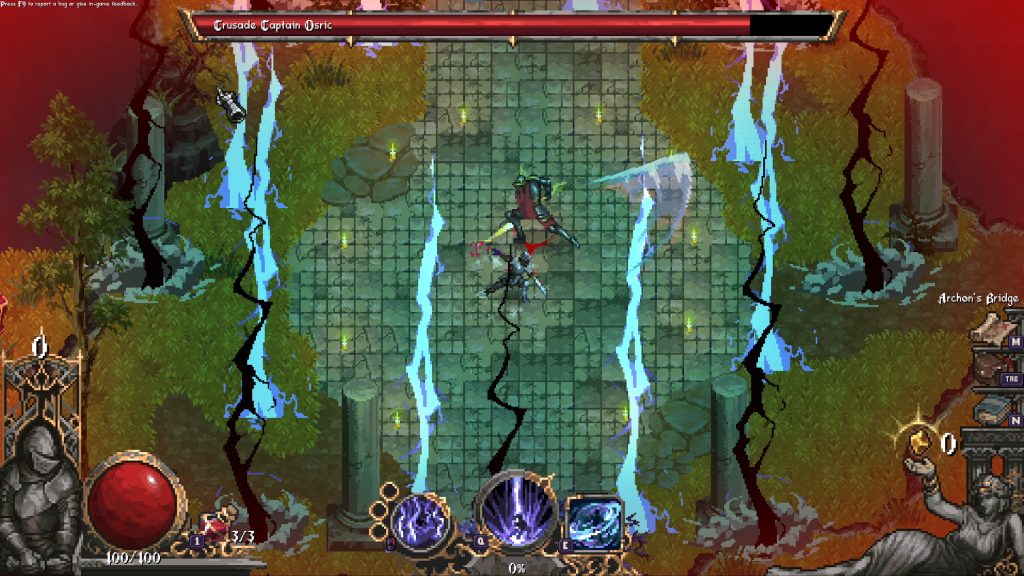
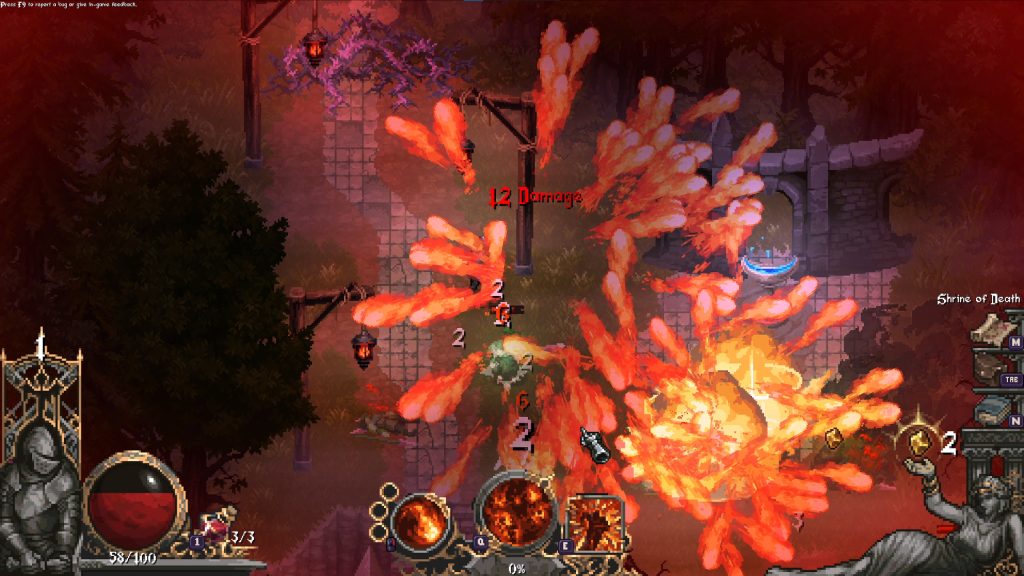
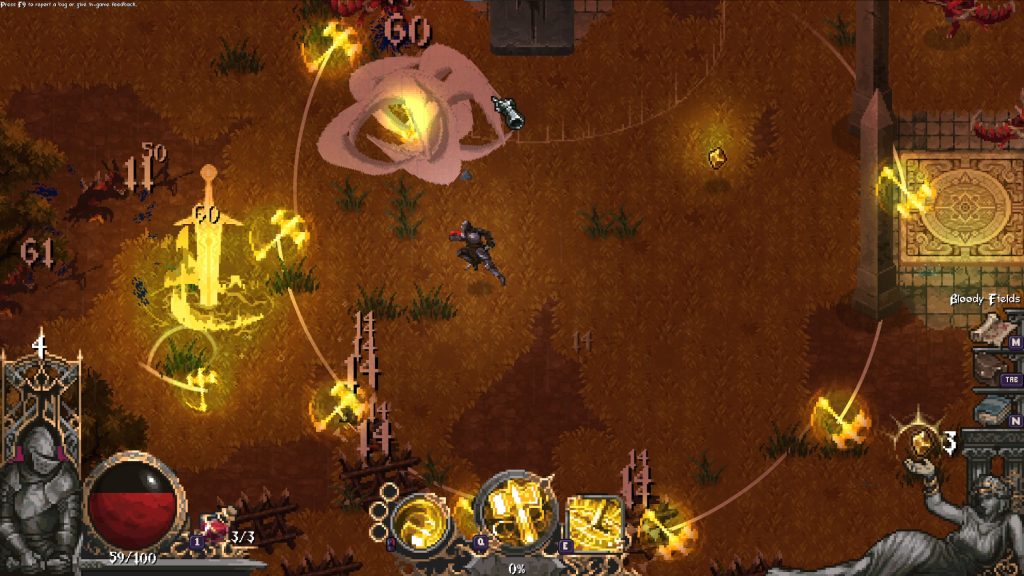
Yeah. The coolest mechanic in Necrovale was “melding,” where you could fuse two (and eventually three) items together to make wholly new ones with properties from both. I took that concept even further here with the rune system. Now, on top of your base spells, you can socket in runes that confer new properties, so you’re essentially building new spells each run. It’s a cracked-out melding system.
The fantasy-meets-heavy-metal pixel art direction is very striking. What is your art workflow like at Clyde Games?
Honestly, I’m not a great artist. I think I have a good eye for creating atmosphere, but it’s my artists who are actually making something that looks amazing. I was quite lucky to team up with a couple of heavy hitters for Cursemark: Adam Ferguson and David Stuart.
What were some of the inspirations behind the enemies, weapons, and the protagonist’s look?
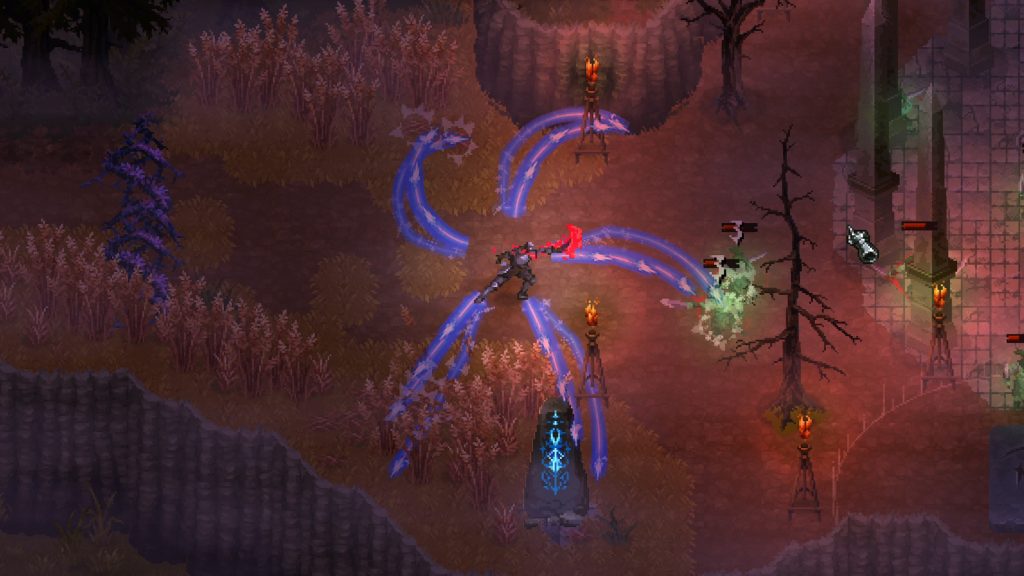
We started by discussing the lore and themes of the world, and tried to grow the types of magic, the protagonist’s look, and the enemies out of that. But we treat most lore as invisible, and try to let it manifest in second- and third-order ways instead of lore-dumping on the player. The goal is to make a world that feels very lived in, with layers and layers of history.
What were the core pillars you established early on for the combat system?
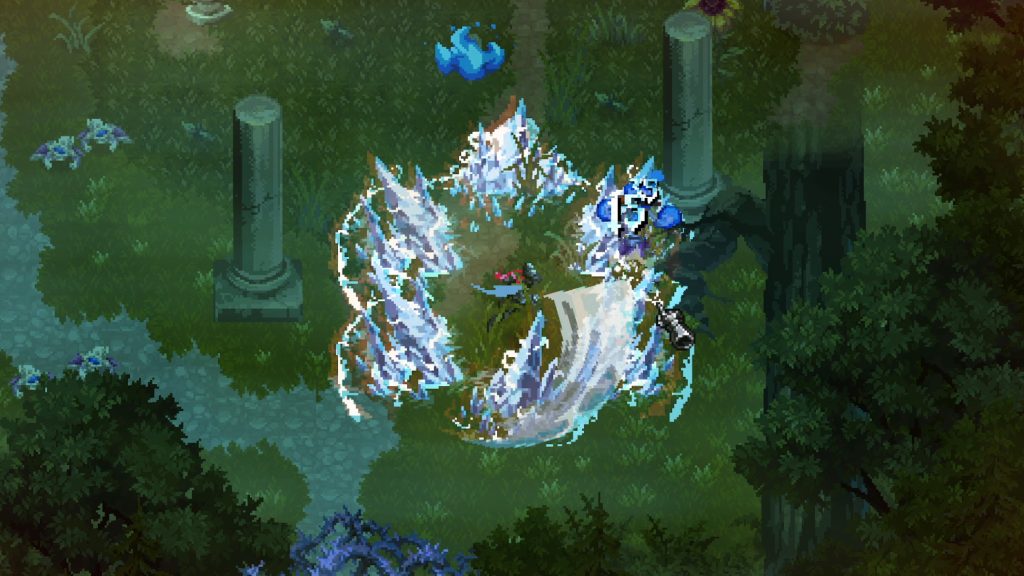
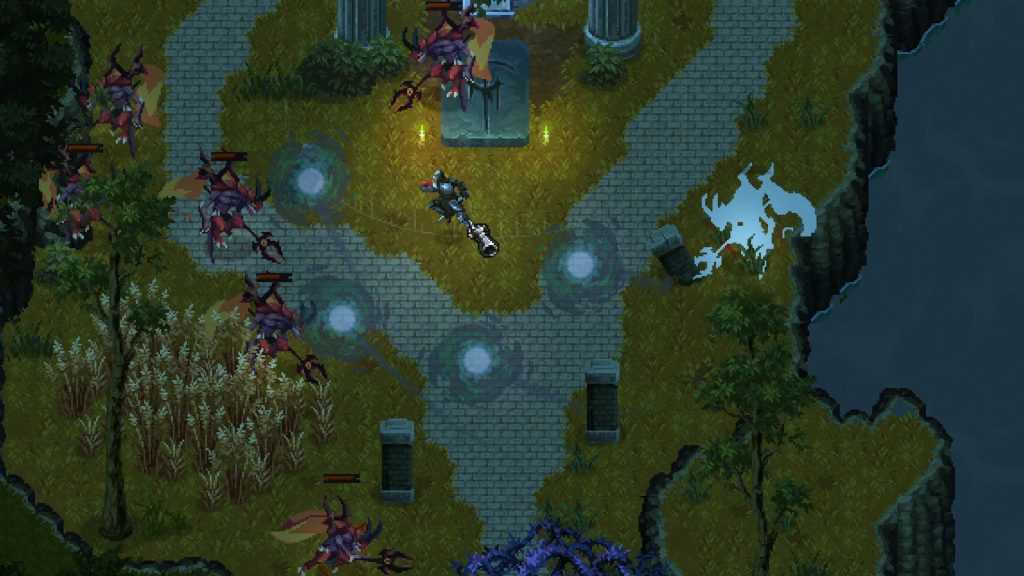
The core system I devised goes back to a problem I had in Necrovale, which is that projectile-spam builds nearly always dominated. All roads led to projectile spam. I realized that was because creating projectiles was free and easy, with no cost to it, while there’s a huge cost to melee because you’re risking your hide. So I made a system where you generate energy with melee attacks and then spend that energy on spells (usually ranged). That means you have to get into the thick of combat to charge your spells up.
Roguelikes can be difficult to balance, especially when combining randomness, progression, and player mastery. How do you approach difficulty tuning and run variety in Cursemark?
The core solution is in the design of the game itself. Anything that empowers you is a transient resource; you lose it when you die. The goal is for the player to have a transformational experience each run. They start out evenly matched with the enemies, and then begin an arms race with them. So when things go well, you can absolutely trash the enemies. My second method for balancing is fairly detailed gameplay analytics. That helps me find power outliers (in both directions) and see the results of any changes I make in an objective way.
Are there any new mechanics or systems in Cursemark that weren’t possible during Necrovale’s development due to time, tech, or experience?
On the theme of sticking with a genre and evolving my abilities, I was able to spend a lot of time improving the visual element of the game. I got into shaders and started learning them so I could give the game a higher level of polish. I was also able to significantly build out my internal tooling, which I see like compound interest. The more I invest in that sort of thing, the more I get back over the long term.
The game places heavy emphasis on curses, relics, and upgrades. How do you make sure each run feels different while still keeping the experience fair and skill-based?
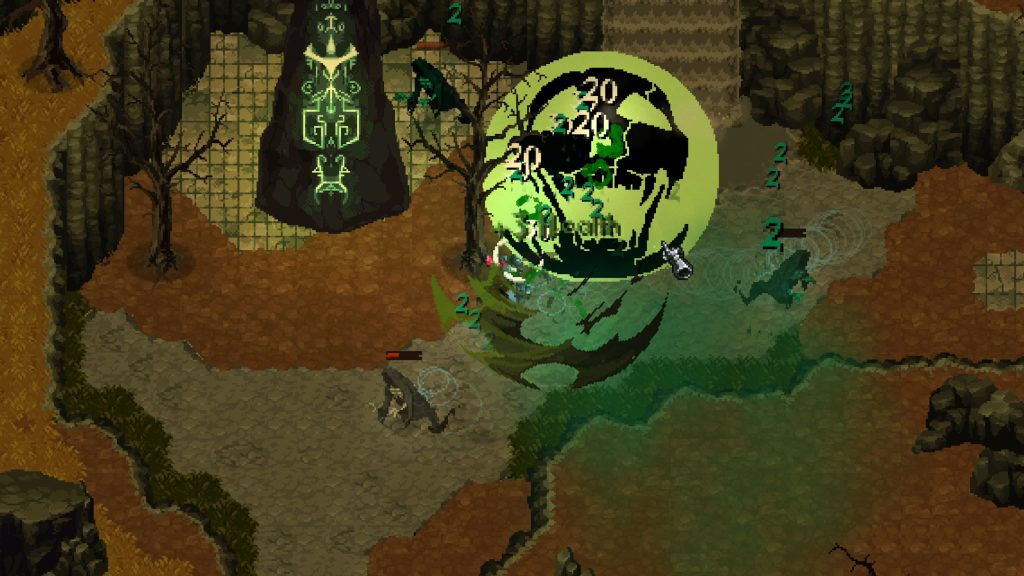
It’s tough, and honestly I don’t feel I’ve perfected this yet. But the goal is to have such an insanely deep pool of Runes and Talismans, all interacting in fascinating ways, that people can spend a lot of time discovering the nuances of the system and what’s possible within it. And going back to design accommodating balance, ideally the game doesn’t need to be perfectly balanced. Break the game! That’s sort of the goal. But the overall design has to accommodate that breaking without breaking itself.
What’s one mechanic or feature you’re especially excited for players to discover once they get deeper into the game?
In Necrovale, players took the systems I built way farther than I ever imagined. They were making builds that released swarms of hornets, turning themselves into a V2 rocket and shooting around, getting their DPS into the trillions. I want similar things here. I’m trying to create a play space that’s vastly larger than the design space.
Many roguelikes lean heavily on systems over story. How do you strike the balance between strong gameplay and a compelling world?
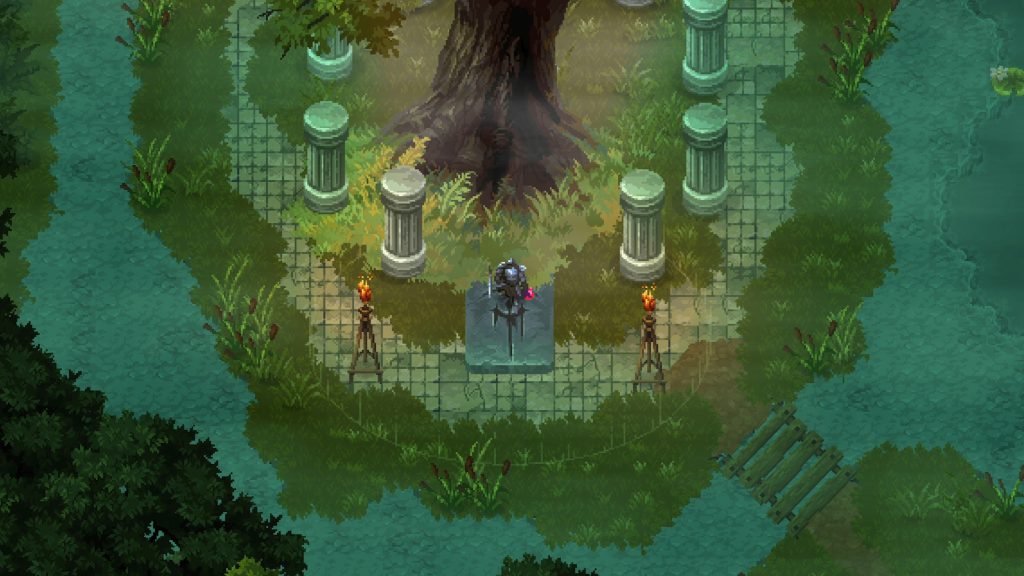
In my opinion, melding story and gameplay was figured out decades ago by Myst. The formula is that 95% of the story has already occurred. In playing, you’re seeing environmental clues to reconstruct and understand what has happened. Then, when your understanding comes together, you are the X factor in completing the last 5% of the story. Dark Souls took this formula and used it perfectly. I want to do similar things here. The act of playing and witnessing the world is to relive the story of the world.
How long has Cursemark been in development so far, and how has the project evolved compared to your early prototypes?
About a year and a couple of months, I think. It took about six months of tinkering to find the right formula; I tried a huge number of different ideas. At first the game was about alchemy, and discovering secret properties of objects by combining them. Then it was a game where there was just a big infinite plane that you explore. Eventually I started leaning more toward an exploration element, because my heart was really drawn in that direction. I started thinking about Zelda 1, and how it achieved a great sense of exploration without amazing vistas or anything, just a great sense of possibilities and good design.
As a team, how do you divide responsibilities at Clyde Games? Is Cursemark a solo-heavy project or more of a team collaboration?
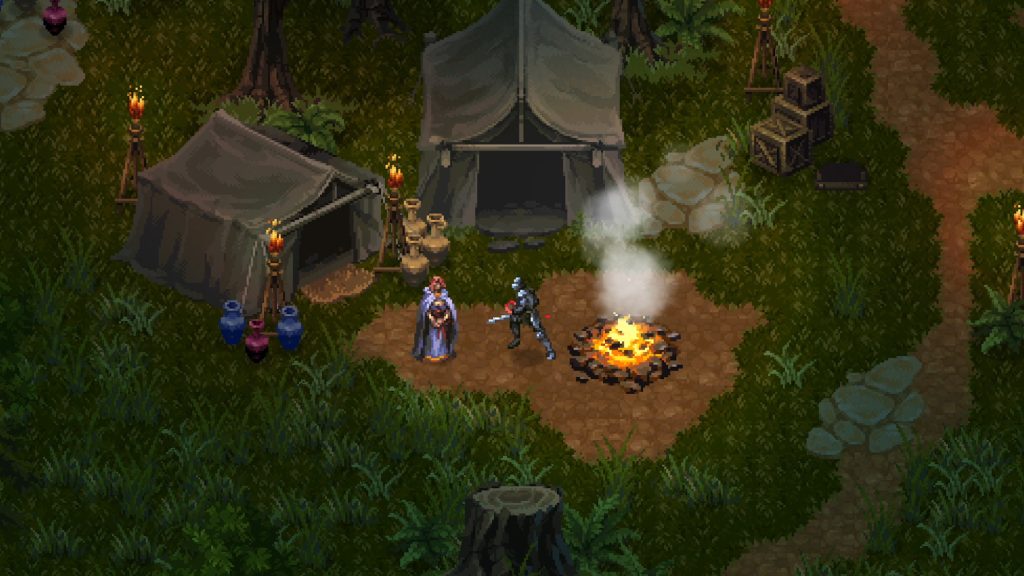
I do the core programming and design, and I kind of keep final say on things to try and keep everything coherent. But my artists really bring the visual direction, and a lot of great design ideas as well.
Now that you’re partnered with a publisher, how has it changed your day-to-day workflow or long-term planning?
It’s basically let me actually breathe and refocus on what I do. In making indie games, the “peripheral” tasks just keep building up more and more: marketing, communicating, organizing, and so on. With some funding and support, I can bring the actual design of the game back into focus. In the end, that’s the only thing that really matters: is the game fun or not.
Have you received any early feedback from playtests or closed demos? What surprised you the most about how players interacted with the game?
Yeah, I get tons of feedback. I built a feedback system into Necrovale that I use here as well. It’s a massive help for seeing what players are thinking and frustrated by. I’m always surprised by how in-depth players come to understand a game, and all the little quirks of its mechanics and world.
What does the current roadmap look like? Upcoming features, planned content, milestones, or things you’re especially excited to reveal later?
Now that I have the publisher deal, my current goal is to really get into the core combat experience and improve it. It’s not my strength (I like making crazy systems players can experiment with), so it deserves more time here. I’m pretty excited about that, though it’s not exactly very sexy.
What’s the best way for players to follow development, support the project, or get involved with Clyde Games’ community?
If it looks cool, wishlist it and follow it on Steam. I’ll keep everyone updated there. There’s a demo you can try now.
Before we wrap up, here’s the final question passed forward from the previous SDC Spotlight developer, The Wacy, developers of Beat, Heart, Beat: Has a real-life experience or piece of non-game media influenced or inspired your work in some significant way? If so, how do you think your design philosophy, aesthetics, etc. have changed as a result?
Awesome question. A few years ago I built out a camper van, and my wife and I traveled all across the US visiting the National Parks. The world design in Cursemark is very inspired by those beautiful places. For instance, the swamp is inspired by the Everglades. The Badlands are inspired by Death Valley (wait, why does the real place have a cooler name than my fantasy place?). The desert area is inspired by Zion National Park. An urge to share that sense of beauty with people in some form has really shaped this project.
Cursemark is on Steam now. You can play the demo, wishlist the game, and follow along for development updates straight from Clyde Games. Thanks to the team for taking the time to talk with us, and stay tuned for the next SDC Spotlight, where we’ll be passing this developer’s question forward to the next studio in the series.