Negative Time Sends You Backward When You Fail. Round Owl Explains Why.

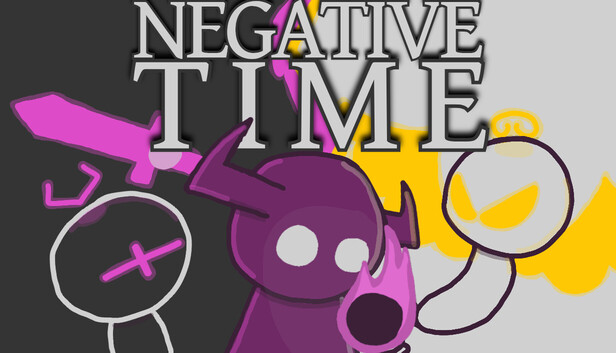
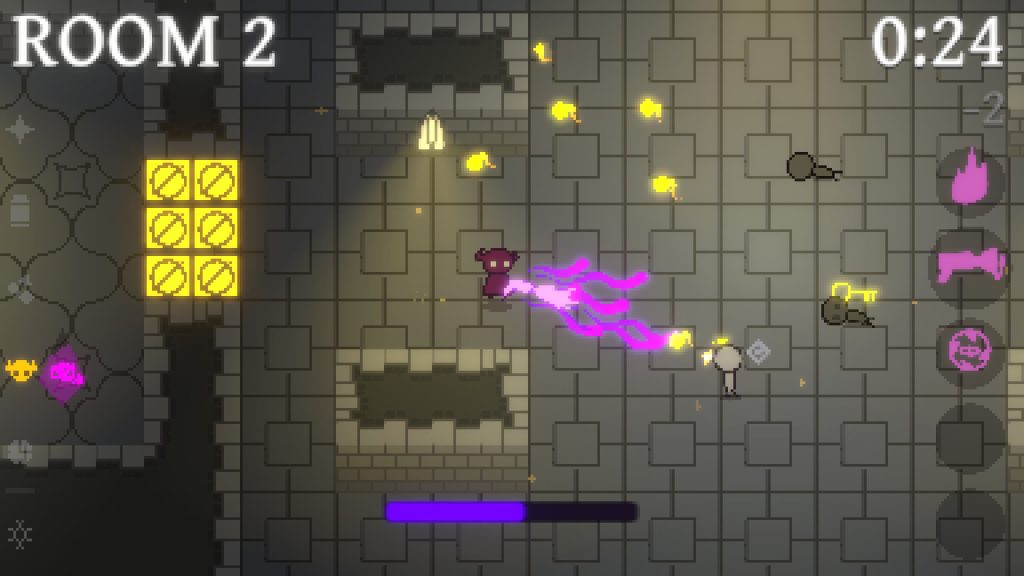
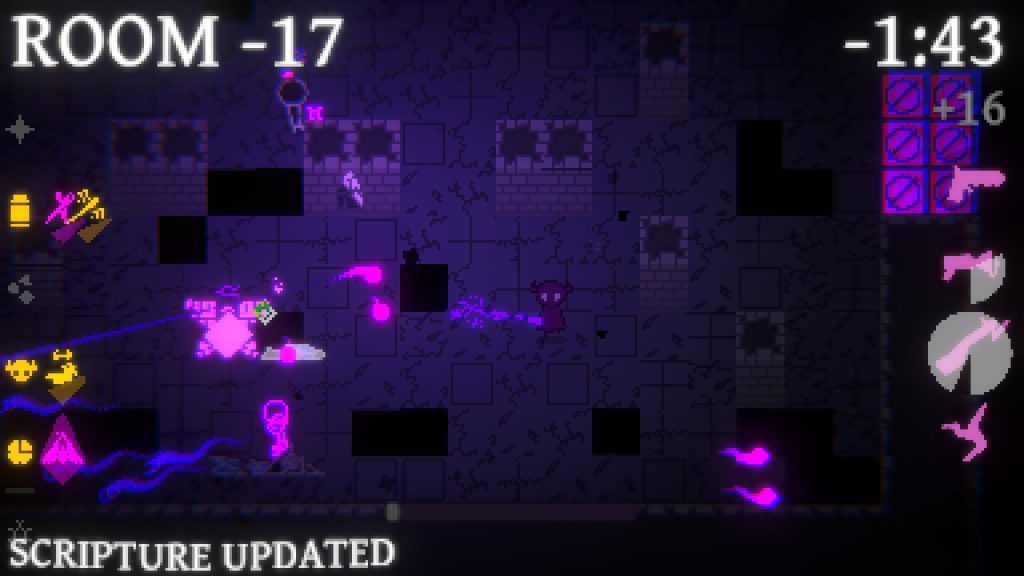
Most bullet hells punish a mistake by ending the run. Negative Time punishes it by dragging you backward. Get hit and the screen pixelates, the clock runs the wrong direction, and you find yourself in rooms numbered below zero, where the enemies are new, the weapons are new, and dying again is the only way back out.

That idea came out of the 2025 GMTK Game Jam, where the theme was Loop and CodeRed and Golden Disguise decided a straightforward time loop would be the most crowded lane in the jam. The two of them make up Round Owl: CodeRed handles the Unity project, Golden Disguise handles the art and, by CodeRed’s own accounting, about 90% of the ideas. What was supposed to be a slightly expanded jam build turned into just over a year of work, picking up a roguelike blessing system, minibosses, a lore archive, and a final cutscene along the way.

Negative Time hits Steam on August 21. For this SDC Highlight, we talked with Round Owl about scope creep, the rewind bug that softlocks the entire game, a balance problem named Wand, and the enduring importance of windows.


What was the original idea that eventually became Negative Time? Was the time-reversal mechanic there from the beginning, or did it emerge later in development?

CodeRed – The original idea for Negative Time came from the 2025 GMTK Game Jam, which is when my dev partner Golden Disguise and I first created the game. The theme that year was Loop, which immediately had us thinking about some kind of time loop situation. However, both of us like making unique interpretations of game jam themes, and having a basic time loop was definitely going to be everywhere in the game jam. We bounced around some other ideas, like a racing game where each time you loop around the track it changes, but eventually I came up with the idea of a bullet hell where each time you die you are sent further back in time, which we both decided to go forward with. So yes, the time-reversal mechanic was there from the beginning.
How long has Negative Time been in development, and how has the game changed during that time? Can you also tell us a bit about the makeup of Round Owl as well?

CodeRed – Negative Time has been in development for just over a year now! The game has grown a lot over the last year, mainly in scope, honestly, lol. Our original hope was to keep Negative Time small. We planned to add just a bit more content to the game jam version and release it around late 2025/early 2026. But instead, we ended up adding a roguelike random upgrade system called blessings, adding minibosses, lore, and more. I’m very happy with the final result, but yeah, scope creep did get the better of us.

And yeah, a bit about us: Round Owl is a partnership between myself (CodeRed, programmer) and Golden Disguise (animator). I’m the one who is in the trenches of the Unity project, while Golden Disguise is the one coming up with 90% of the ideas, while in call watching my shared screen.

What games or other media had the biggest influence on Negative Time? Were there any particular games you looked toward when developing its combat, roguelike structure, or time mechanics?

    Golden Disguise – For combat, I’m not going to act like it isn’t obvious: Enter the Gungeon is a huge inspiration for the moment-to-moment gameplay of Negative Time. In fact, I think I modeled the roll animation directly off of Enter the Gungeon’s.

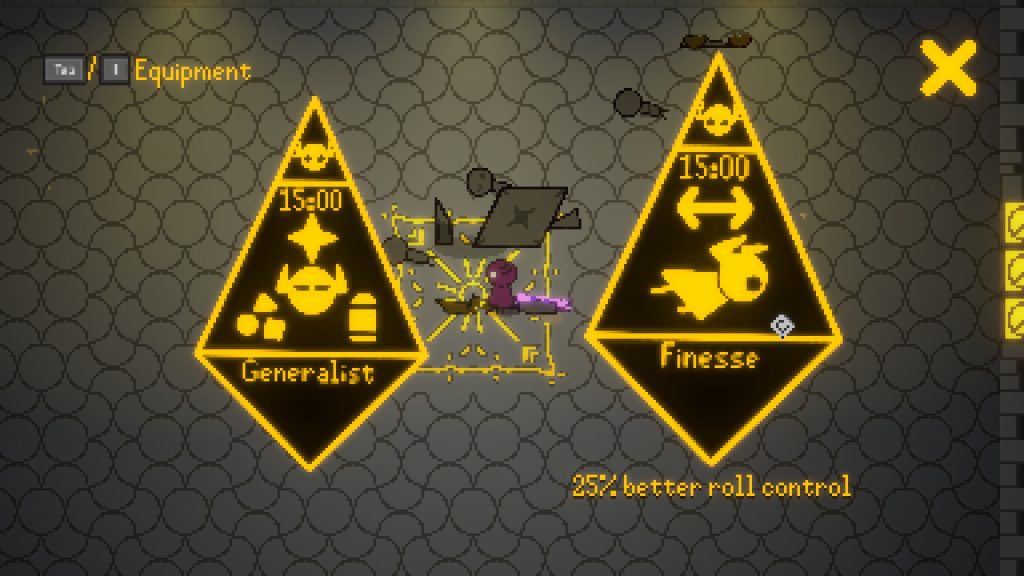
    CodeRed – For roguelike structure, I took inspiration from the way Hades does boons. The different categories of blessings are similar to the different gods who give you their boons, and originally blessing categories were also presented on the ground as items similar to the way boons appear in Hades.
    Playing Negative Time is somewhat reminiscent of classic Flash-era games, particularly its fast-paced top-down action and visual style. Was that era of games an influence at all? Are there any older web or Flash games that had an impact on the game or on you as developers?

    CodeRed – Interestingly, I think Negative Time is one of our games that takes direct inspiration from Flash games the least, at least in terms of visuals with the pixelated look. A lot of our other games, I’d say, look a lot more Flash-like, given Golden Disguise’s art style. However, that doesn’t mean Flash games haven’t affected the game at all. Flash games greatly affected me as a developer, given the fact that my first experience playing video games was through random Flash games. I can’t think of any that directly inspired things in Negative Time at the moment, but some notable Flash games I can think of that I really liked include Ninja Brawl, Lose the Heat, any racing games, and any games on the website Sploder (that’s where I first started making games!).

    The central idea of being sent further back in time every time you’re hit is really unusual. How did you arrive at that mechanic?

    CodeRed – Well, to expand on what I said before, we were originally thinking of doing a bullet hell game where you can save the game, and when you die, the game rewinds to your last save. The lose condition, then, would be effectively getting softlocked due to misplacing a save. I didn’t really like this idea, but I liked the concept of a rewinding bullet hell. I don’t really remember if the idea of going into “negative time” came first, or the idea of being sent further back in time every time you are hit. But either way, one idea naturally led to the other. I instantly loved the concept of a negative area of the game, and the rest is history.
    How difficult was the time-reversal mechanic to implement technically? What challenges came with having the game continually remember and reconstruct previous states?

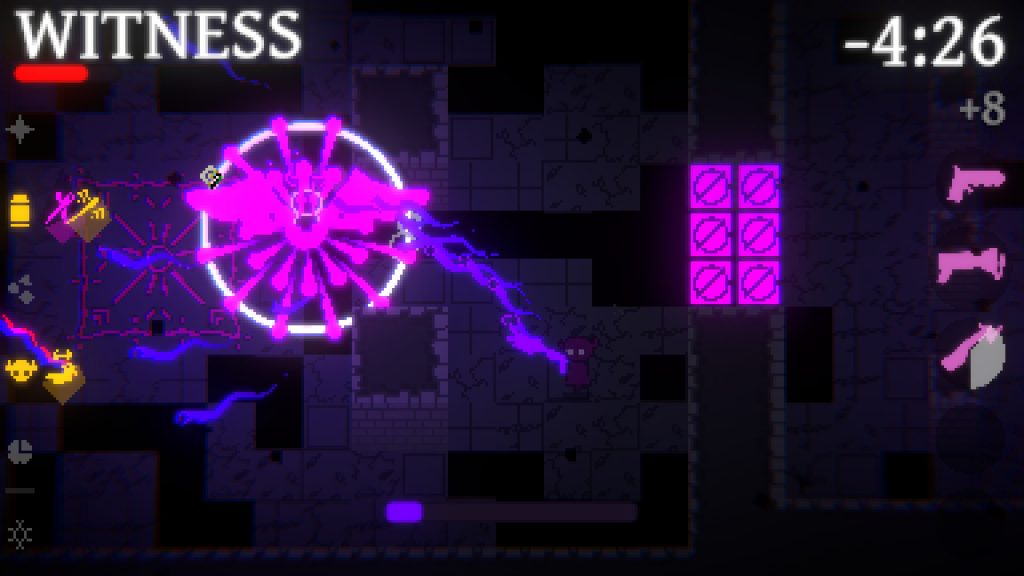
    CodeRed – It wasn’t too difficult to create an initial working version. The real problem came with expanding it without it becoming a mess (spoiler, it did become a mess). One bug that has plagued the game since its original game jam version involves any error occurring during the frame in which the game rewinds everything. The game goes through and calls functions on any objects with the rewinder component that existed at that time, giving it the state to rewind to. It also calls an OnRewind event. The problem is that if there is any error, like a null reference, in any of these functions, the rest of the rewind coroutine fails to run, resulting in a permanently pixelated screen, since the game has a cool effect where the screen pixelates as you rewind. Obviously, ideally you don’t have any errors to begin with, but it is just really unfortunate that an error that otherwise might not affect anything can cause a softlock because of the way rewinding is structured.

    Did the rewind mechanic create any unexpected strategies or player behaviors during playtesting?

    Golden Disguise – In the initial game jam version of the game, we hadn’t implemented any systems to stop or discourage you from AFKing, and in a game where time is effectively your health, the longer you sit still without risk, the more health you gain, so AFKing was an optimal strategy, which we did not like, because we were intending Negative Time to have a fast-paced escape feel to it.

    Negative Time turns failure into an opportunity to discover new enemies and weapons. How did you approach making failure itself part of the player’s progression?

    Golden Disguise – I wanted to utilize the negative and positive format so that the game never truly has a lose state. If you die in positive time, you go to negative time where you can make permanent progression, and if you die in negative time, you can go to positive time to get more blessings for temporary upgrades, so losing is always a smooth gateway to getting something good.
    Were there any weapon, blessing, or other combinations that completely broke the game during development? In a roguelike, how do you decide when an overpowered combination needs to be balanced versus when discovering something broken is simply part of the fun?

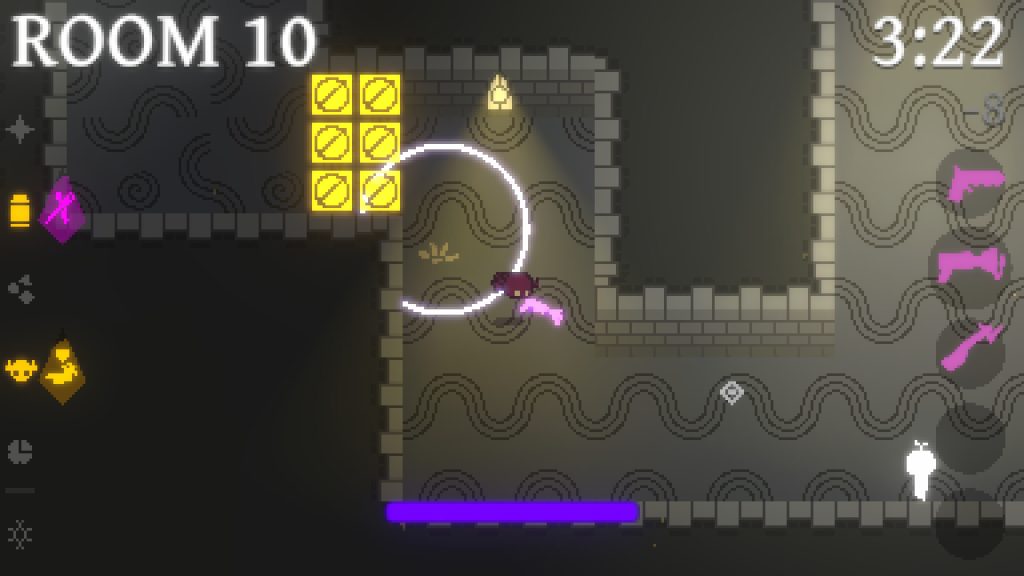
    Golden Disguise – Wand. Always wand. It’s one of our favorite weapons, but it has consistently been such a pain to balance. It’s just the way that it interacts so well with every blessing that we had to neuter its base stats just to make it scale worse. Nevertheless, it is still one of the best weapons in the game.

    What changed the most as a result of watching people play Negative Time? Were there any mechanics, encounters, or systems you substantially reworked because of player feedback?

    Golden Disguise – Maybe it’s just me not wanting to change our game based on what other people say. But we haven’t made many alterations due to player feedback. Probably the biggest change is how you used to not be able to roll through the Conductor’s lightning, which made the Conductor a lot harder in a way that I liked but also was poorly communicated and ultimately overly frustrating, so we changed it.

    Was there anything that started as a small experiment or seemingly minor idea that unexpectedly became a major part of the finished game?

    Golden Disguise – Bullet deletion in general. It was originally just something that we added to Big Block so that it could be a more effective defensive tool. But then we just kept adding it in places; eventually, bullet deletion fields became the signature ability of player blessings, and now certain enemies have them too, and suddenly it’s all over the place.

    What part of Negative Time took considerably more work than you think most players will realize?

    Golden Disguise – Lore took so long to make, between actually making the UI, writing the dialogue, and figuring out the mechanical systems to display the lore. Just coming up with the damn thing took so much time. There were multiple nights where we were just staying up effectively theorizing about lore that didn’t even fully exist. And possibly the smallest thing that took the most time was windows. Yep, that little visual element in every room, manually placed for every room preset. We manually chose each type of window for each room. It took so long for such a small feature, but it was worth it. Windows are great.

    After spending so long developing the game, what has the process of actually approaching release been like for the team?

    CodeRed – Very difficult. We’ve consistently underestimated the amount of time stuff would take while developing this game, and the release has been a struggle because of it. I’ve constantly been in a state of feeling like the release is just around the corner, and so finally settling on a release date and sticking to it feels nerve-wracking. We did many playtests over the course of the game’s development, and I would always work until the last minute to get changes done. The problem would inevitably be that I would break something just before the playtest, and so I am currently trying to effectively have the game “done” by August 14th, so if I break anything last minute, we’ll have a week to fix it. The trick will be actually having the game done by the 14th… Here’s hoping!
    What is the most memorable bug you encountered while developing Negative Time? Did the time-rewinding system result in any particularly strange ones?

    Golden Disguise – In older versions of the game, whenever you killed a Reclaimer, there was about a 25% chance that they would just revive themselves a few seconds after dying, just deciding to get better. For the rewinding system, the most memorable bug was known as eggnog time. It’s where you would be in negative time, the location, but the timer and how the timer functions would be as if you were in positive time, so we called it negative positive time, which eventually devolved into eggnog time. (There was also the reverse, which is known as Pegnog time.)

    With release approaching, what part of Negative Time are you most excited to finally see players experience?

    CodeRed – The final cutscene. We’ve spent a good portion of the last few months adding lore to the game, which was a completely unnecessary, extra addition I thought of as a high-hopes goal. But we had already taken so much longer on the game than we thought that we figured “why not?” And as with everything else, it took a lot longer than I thought to add, but BOY was it worth it! The final cutscene is only like 30 seconds long, but I LOVED making it. I only hope people will actually get to see it, though, since the game is very, very difficult.

    What do you lean on to keep going when inspiration, excitement, and novelty have all seemed to abandon you?

    Our previous SDC Highlight developer, CLYDE Games of Cursemark (https://store.steampowered.com/app/3219180/Cursemark/), left this question for you.

    CodeRed – It depends, but I’d say a consistent fixation throughout Negative Time’s development that has helped me stay excited about game development is Deltarune. Chapters 3 and 4 came out right around when we first started making the game, and I got SUPER into it. I even got Golden Disguise to play the game for the first time, and some of our friends and I joined in to voice characters. Even though Deltarune is a very different game from Negative Time, it has consistently been a huge inspiration, mainly by just reminding me what I love so much about games, and game creation in general. And I mean… it does have bullet hell elements so there’s that!

    Golden Disguise – I am extremely lucky to not often have to deal with this situation. I am 95% of the time completely obsessed with the game that I am working on, but during the small lows, really, I just tough it out. I know that it will eventually be fun again, and while working on a longer-term project, you aren’t always going to want to work on the project, but sometimes you just have to keep going. (I am not saying that this is a healthy way to handle it, but it is my way.)

    Lastly, what question would you like to ask the next developer featured by SDC?

    CodeRed – I’ll let Golden Disguise figure that out. 🙂

    Golden Disguise – I know that this isn’t a very game dev-related question, but I would love to know what game they have stopped playing yet still hold dear in their heart. For me, that game is Halo.


    Round Owl leaves the next SDC Highlight developer with a question that has nothing to do with game development and everything to do with why people make games in the first place: what game have you stopped playing but still hold dear? For Golden Disguise, it’s Halo. Thanks to CodeRed and Golden Disguise for taking the time this close to launch. Negative Time releases on Steam on August 21, with development updates on CodeRed’s YouTube channel and a Discord that’s open if you find something broken or just want to argue about whether Wand is still overtuned.

    Progressive Game Jam – Season 12

    The Progressive Game Jam (PGJ) is back for its twelfth season — and we’re more excited than ever to help local developers build awesome games and connect with a thriving community of creators.
    Whether you’re a beginner or a seasoned dev, PGJ gives you the tools, time, and team to actually finish a game. Each month on the third Saturday, we’ll gather for structured, supportive in-person jam sessions where you’ll:

    Set development goals and track your progress
    Get feedback from other local developers
    Learn from guest speakers and industry pros
    Showcase your game at public events like CCS
    PGJ Season 12 is your chance to bring your game to fruition — with the support of the Sacramento game dev community behind you. Returning games are welcome!

    Capital Creative Showcase 2026 Celebrates Sacramento’s Game Dev Community With Its Biggest Year Yet

    The Sacramento Developer Collective closed out Capital Creative Showcase 2026 with an awards ceremony celebrating the creativity, dedication, and talent behind the local game development scene. Hosted by SDC President Thomas Ruiz, the ceremony highlighted not just the award winners, but every developer, student, exhibitor, and attendee who helped make this year’s event special.

    Before announcing the winners, Thomas took a moment to recognize how much work goes into making a game. Game development pulls together programming, animation, art, design, writing, sound, music, production, and countless hours of testing, problem-solving, and persistence. Every project on the show floor represented a major achievement, whether it walked away with an award or not.

    That spirit is what Capital Creative Showcase is all about. The event gives Sacramento’s creators a place to share their work, connect with players, meet other developers, and celebrate the growing game development community in the region.

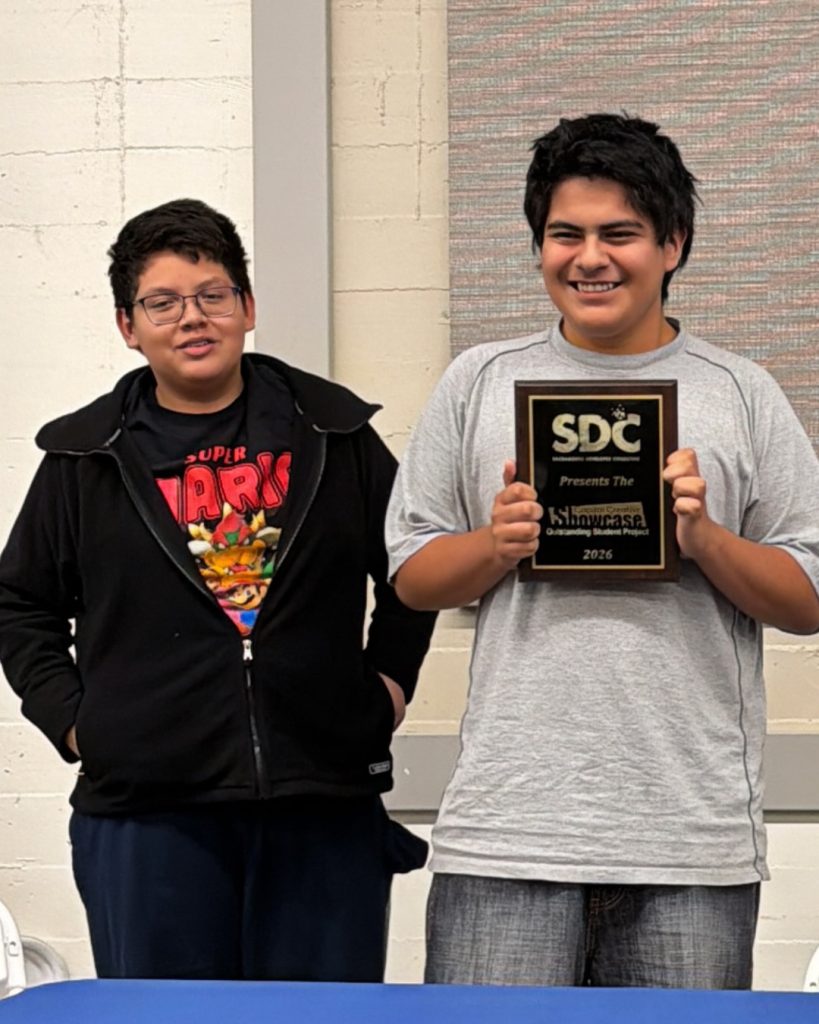
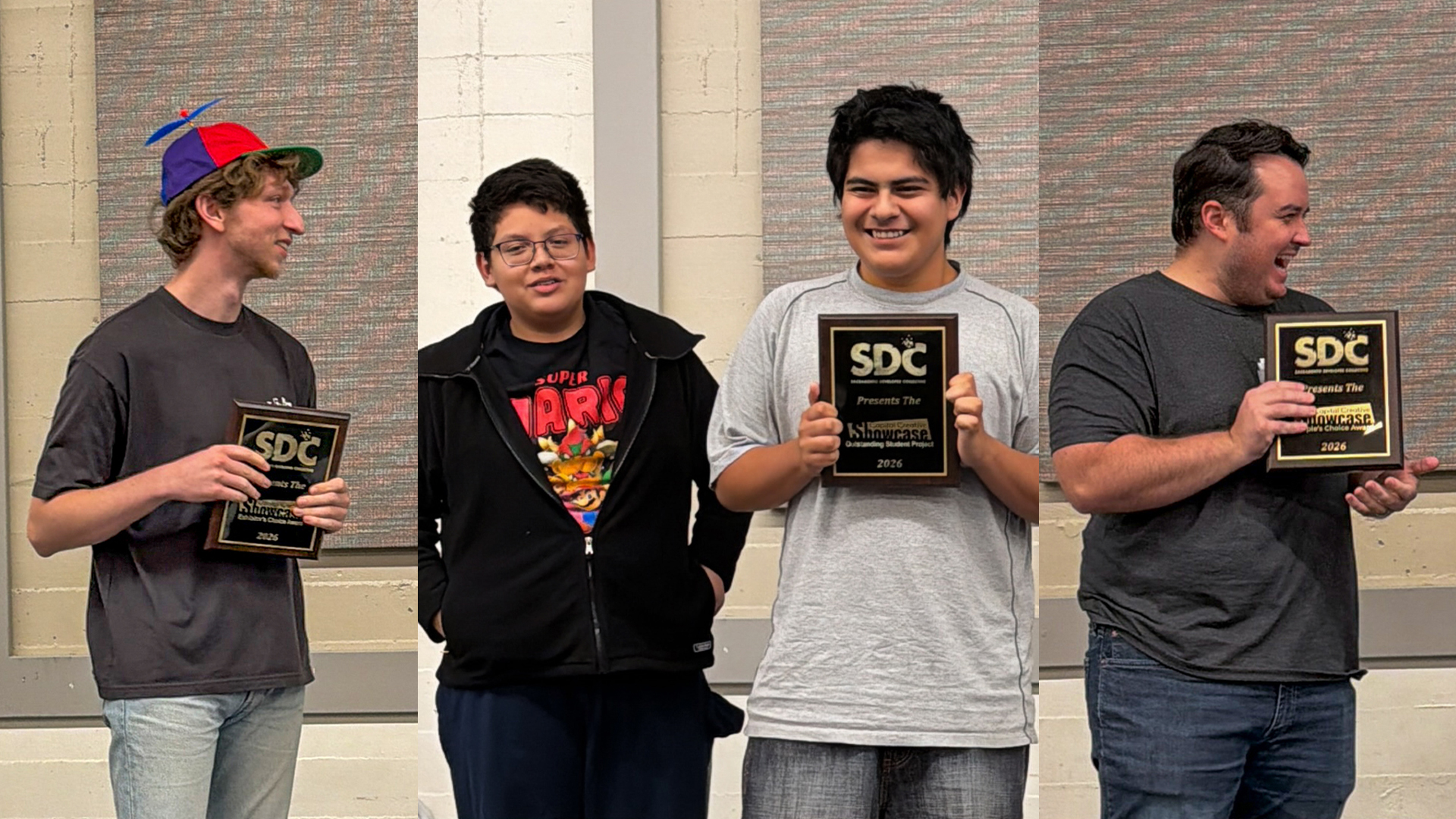
    The first award of the night was Outstanding Student Project, recognizing the impressive work being done by young developers. After a strong showing from the student projects, Bear With Me took home the award.

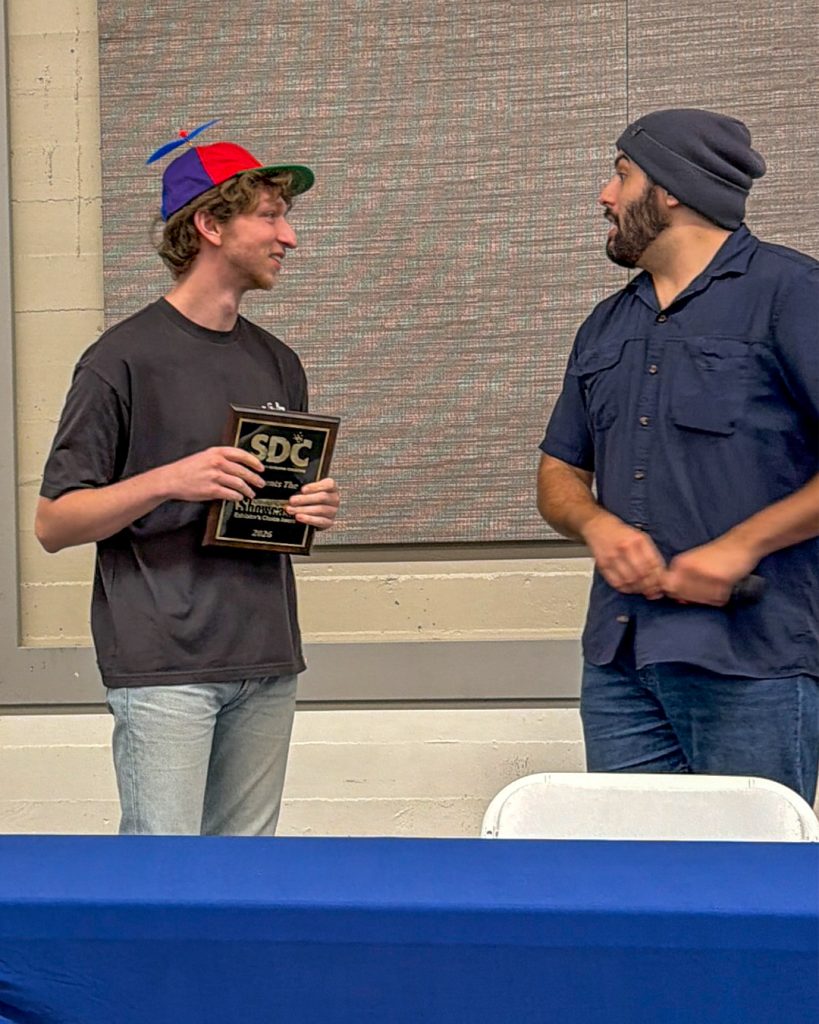
    Next up was the Exhibitor Choice Award, voted on by the developers and exhibitors at the event. Thomas noted that developers often see games through a unique lens, noticing systems, mechanics, and design choices that might stand out differently to fellow creators. The nominees were The Lost Frog, Blocks for Babies, and Giga Turtles, with Blocks for Babies winning the award.

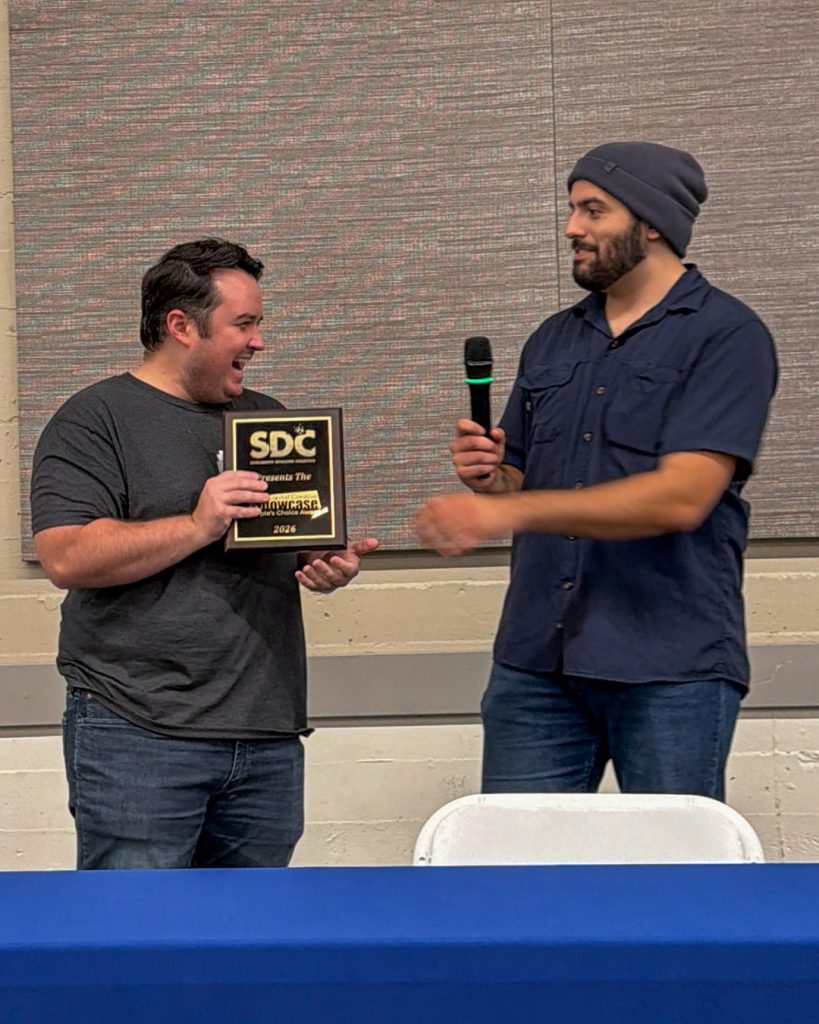
    The final award of the night was the People’s Choice Award, voted on by attendees. This category was especially competitive, showing just how much the crowd connected with the games on display. The nominees included My Wizard Doesn’t Feed Me So I Tarnish His Room, Now He’s Sending Buckets of Water on My Head, Cardboard Cowboy, and Goat Game. Goat Game took home the People’s Choice Award, earning the top audience honor of the night.

    Thomas closed the ceremony by thanking everyone who helped make CCS 2026 possible, calling it the biggest and most successful Capital Creative Showcase in SDC’s ten-year history. For Sacramento’s game development community, the night was more than an awards ceremony. It was a reminder of how much creative work is happening locally, and how important it is to give developers a space to be seen, supported, and celebrated.

    Capital Creative Showcase continues to grow as a home for Sacramento’s game creators, and CCS 2026 made one thing clear: this community has a lot to be proud of.

    SDC x GDC Partnership

    Sacramento Developer Collective x GDC: A Major Step Forward for Our Community

    SDC is proud to announce an official partnership with the Game Developers Conference — and it’s going to directly benefit Sacramento developers.

    For years, the Sacramento Developer Collective (SDC) has worked to create opportunities for indie developers, students, and small teams to learn, connect, and grow.
    This partnership with GDC is a huge milestone — not just for SDC, but for the entire Sacramento game development community.

    GDC is the premier professional gathering for game creators, and this collaboration gives our community a stronger presence on the show floor, more visibility with industry leaders,
    and more meaningful pathways for local developers to share their work with the world.

    Why This Partnership Matters

    • Visibility for Sacramento developers: More eyes on the incredible projects being built here in our region.
    • Real opportunities for teams: Showcasing, networking, and connecting with publishers, funders, and collaborators.
    • Community uplift: SDC exists to help developers succeed — this partnership amplifies that mission at the biggest industry stage.

    SDC Will Have a Booth at GDC

    As part of this partnership, SDC will have an official booth at GDC where we’ll be showcasing games currently being made in the Sacramento community.
    Our goal is simple: help developers get discovered, help projects gain traction, and help talented teams connect with the people who can support them.

    10 Sponsored Developer Will Be Coming To GDC

    We’re excited to share that SDC will be sponsoring 10 developers to attend GDC and show off their games.
    These sponsored passes are a direct investment into our community — helping teams who might not otherwise be able to attend take a major step forward.

    We also want to recognize how incredibly generous GDC has been in making this partnership possible.
    Their support isn’t just symbolic — it materially helps developers get access to the world’s most important industry gathering.
    We’re grateful, and we’re committed to making the most of this opportunity for Sacramento creators.

    SDC Community Discount Code (GDC)

    In addition to the sponsored passes, we’re also providing an SDC community discount code for anyone planning to attend GDC.
    If you’re considering going, this is a great way to reduce the cost and join us on-site.

    CODE: SDC10

    Where to use it: Apply the code during GDC registration checkout here: https://gdc.informafestivals.com/2026/registrations/Attendee?_mc=barter_gdcsf_gdcsf_le_x_partner_2026?

    What’s Next

    Over the coming weeks, we’ll be sharing more updates — including future blog posts highlighting members of our community who receive sponsored passes,
    as well as the games we’ll be showcasing at the SDC booth.

    This partnership is about uplifting developers — especially indie teams and emerging creators — by giving them real opportunities to be seen, supported, and celebrated.
    We can’t wait to share what’s next.

    Why GDC Is a Great Opportunity for Indie Devs and the SDC Community

    Every year, the Game Developers Conference (GDC)is the place where the game industry gets unusually accessible. It’s a week where the people who build games, fund games, publish games, market games, and support development all show up ready to talk shop. For indie developers, that’s rare. For the Sacramento Developer Collective community, it’s even better because it’s close enough to feel doable, and big enough to genuinely change what your year looks like afterward.

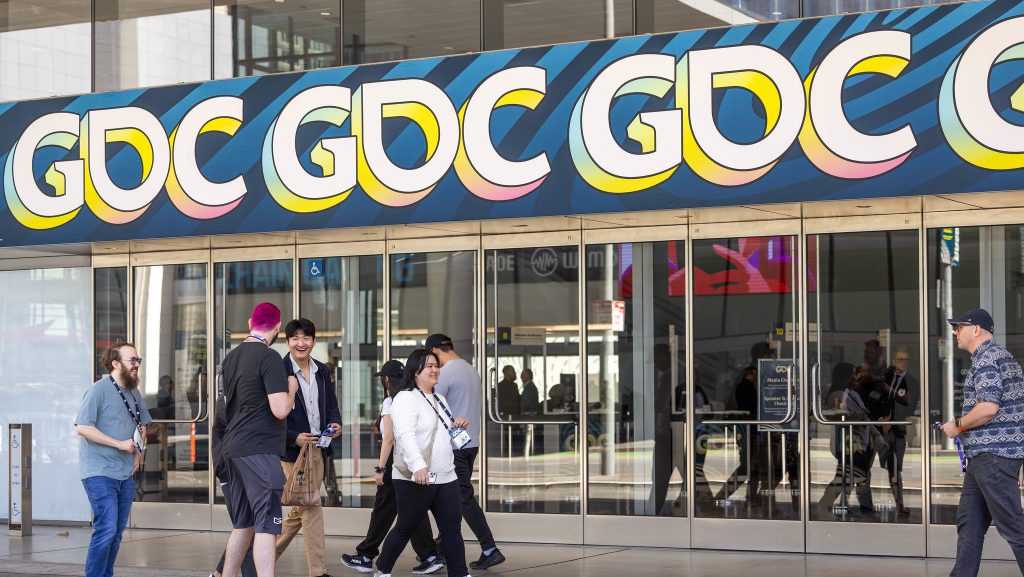
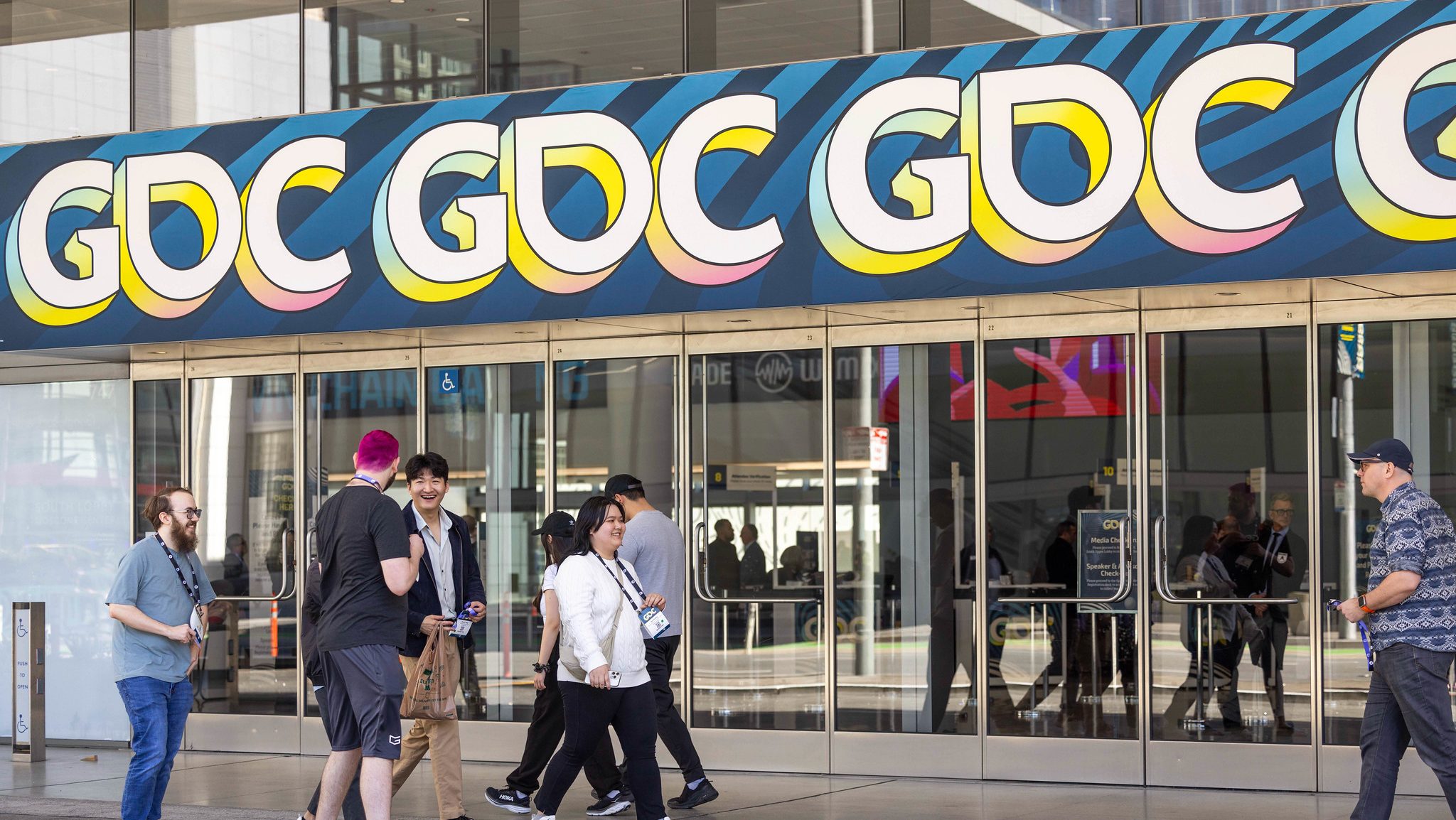
    GDC 2026 runs March 9–13 at Moscone Center in San Francisco, and it’s leaning hard into a “Festival of Gaming” approach that blends conference sessions with meetups, show floor discoveries, and nightly events that make it easier to actually meet people instead of just sitting in talks all day.

    You Get Real Answers From People Who Have Shipped

    Indie teams are always solving problems under pressure. Technical challenges, scope issues, marketing confusion, funding uncertainty, community building, hiring, production planning, you name it. GDC is useful because it puts practical knowledge in one place, across the whole lifecycle of making a game. The 2026 program is structured around 14 tracks, including independent development, design, narrative and performance, discovery and marketing, business strategy, production, and tools and tech topics.

    It also includes “Summit Communities” that are meant to give you a home base during the week. If you’ve ever felt like your discipline gets lost in the shuffle at big conferences, these communities are designed to solve that. Independent Games is one, but there are also communities around things like UX, narrative, tools, game AI, level design, and more.

    Networking Is Built In, Not Left to Luck

    People joke about networking, but at GDC it’s not just “talk to strangers and hope it works out.” The event is intentionally structured around connection, with curated matchmaking, lounges, and meeting formats that make it easier to talk with purpose.

    For SDC folks, this is where going together becomes a superpower. You can split up and cover more ground, compare notes at the end of the day, and introduce each other to people instead of doing everything solo. Even a small group makes the whole experience less intimidating and more productive.

    The Festival Hall Is a Cheat Code for Getting Oriented

    If you’re an indie dev, the show floor is not just for playing demos. It’s where you can see the ecosystem up close. Tools, services, platforms, partners, and communities are all represented, which makes it a great place to get clarity on what’s worth your time and money this year.

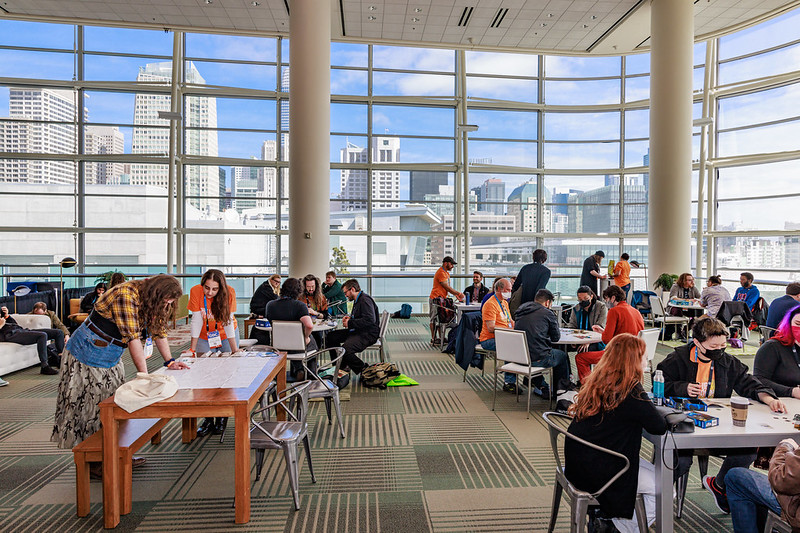
    GDC is also calling out a dedicated Indie and Education neighborhood in the Festival Hall, with its own stage for microtalks, fireside chats, and community meetups. For newer studios, that kind of focused space matters. It makes it easier to find your people and easier to learn in smaller, more approachable formats.

    The Independent Games Festival is part of what makes GDC feel indie-friendly. In 2026, the IGF Pavilion runs from March 11–13, and the IGF Awards happen on March 11. Even if you are not submitting a game this year, IGF brings a real spotlight to independent work and attracts attendees who are specifically there to discover new games and new teams.

    It’s More Affordable Than Ever

    GDC has always had a “big conference price tag” reputation, but the 2026 structure offers more entry points than people realize.

    There’s a Festival Pass with an early rate price, and there are also application based passes that are clearly aimed at small teams and students. The Early Stage Indie and Start up Pass is designed for studios and self employed professionals that have been operating less than five years, and the Academic Pass is available for verified students and faculty. There’s also a Digital Pass for people who cannot make the trip but still want the content and some networking access through the event app.

    On top of that, SDC members can take 10% off using our discount code SDC10, which helps take some of the sting out of pass pricing.

    For SDC specifically, the group discount is also worth paying attention to. If you can get 10 people going, there’s a discount on current Festival or Game Changer pricing, which is the kind of thing a community can actually pull off.

    Why This Matters for SDC, Specifically

    A lot of communities talk about “building connections,” but SDC is already doing the hardest part. People are making things, sharing work, showing up, and helping each other improve. GDC is a multiplier on that energy because it plugs a local scene into the wider industry for a week.

    It also fits the practical reality of Sacramento. You are not flying across the country; you are making a short trip to San Francisco, and you can come back with fresh relationships, clearer plans, and new ideas you can share with the rest of the community.

    If you want this to have maximum impact, the move is simple. Go in with a plan, and come back with a debrief. Pick a few focus areas, decide what “success” looks like for your week, and then share what you learned with other SDC members afterward. That’s how a conference trip turns into a community upgrade.

    Progressive Game Jam – Season 12

    The Progressive Game Jam (PGJ) is back for its twelfth season — and we’re more excited than ever to help local developers build awesome games and connect with a thriving community of creators.
    Whether you’re a beginner or a seasoned dev, PGJ gives you the tools, time, and team to actually finish a game. Each month on the third Saturday, we’ll gather for structured, supportive in-person jam sessions where you’ll:

    Set development goals and track your progress
    Get feedback from other local developers
    Learn from guest speakers and industry pros
    Showcase your game at public events like CCS
    PGJ Season 12 is your chance to bring your game to fruition — with the support of the Sacramento game dev community behind you. Returning games are welcome!

    Playtesting Day

    Developers can set up at a table and have customers at the café play their game and provide feedback. It’s a great chance to get real-world testing and build community interest! Your game can be digital or analog, whether it’s an early prototype, a nearly finished build, or even a board/card game.

    For players, this is your chance to try out games before anyone else! You’ll get to sit down with the developers, playtest their creations, and share your thoughts on what works and what could be even better.

    If you’re interested in showcasing your game, sign up here: https://forms.gle/aVybWdTpgXzVRsE76

    We’ll reach out to confirm availability and details. Spots may be limited, so grab yours early and be part of the fun!

    Progressive Game Jam – Season 12

    The Progressive Game Jam (PGJ) is back for its twelfth season — and we’re more excited than ever to help local developers build awesome games and connect with a thriving community of creators.
    Whether you’re a beginner or a seasoned dev, PGJ gives you the tools, time, and team to actually finish a game. Each month on the third Saturday, we’ll gather for structured, supportive in-person jam sessions where you’ll:

    Set development goals and track your progress
    Get feedback from other local developers
    Learn from guest speakers and industry pros
    Showcase your game at public events like CCS
    PGJ Season 12 is your chance to bring your game to fruition — with the support of the Sacramento game dev community behind you. Returning games are welcome!