SDC x GDC Partnership

Sacramento Developer Collective x GDC: A Major Step Forward for Our Community

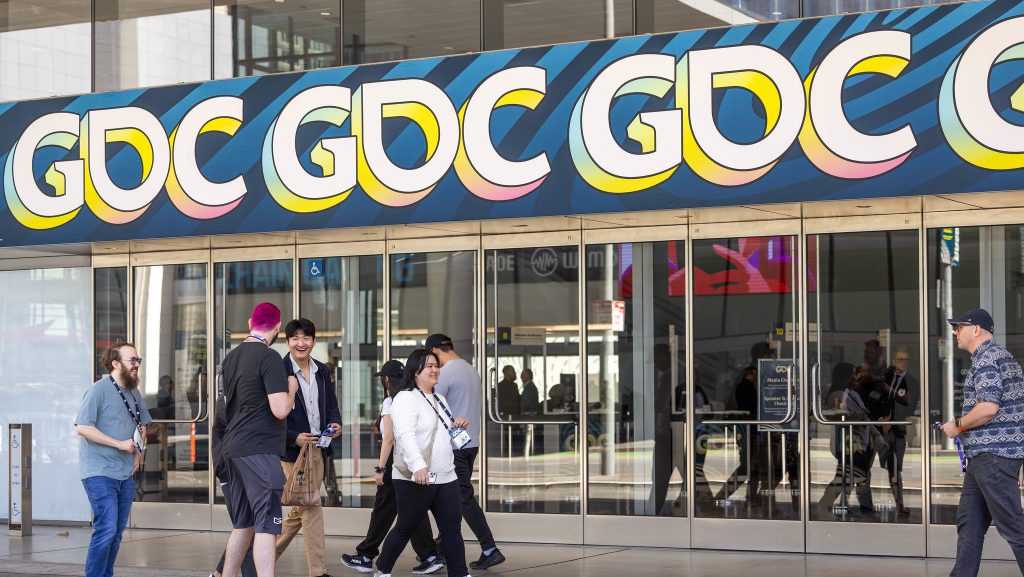
SDC is proud to announce an official partnership with the Game Developers Conference — and it’s going to directly benefit Sacramento developers.

For years, the Sacramento Developer Collective (SDC) has worked to create opportunities for indie developers, students, and small teams to learn, connect, and grow.
This partnership with GDC is a huge milestone — not just for SDC, but for the entire Sacramento game development community.

GDC is the premier professional gathering for game creators, and this collaboration gives our community a stronger presence on the show floor, more visibility with industry leaders,
and more meaningful pathways for local developers to share their work with the world.

Why This Partnership Matters

  • Visibility for Sacramento developers: More eyes on the incredible projects being built here in our region.
  • Real opportunities for teams: Showcasing, networking, and connecting with publishers, funders, and collaborators.
  • Community uplift: SDC exists to help developers succeed — this partnership amplifies that mission at the biggest industry stage.

SDC Will Have a Booth at GDC

As part of this partnership, SDC will have an official booth at GDC where we’ll be showcasing games currently being made in the Sacramento community.
Our goal is simple: help developers get discovered, help projects gain traction, and help talented teams connect with the people who can support them.

10 Sponsored Developer Will Be Coming To GDC

We’re excited to share that SDC will be sponsoring 10 developers to attend GDC and show off their games.
These sponsored passes are a direct investment into our community — helping teams who might not otherwise be able to attend take a major step forward.

We also want to recognize how incredibly generous GDC has been in making this partnership possible.
Their support isn’t just symbolic — it materially helps developers get access to the world’s most important industry gathering.
We’re grateful, and we’re committed to making the most of this opportunity for Sacramento creators.

SDC Community Discount Code (GDC)

In addition to the sponsored passes, we’re also providing an SDC community discount code for anyone planning to attend GDC.
If you’re considering going, this is a great way to reduce the cost and join us on-site.

CODE: SDC10

Where to use it: Apply the code during GDC registration checkout here: https://gdc.informafestivals.com/2026/registrations/Attendee?_mc=barter_gdcsf_gdcsf_le_x_partner_2026?

What’s Next

Over the coming weeks, we’ll be sharing more updates — including future blog posts highlighting members of our community who receive sponsored passes,
as well as the games we’ll be showcasing at the SDC booth.

This partnership is about uplifting developers — especially indie teams and emerging creators — by giving them real opportunities to be seen, supported, and celebrated.
We can’t wait to share what’s next.

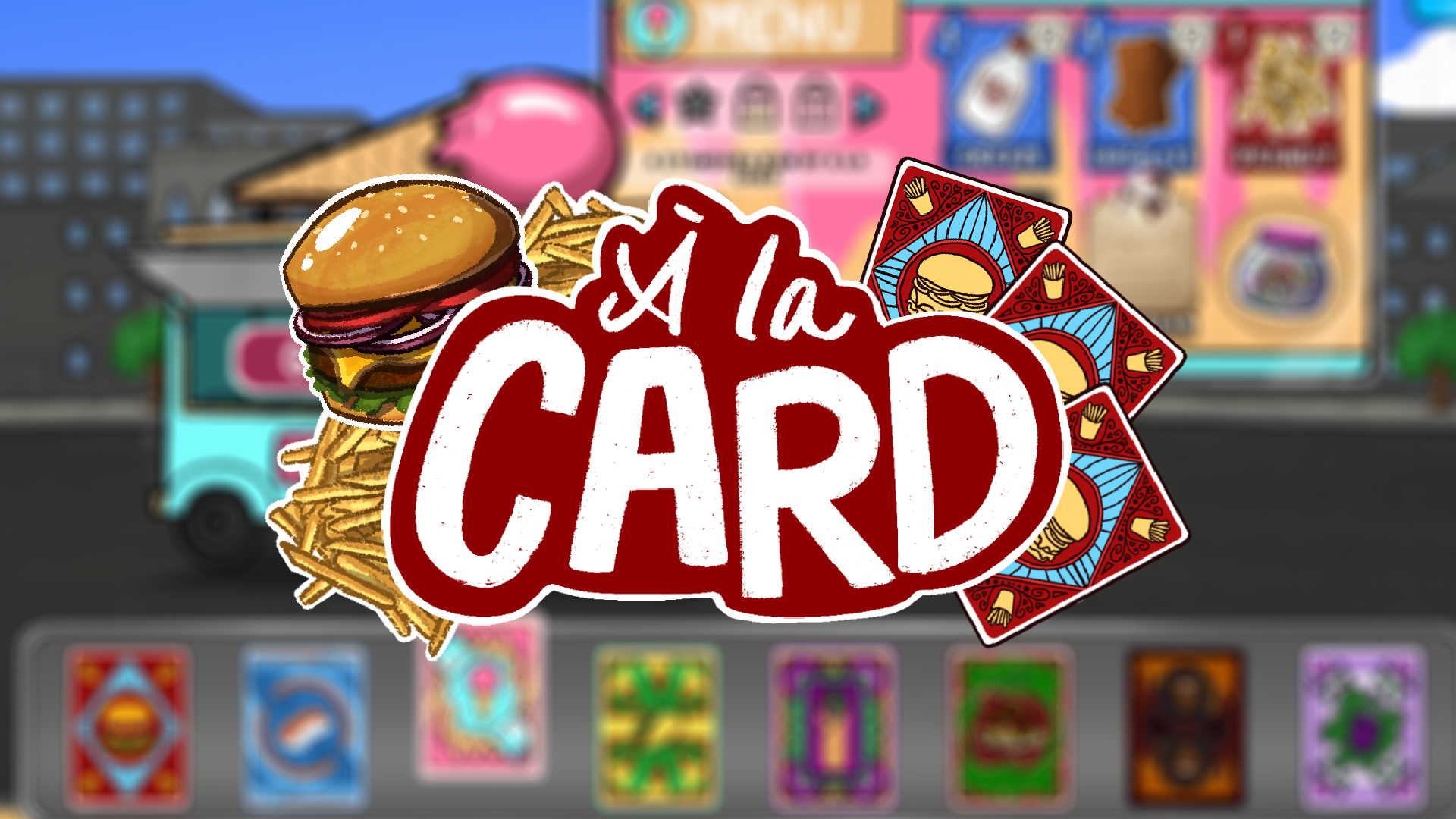
A la Card: Food Truck Chaos Meets Deckbuilding Strategy

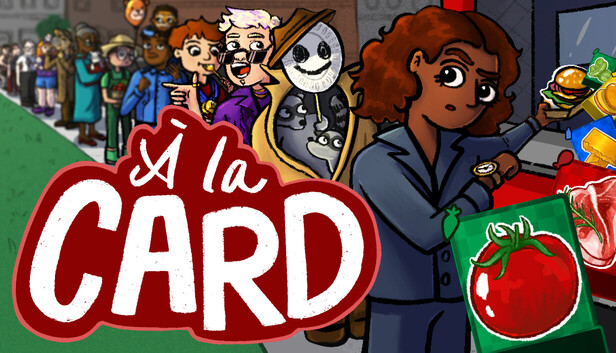
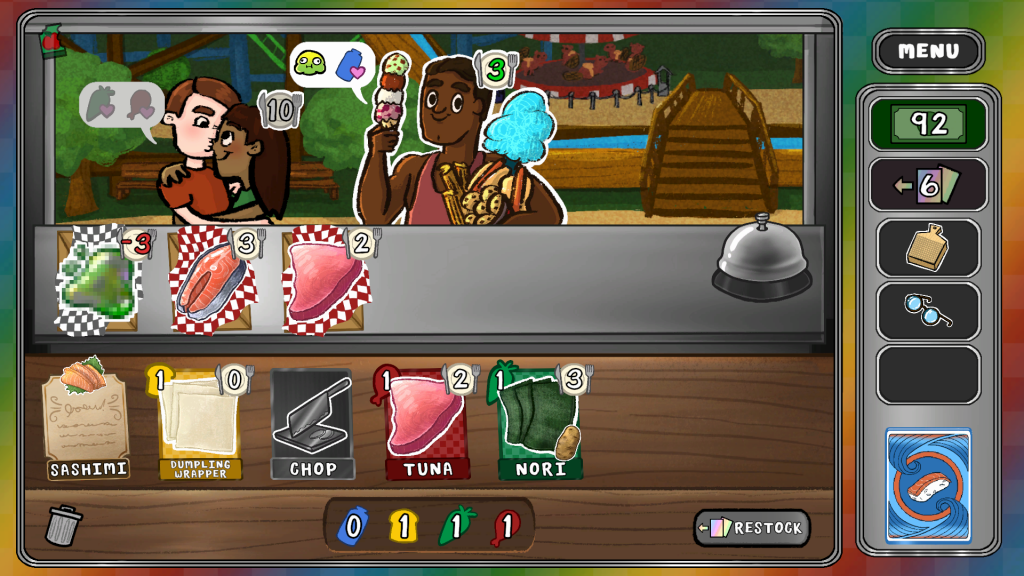
A la Card rolls up to Steam on December 11, 2025, bringing a food truck twist to the roguelike deckbuilder formula. It is a single-player card game from indie studio Shook Loose where you run a chaotic kitchen-on-wheels and stitch together absurd card synergies to survive waves of hungry customers and quirky bosses.

What is A la Card?

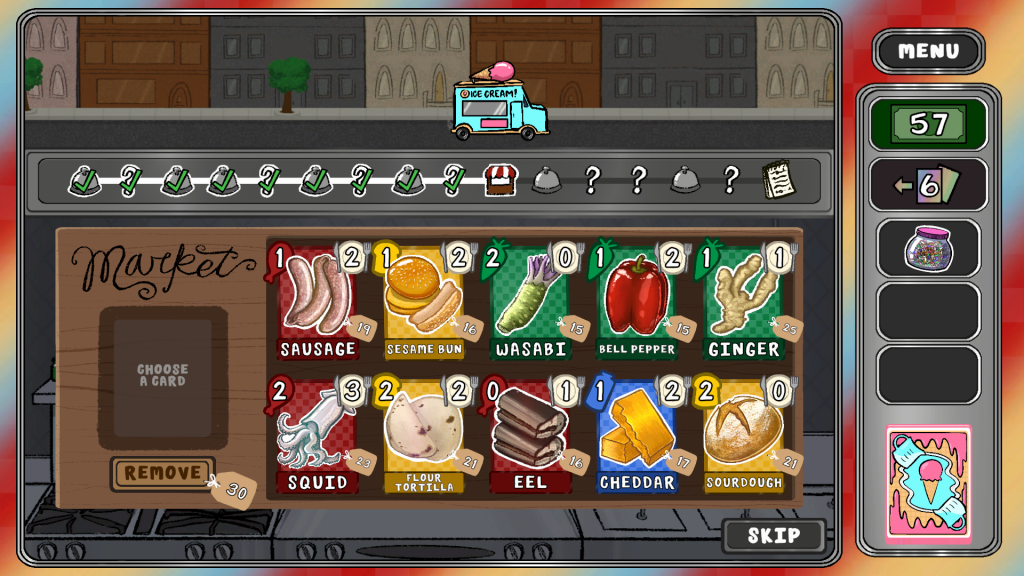
At its core, A la Card is a roguelike deckbuilder about running a food truck and bending the rules of your cards until they barely resemble what you started with. Every card is a dish, upgrade, or effect tied to your makeshift menu. Each run is a fresh route, with customers lining up at your serving window while you scramble to build a deck that can keep up with their appetites.

You will juggle ingredients, calories, and triggers while trying to keep the line moving. The tone is playful and a little chaotic, with a cute, hand-drawn presentation and a lighthearted take on cooking and card battles.

How a run plays out

A typical run sees you alternating between two main phases: cooking up your deck, and putting it to the test on the road.

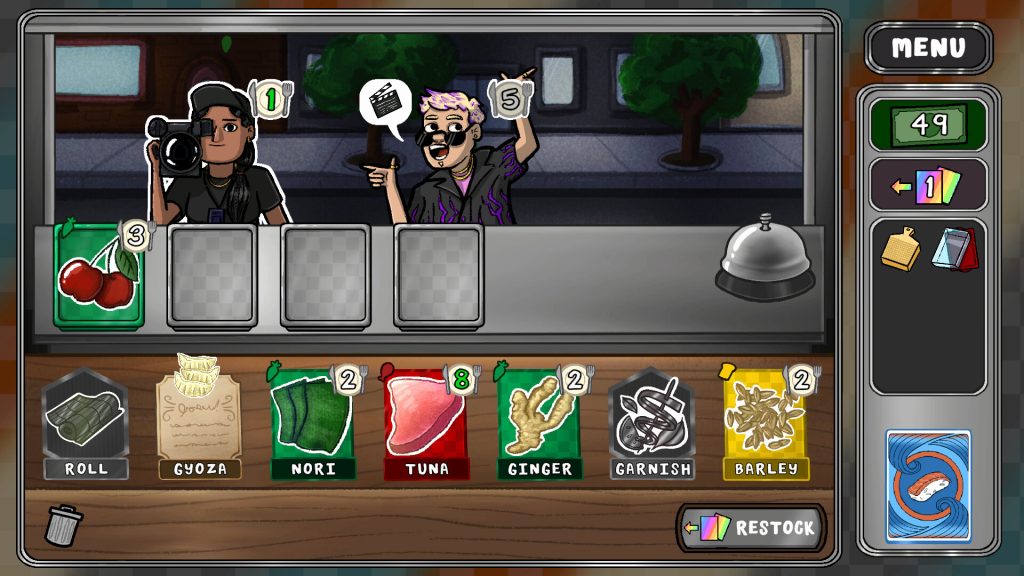
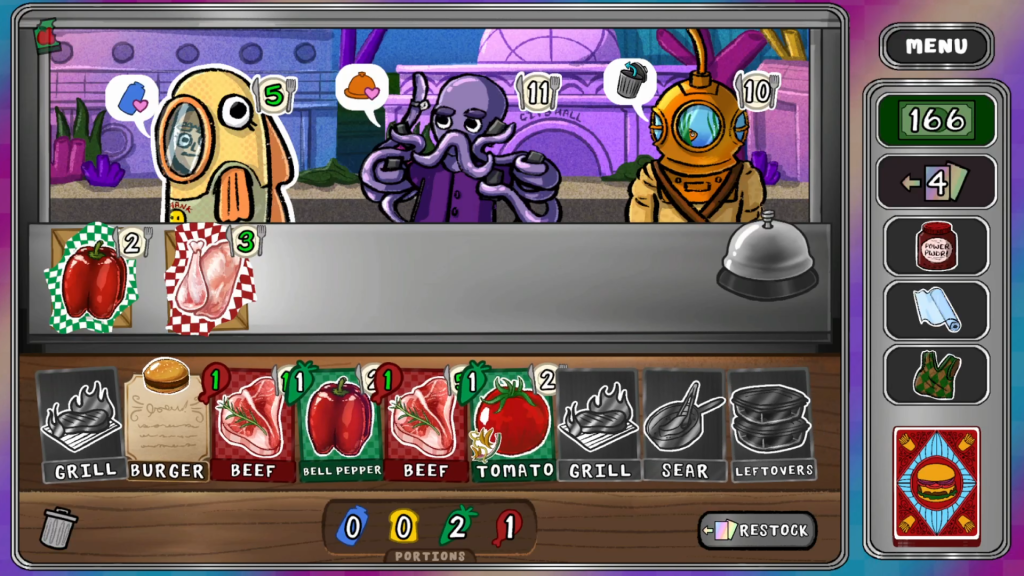
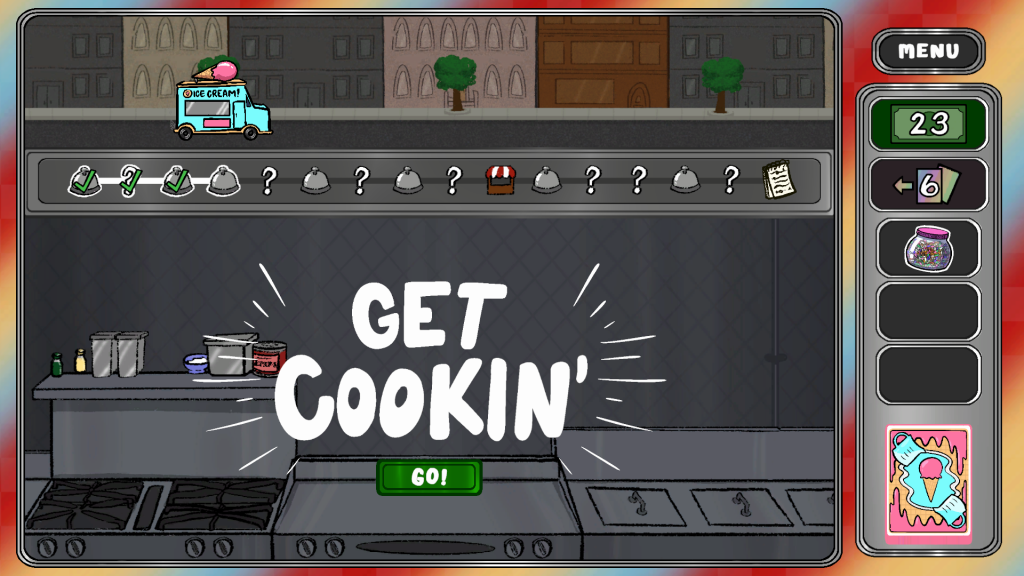
In the prep phase, you load up your deck with ingredients and recipes, tweaking stats and effects to build the kind of menu that fits your playstyle. Once you hit the road, you start serving customers from the truck window, playing your cards in sequence to squeeze as much value out of your combos as possible before the shift ends.

The roguelike structure means you are chasing strong runs rather than permanent progression in the traditional RPG sense. You will lose, tweak your approach, and jump back in with new ideas for how your menu should work.

The hook: mutating your cards

The big hook in A la Card is how aggressively you can rewrite your cards.

Instead of simply adding stronger dishes to your deck, the game lets you stick one card’s effect onto another, change what triggers that effect, and swap around stats and “flavours” to build something that feels entirely custom. Over time, your deck stops looking like a standard starter list and becomes a strange, min-maxed monster of your own making.

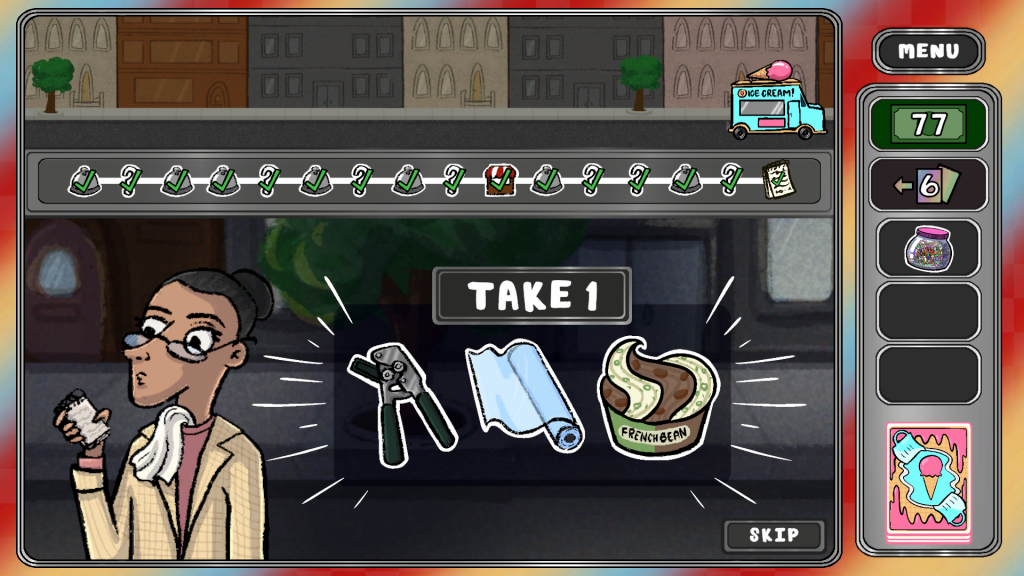
Random events along your route give even more control. They let you adjust colors, calories, triggers, and other details mid run, turning every shift into a little design lab where you tinker with a few key cards until they become the backbone of your strategy.

Bosses as puzzles, not just stat checks

Serving regular customers is only part of the job. Each location has its own boss, and these bosses behave more like card puzzles than traditional health sponges.

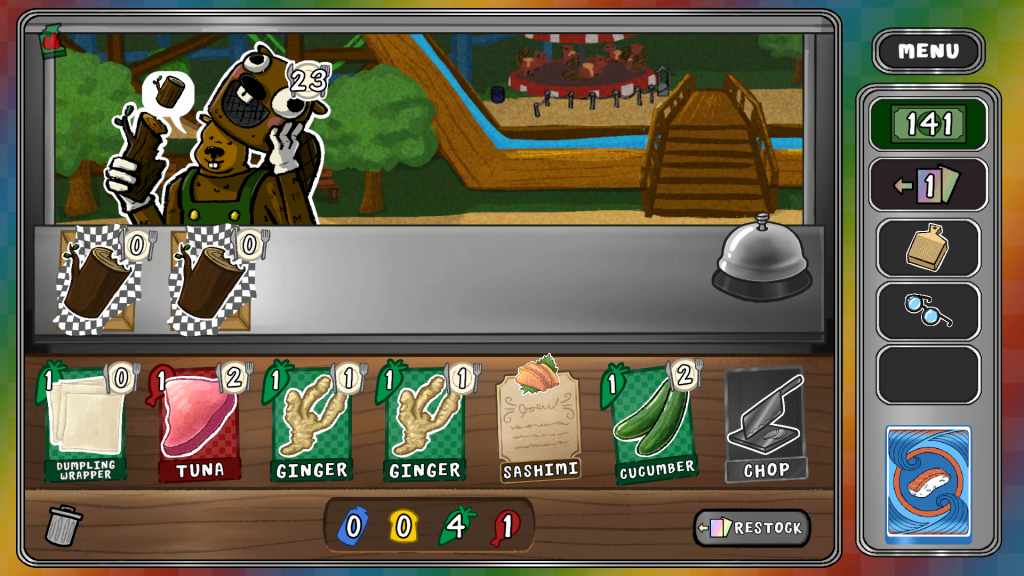
They can hand you a specific card and refuse to leave until you serve it, or clog up your window with half-eaten scraps that force you to rethink your usual sequencing. The idea is that “big numbers” alone are not enough. You have to build a flexible deck that can adapt when a boss suddenly changes the rules on you.

Decks, trinkets, and long-term replay

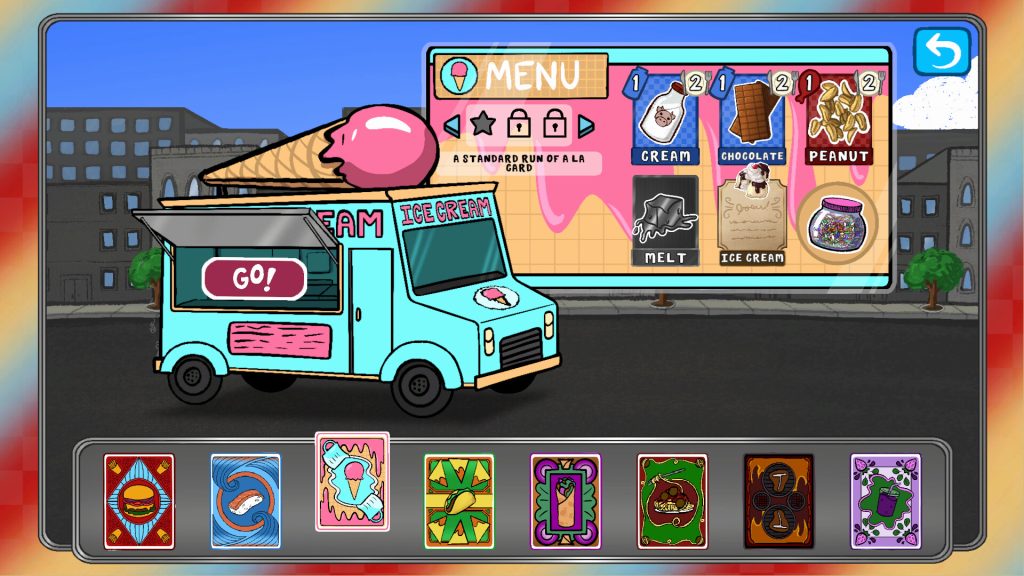
A la Card is designed to be something you come back to for a lot of short runs. There are multiple starting decks, each tied to a unique trinket that shapes how that deck plays. As you win runs, you unlock more starting options, more trinkets, and more cards that fold into the overall pool for future attempts.

Ahead of release, the team has talked about shipping over 200 cards, more than 50 trinkets, and eight starter decks at launch, along with plans for regular post launch content drops. That gives the game a lot of room for experimentation and “I have never seen this combo before” moments.

With that many moving pieces, no two runs should look or feel the same, which is exactly what you want from a modern roguelike deckbuilder.

Who A la Card is for

If you enjoy games like Slay the Spire, Balatro, or other roguelike card battlers but want a lighter, more playful theme, A la Card looks like an easy recommendation. It leans into problem-solving and clever sequencing, rewards creativity, and adds a fresh layer of cooking and food-truck mechanics on top of familiar mechanics.

The presentation is cute and cartoony, composer Josh Whelchel handles the soundtrack, and the systems are built to support both casual “one more run before bed” sessions and more obsessive theorycrafting.

Release details

A la Card is developed and published by Shook Loose and launches on Steam for PC on December 11, 2025. It supports single player, Steam achievements, Steam Cloud, and other standard platform features.

If you like the idea of turning a simple burger into a ridiculous, rules-bending engine that carries an entire shift, this food truck is worth lining up for.

Links: https://store.steampowered.com/app/3180680/A_la_Card/

Why the Capital Creative Showcase Coming Back in 2026 Matters for Indie Devs

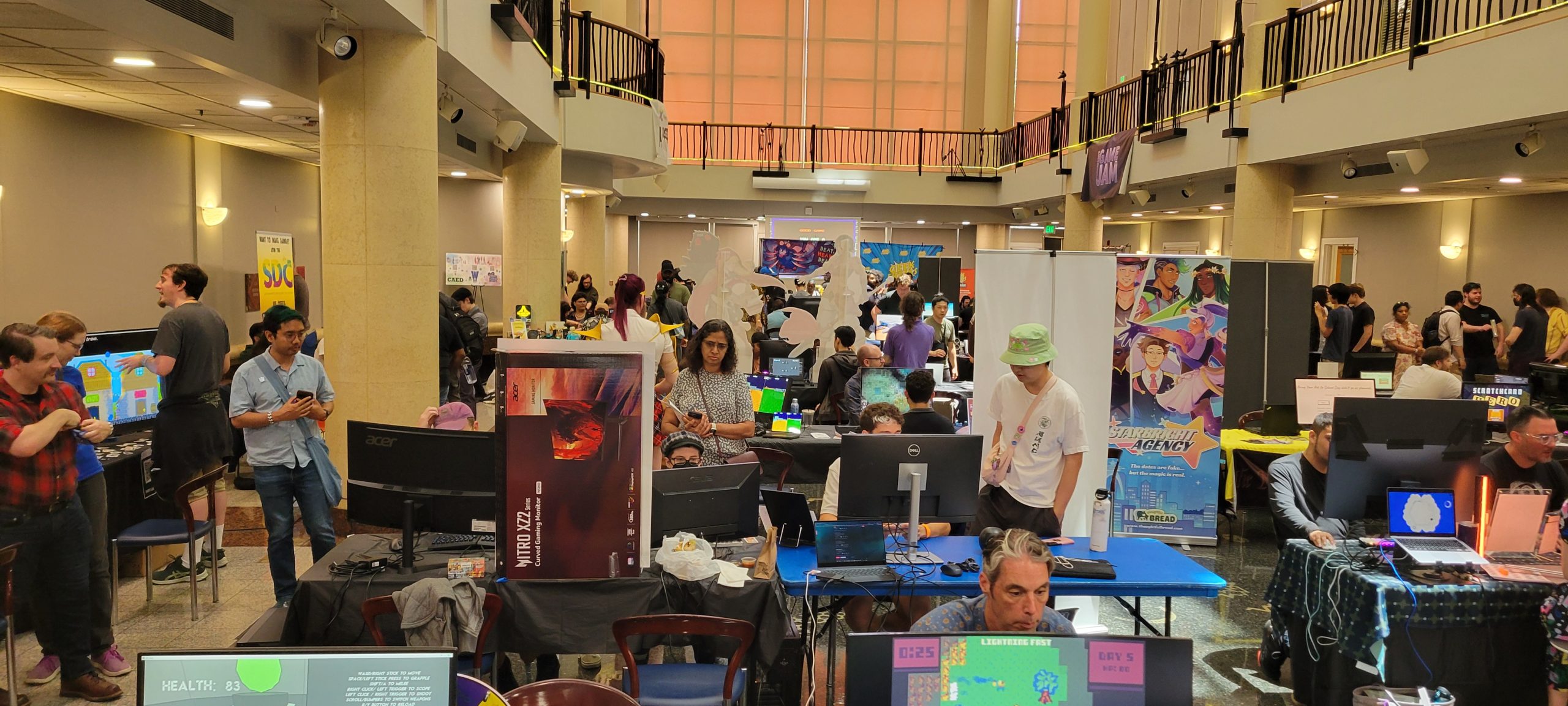
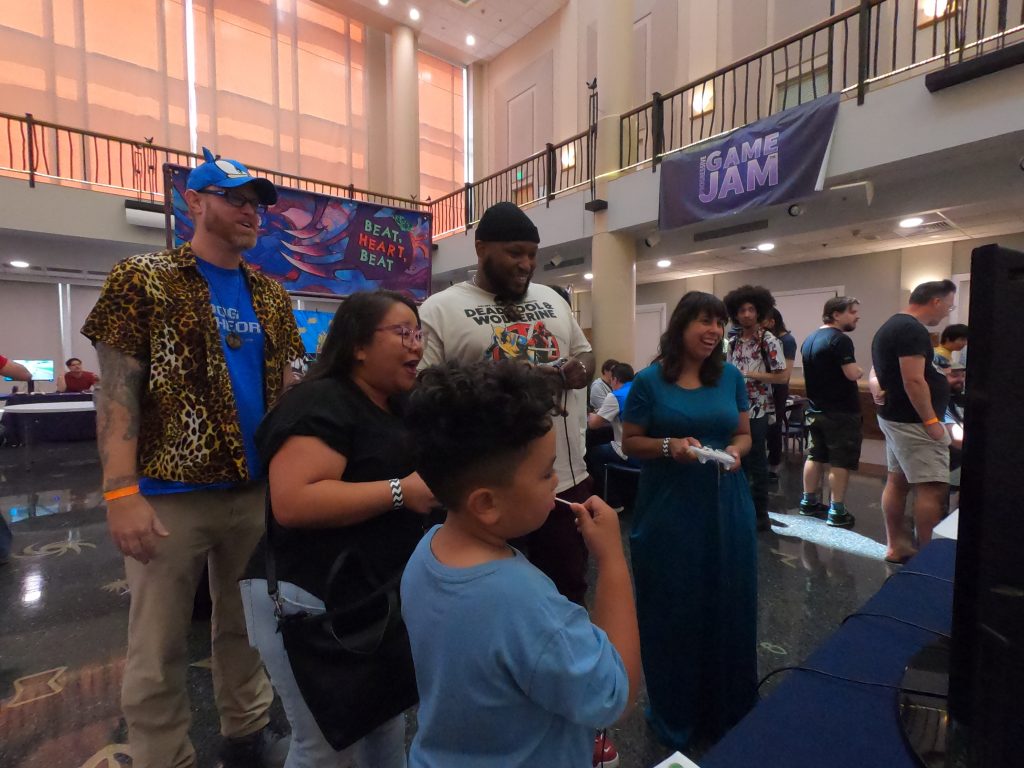
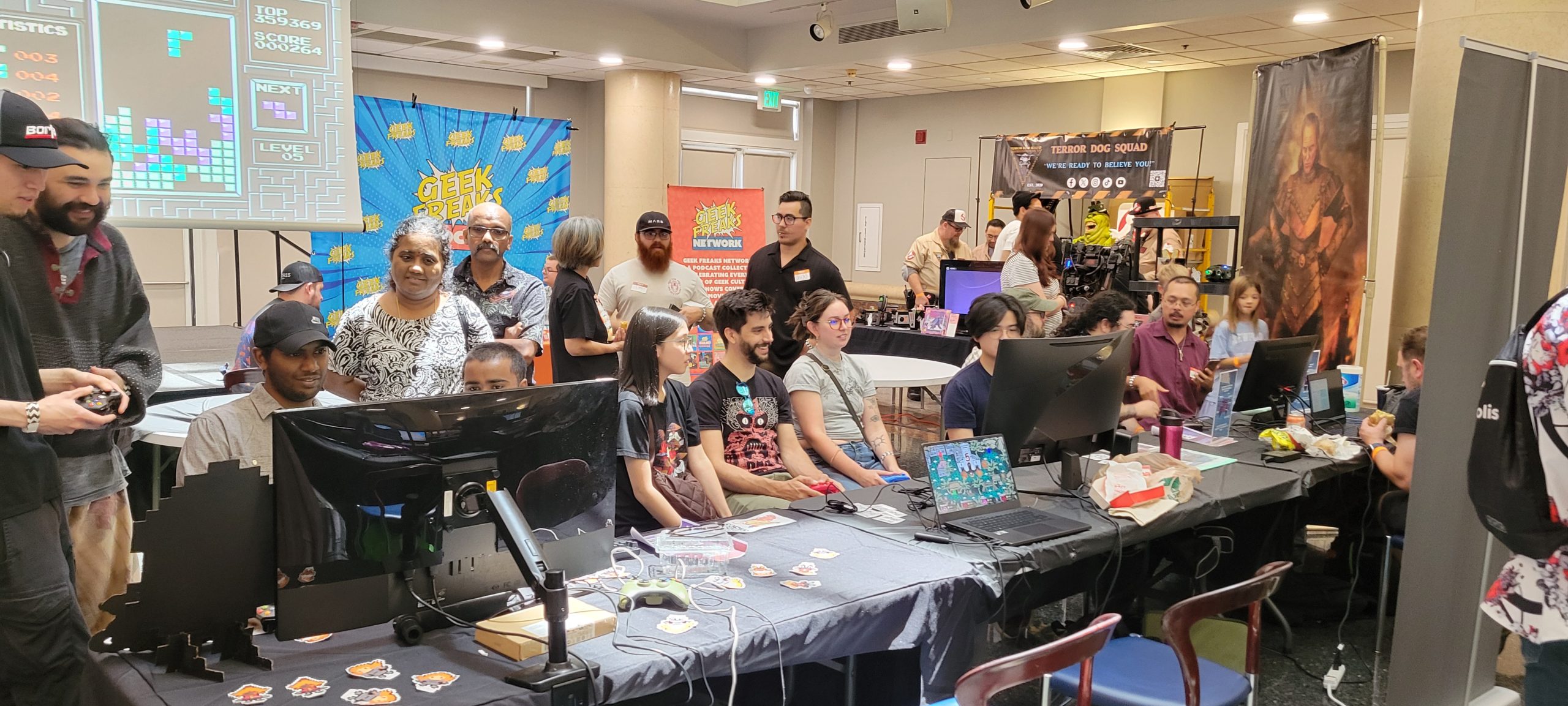
The Capital Creative Showcase is coming back on Saturday, May 9, 2026, and that return matters because CCS has a real track record of putting Sacramento area indie creators in front of people who will actually play their games. Over the past several years, the event has worked like a big community amplifier: not a corporate expo, but a place where small teams can show what they are building, get feedback on the spot, and connect with players, fellow devs, and potential collaborators.

From the start, CCS has been built around hands-on discovery. The whole format is “play first, talk to the dev second,” which is exactly what indie games need. Instead of being buried online, projects get a physical space where attendees can sit down, try a build, and give real reactions. That feedback loop has been one of the show’s biggest values for returning teams. People show up with early versions, watch what lands, then take those notes back into production.

CCS also doesn’t just showcase polished releases. It highlights works in progress, especially games coming out of the Sacramento Developer Collective’s Progressive Game Jam. Each season of the jam funnels into CCS, so the showcase becomes a kind of graduation day for new projects. Teams that formed months earlier get their first public audience at CCS, which is often the moment their game shifts from “cool idea” to “something we can finish.”

When COVID hit, CCS didn’t lose that mission. It transitioned online for a year, evolving into a streamed showcase featuring game spotlights and developer segments. That pivot kept local games visible during a time when most small events went quiet. It also left an archive of featured projects that helped newer audiences find Sacramento teams long after the livestream ended.

As the event returned to in-person shows, CCS expanded who gets the spotlight. Recent showcases have added a sharper focus on students and first-time creators, with dedicated areas like the Student Showcase and Creators’ Corner. That matters because it lets people in the early stages share the floor with more established indie studios. It’s a built-in bridge from classroom projects and hobby teams into the wider local scene, and it helps the audience see how deep the region’s talent pool really is.

CCS has also steadily widened the creative lens beyond just video games. Tabletop projects, art, film, and other interactive work have been part of the mix, which keeps the show feeling like a true “creative showcase” instead of a single lane convention. For indie game developers, that broader crowd is a win because it brings in curious attendees who might not normally hunt down a game expo, but will happily stumble into a booth, pick up a controller, and discover something new.

So with CCS returning in May 2026 at The Grounds in Roseville, you’re not just getting another fun day on the calendar. You’re getting the next chapter in an event that has consistently shared indie work the way it should be shared: on the floor, in people’s hands, with the creators right there to talk, learn, and grow with their community.

Inside A la Card: How Shook Loose Turns Recipes into Roguelike Combos

Cooking and deckbuilding shouldn’t fit together, but A la Card makes the pairing feel obvious. Shook Loose turns ingredients into cards, recipes into combos, and the serving window into a tight little puzzle where order matters and wild mutations can flip your plan in an instant. The team chases the fun of “breaking” a run without letting any one card solve the game, and they’ve rebuilt core systems to make that depth easier to learn.

In this interview, SoBad and Ash talk about tuning outrageous synergies, designing bosses that test your build without hard counters, and why onboarding exposed a bigger design choice than any tutorial could. We also get into trinkets, mid-run edits, the Unity toolchain they rely on, and Josh Whelchel’s score that ramps up as your kitchen heats up. A la Card is heading toward launch with hundreds of cards, a pile of trinkets, and the kind of discovery that keeps roguelike fans coming back for “just one more meal.”


What was the original spark for mixing cooking with deckbuilding, and how did that idea evolve from prototype to what we see now?

Cooking is very piecewise. You can take a bit of this and that and adapt based on what you have on hand, which is exactly how A la Card works! Food also naturally lends itself to categories, so very little effort is required to think up distinctions between different types of cards. Want colors? Use food groups!

Each ingredient card has a unique effect you can use to make interesting plays, just like how every ingredient brings its own unique flavors to the pot.

We lean into the framing device as much as possible. The familiarity makes it easier to communicate the design, and you don’t have to learn 300 fantasy character names!


The Steam page mentions wild card mutations and “absurd synergies.” What’s an example of a combo that went from broken to balanced during playtesting, and how did you tune it?

The most fun thing you can do in A la Card is discover something completely broken. Whether something is too broken is centered around that discovery: How hard is it to break? How hard was it for the player to figure that out?

Uncovering a crazy synergy makes you feel smart and accomplished and excited to call your parents, but stumbling onto a single card that wins the run for you is boring. During the card design process, the only question we allow each other to ask is, “Without ANY mutation, is this card broken?” If the answer is no, we’re in the clear.

One example of something we try to watch the power level of closely is cards that clone themselves, since they can sort of be the whole machine on their own.

We’ve rebalanced almost everything continually while sharpening the systems and mechanics. There was a trigger in the first demo that would go off when ANY other card was played, up to 15+ times per round if you were maximizing it. We’ve adjusted it so it only goes off when another food is prepared, which limits the number of triggers to the spaces available in the window (6 or fewer, unless you discover a different way to break it). It’s a slight adjustment that still lets you scale like crazy, but it’s not a surefire way to win the game.


How do the “sequence your cards” mechanics shape moment-to-moment decisions? Any lessons you learned about teaching sequencing without a long tutorial?

When the order of the cards matters, it introduces a second arm of gameplay and decision-making beyond the deckbuilding. There’s no way to build a deck that will win for you. Every ingredient you pick up is like a flexible puzzle piece that you get to work into your solution.

A friend of ours described his experience with the card-play sections of the game like “trying to find lethal in Hearthstone,” and we think that really does capture the agency the player has over stealing a win from (into?) the jaws of hungry customers.

It’s a dense game, so we’ve done our best to keep the tutorialization as short as possible. We have a few sentences at key moments instead of a dedicated tutorial level. No one wants to sit through a tutorial anyway! Doing (and failing) is the best way to learn, so prepare to upset a few customers along the way.


Bosses act like small puzzles. How did you design them so they test flexibility without hard-countering certain decks?

We’ve drawn a lot of inspiration from lots of games, but we love how Balatro’s bosses can throw a wrench in your build. We’ve structured our levels so that every boss is designed to test a specific weakness, and some customers that come before the boss have a similar effect as a forewarning to what’s coming. You’ll have lots of time to adapt!

One of our favorite levels is Biff’s Cliffs and Rapids (a beaver-themed water park, if you haven’t made plans for next summer). There, some customers take away a precious window space by vomiting into it. It’s very gross, and you’ll feel motivated to come up with a solution. Once you get to Biff at the end of the level, he beavers it up and jams the window with logs. If you prepared a counter for the customers, you should be equipped for the boss fight too!

Our ultimate goal with our boss design is to highlight the strengths that benefit all decks, like being able to manage space in the window, without forcing any deck to be generally flexible.


Trinkets seem to define starting decks. What design rules do you use to keep trinkets powerful but not prescriptive?

Trinkets are definitely designed to be powerful, but they’re also meant to be a divining rod for a general build direction.

For example, the Burger deck has Protein Powder as the starter trinket, which gives all your red cards a +1 boost. With this deck, you’ll have a stronger preference for taking red cards than you normally would, which results in the player being willing to try certain cards they might otherwise undervalue. For contrast, the starter trinket for the Sushi deck turns your recipes into a draw engine, which incentivizes the player to support a larger number of recipes in their build.

Because you can hold six trinkets, there are lots of ways to expand into different paths. The trinket offered is intended to be built upon with lots of other trinkets, techniques, and skillfully built plays designed by the players themselves.

From a design perspective, there’s a bonus to making the most powerful objects in the game extremely niche: it balances them. If you’re offered something insanely powerful, there needs to be a reason to turn it down. Being able to make the right choice (and occasionally, the wrong choice) is an important part of that feel-good discovery process.


Random events let players swap colors, stats, and triggers. Where did you draw the line on how much mid-run editing is too much?

This is a conversation we’ve had in depth. The deckbuilding component of the game hinges on trying to nudge your deck in the right direction while it mutates more and more, and it’s definitely possible to fumble with the extent of this. We’ve actually found that we have competing philosophies:

SoBad, being bald but otherwise of sound mind and body, prefers only the smallest incremental changes at a time, the summation of which yields variety run to run. No two final decks could ever be identical because no two players will make the same 25 incremental changes in a row.

Ash worries that small changes feel less meaningful over time. Adding yellow to one of your thirty 3-color cards has way less impact than making your first 2-color card in a 5-card deck.

Ash prefers consistently significant change. As your deck mutates more and more, it requires a more drastic mutation to make player decisions interesting: big risks, big rewards (it’s worth noting that Ash doesn’t have to program any of it).

SoBad worries that too-large changes can cause deck designs to converge. A late-game event that makes every card in your deck yellow would cause different players to frequently end their runs with all-yellow decks.

Where we agree is that card-mutation events are only fun if the player feels like their choices are meaningful. There’s also less fun to be had if you have to win 3+ meals in a row using the exact same strategy every time. You already proved it works! Consistently weaving between meals (the card-playing portion) and mutation events (the deck or card-modifying portion) keeps your gears turning while still testing your decisions as often as possible. And gradually increasing the severity of the mutations offered keeps each change feeling impactful.


The soundtrack is called out on the page. How early did audio get involved, and did any track inspire a mechanic or encounter?

We have enough respect for the art form to have known very early on that we wanted an experienced composer to tie the game together rather than amateurishly try to make something ourselves. Josh was our first choice, and we can no longer imagine A la Card without his influence.

He brings such a spirited energy and willingness to help with whatever he can. It was his idea to design the tracks to seamlessly blend into more intense versions of themselves as the player progresses further into each area of their run, which honestly adds so much. We also think that without him, we wouldn’t have considered including vocals in one particular boss-intensity track to pair with a superstar songstress.

He’s a phenom and a pillar (and some sort of creativity fae creature). And you can check out his stuff here!


What are your goals for launch and beyond in terms of new cards, trinkets, or modes? How will you keep the meta fresh without power creep?

At launch, the game will have well over 200 cards and more than 50 trinkets.

For a stretch of time after release, we plan to frequently and consistently add more to keep injecting freshness into the game. Maybe even multiple times per week! We’re still having fun, so why stop?

The base game also has 8 starter decks, and we’re having discussions about how to add more, whether in the form of a special rotating deck, a bulk drop in a DLC, or some secret third thing even we don’t know about!

We’re not really concerned about potential power creep so long as new cards follow our existing design philosophy of requiring other cards or mutations to become truly broken.


Accessibility and approachability for deckbuilder newcomers can be tricky. What options or onboarding choices are you including so more players can enjoy the game?

Onboarding is the single most overlooked aspect of essentially any game we’ve ever found ourselves complaining about. It is crucial. Not only for the player’s experience, but also as a means for the developer to evaluate their game’s core design.

Sure, there’s low-hanging fruit like your tutorial being too long or too text heavy, or neglecting to explain anything at all. But higher up in the tree, some pompous lemurs are deep in conversation: “Your onboarding is a microcosm of your entire design paradigm.” If you squint your ears, you can hear faint murmurs of, “If you think you have an onboarding issue, it might actually be the case that you have a core game design issue.”

In early tests, we noticed the mana system in A la Card was unintuitive for new players, despite how simple we convinced ourselves it was. (Like, really, if you draw a red card, you get a red mana. Easy peasy, right?) We worked hard to improve the conveyance with sounds and animations. When that didn’t solve it, we added an explicit tutorial.

Then we watched streamers and playtesters continue to misunderstand or fail to even notice it. So we climbed a little higher up the tree, and what we learned from this failure of onboarding was that this mana system does not make sense in our game.

A “you can’t just play all your cards” limiting mechanic already exists via the small number of slots for foods. The mana system was double-dipping this limitation, and having two competing systems caused them to distract from each other during those pivotal first few minutes of onboarding, making both harder to learn. As a player, if you already notice a reason you can’t do something, would you go looking for another?

After removing the mana system, we were left with a game that’s easier to learn, and the potential for depth stays the same thanks to the already existing limiting mechanic.


From a development standpoint, what does your toolchain look like? Engine choice, key plugins, build pipeline, and any custom tools you built to design cards or events faster?

We use what we’re already familiar with: Unity, Procreate, and Git. Sling code in any text editor with a “go to definition” function (which is all of them).

Plugins-wise, KyryloKuzyk’s PrimeTween has been effortless to use, and it’s always nice to have a tweening library on hand. We also enjoyed having mackysoft’s SerializeReferenceExtensions save us some time when it came to making a codeless card-effect editor.

These are not recommendations, and we’re not in the habit of recommending tools since we wouldn’t want new game devs to think that tooling is something they need to worry about before they’ve already made several games.


What was the toughest production challenge so far, and what did it teach you about scoping a systems-heavy indie game?

The least romantic answer is probably the most accurate one: There is no tougher production challenge than having no budget for your game. You can find clever workarounds for essentially any other problem you’ll ever encounter, but there is no avoiding the reality that games take time and effort to make, on the span of years, and even if you never pay a cent for assets, external talent, or marketing, you burn money via the opportunity cost of spending all of your spare time sanding away at your craft.

Indie devs frequently find themselves making their games for “free” this way and with no guarantee of getting a tangible return. If you aren’t already spending your time making games as a hobby, don’t try to spend it making games as a career.

With regard to scoping a systems-heavy game, one obstacle is the fact that individual systems are likely irreducibly complex. If you decide late in development that you need to scope down, you either can’t, or you have to cut entire systems wholesale, which can mutate your game into a different experience entirely. Whereas in a game with fewer systems, larger portions of your experience might be made up of other content that is easier to cull. Consider a narrative that can have a character or subplot removed without suddenly becoming not a narrative, or a world map that could have extraneous areas trimmed very late in development.

Maybe it would be fair to say that new entrants to game development as a hobby should focus on systems-light games first, so they can enjoy the safety of that last-hour flexibility while they develop the skill set of scoping their projects effectively. Game jams are great for this. You’d be shocked by what you can make in two days, and even more shocked by what you can’t.


When can we start playing?

We’ll be launching before the end of the year, and you can wishlist A la Card on Steam to get notified the moment we do!

(Eagle-eared superfans might even notice the bush-rustling of a final pre-launch demo! Oooo!)


Follow-Up Questions

How did Shook Loose as a team come together?
We were each sharing updates on our solo-developed games in a Discord for game developers. Each of us thought the other’s solo project was really cool. We were meeting to work on our separate games, kind of as accountability partners.

After about a month or two of that, we’d finished up our solo games and tried a couple of game jams to test the waters. We ended up taking first place in Ludum Dare in the humor category (with a silly little game called Some Munnings, if you want to try it). We had so much fun with these game jams that it was easy to transition into bigger projects together.

Finally, our last question comes from zilard, developer of Raybounder, the previous game we highlighted here at SDC! They asked: What is the most memorable bug you encountered while working on your game?
We actually kept our favorite bug in the game! In A la Card, every level has a unique multicolor background behind the UI elements. It matches the colors of the zone’s environment. Technically, this color should reset when you end the level. As is, if you go back to the main menu, the background color doesn’t revert to the main menu color scheme; it keeps the zone colors.

We found it charming, so we decided to keep it that way.

What question would you like to ask the next SDC Highlight developer?
How do you balance the art you want to make with the product you want to sell?


Wishlist A La Card today!

A Home Is Safe Turns Your Security Robot Into The Monster

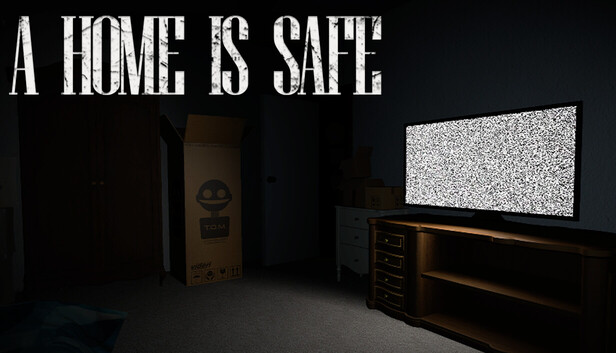
A Home Is Safe is out now on PC and it has a great hook for horror fans: your only hope against a murderous home-security bot is a clunky, retro firmware update you have to babysit in the dead of night. The game launched on October 28, 2025, and is available on Steam.

You play across multiple nights, splitting your attention between a tense terminal interface and first-person stealth in a dark house. While you route power to keep the update moving, T.O.M., the roaming security robot, stalks the halls. The goal is to rebuild its psyche before it decides you’re the problem. It’s a simple premise that leans hard on mood, sound, and that creeping feeling that the tool you bought to protect you is learning all the wrong lessons.

Moment to moment, you’re managing power, shutting down devices that siphon electricity away from your computer, and slipping through rooms without drawing attention. After 2 a.m., T.O.M. flags anything moving as a threat, which ratchets the tension as you push for the next progress bar milestone. The release ships with full English voiceover, single-player support, and a small set of achievements for completionists.

The project comes from California-based indie developer Beto Damian, who studied and taught game development at UC Berkeley before relocating to Los Angeles in 2024. That solo-dev DNA shows through in the focused scope and the “one big idea” design.

If you want to try it first, there’s a free demo on Steam. There is also a limited launch offer running through November 4, which makes this an easy pickup if you’re in the mood for a short, atmospheric scare and like the mix of terminal tinkering with first-person survival.

For the SDC crowd, this is a nice example of how a clear concept can carry an indie horror game. If you dig it, consider leaving a review and sharing notes with fellow devs on what works, from the power-management loop to the way the game teaches you to fear your own tech.

Grab A Home is Safe Today!

Raybounder | Spotlight Interviews

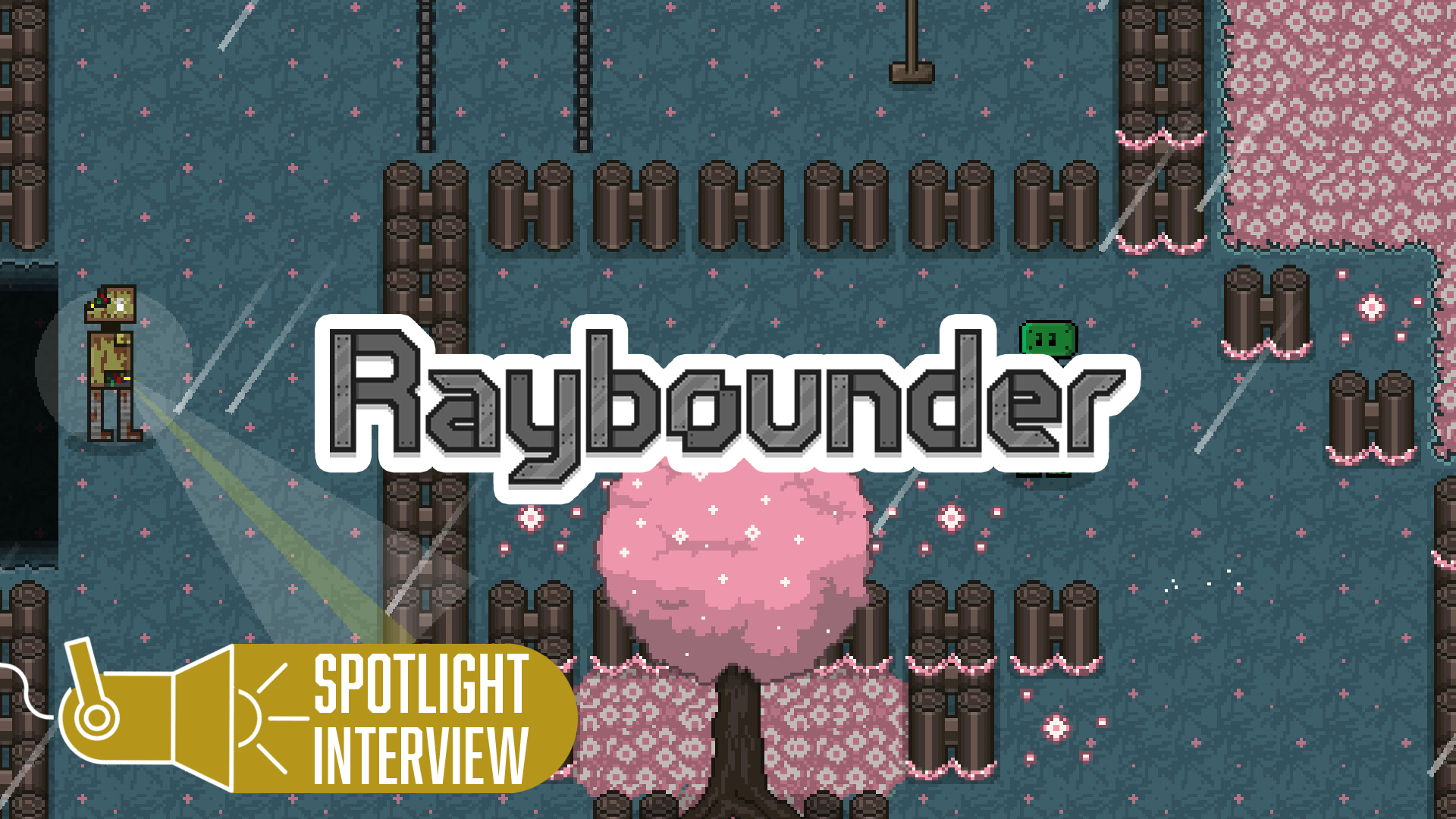
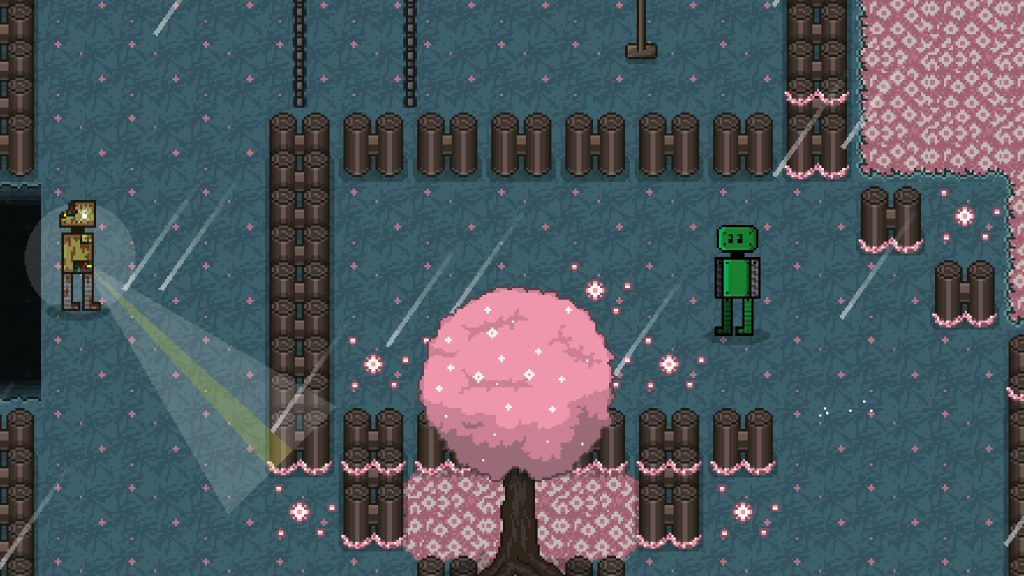
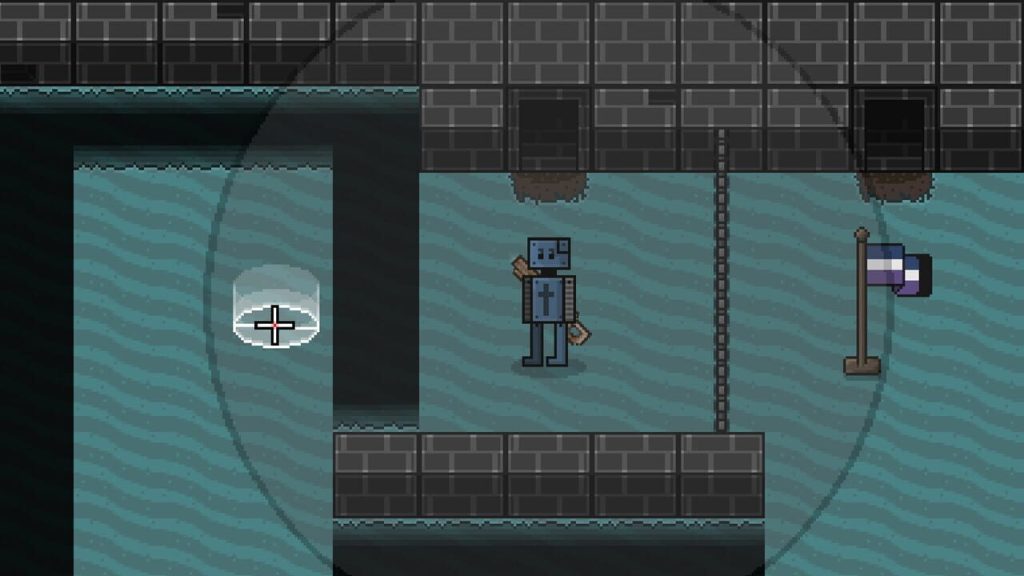
Hello! This week, we’re shining a spotlight on indie developer zilard, creator of the puzzle game Raybounder. What began as a GMTK Game Jam entry in 2020 has since grown into a fully fleshed-out project, featuring more than 60 levels of puzzle-platforming built around a unique mechanic: using laser recoil to move. In Raybounder, players control a robot armed with a laser gun, using its blasts not only to solve puzzles but also to propel themselves across increasingly complex and creative challenges.

We sat down with zilard to talk about the game’s inspirations, the challenges of solo development, and what’s next for both Raybounder and its creator.


For those who may not know, can you give us the quick pitch for Raybounder?

zilard: Raybounder is my passion project of about 2.5 years. It’s a top-down puzzle game where you play as a robot with a laser gun. When the gun fires, the recoil pushes you around the level. You need to use that movement to dodge obstacles, open paths, and ultimately guide both the robot and its laser safely to the end.

What inspired the game’s unique mechanic and puzzle design?

zilard: The game started as a GMTK Game Jam entry back in 2020 called Gun Control. At the time, I was going for something like “golf, but with guns.” Players enjoyed it and wanted more levels, so I decided to expand it. I’d also say old Flash games I played growing up definitely influenced the menus and presentation.

I definitely got those vibes—when I played, it reminded me of sites like Miniclip or Newgrounds.

zilard: Exactly. All those hours on Coolmath-Games must have stuck with me. A lot of playtesters mentioned the same thing.

Did any particular game or piece of media influence Raybounder more directly?

zilard: The art style owes a lot to my time making levels for Knytt Stories. You can see that evolution from my first game, Much Ado Mountain. Mechanically, I think Raybounder is fairly unique, but I’ll give a shoutout to Theyest Thou—the only other game I’ve seen with a somewhat similar concept, which actually came out right around the time I made Gun Control.

How did you first get started in game development?

zilard: Honestly, it goes back to when I was a kid discovering Roblox. Realizing that all these games I was playing were made with this weird language called Lua really piqued my curiosity. From there, I just loved making stuff for me and my friends—Roblox places, Minecraft mods, Scratch games, Knytt Stories levels. Eventually, I started joining game jams. It’s been a long journey, but Raybounder has definitely been the most rewarding project yet.

Were there any mechanics or ideas that didn’t make it into the final game?

zilard: Oh, plenty. Early on, I thought about adding different weapons and attachments—I leaned too far into combat before remembering it was supposed to be a puzzle game. I dialed it back and focused on doing more with less, like combining pushable, destructible, and hazardous objects into the TNT blocks you see in the final version. I’ve kept a lot of unused ideas in my pocket for future projects, though.

With over 60 levels, how did you keep the design fresh and engaging?

zilard: There are quite a few distinct mechanics—wind, ice, lightning, and more. Even with 60 stages, I feel like I only scratched the surface of what’s possible with them. I tried to avoid repeating the same combinations and made sure each area had a unique setting so that every level felt fresh.

A lot of stages also blend traditional logic puzzles with precision-based challenges. That mix kept things varied. My goal was always to have players asking for more, not wishing it was over.

How has the reception been so far?

zilard: Really positive! Making a game solo is a lonely process, and for years I wasn’t sure if what I had was even good. But the players who’ve tried it seem happy with it—even if some levels frustrate them a little, haha.

Raybounder has been such a great learning experience. I’ve grown as a designer and artist through it. While I’m excited to move on to new projects, I think the game deserves more love. I’m planning to release some DLC in the coming months.

Were there any levels you found especially rewarding to design?

zilard: Definitely. Once I made the level Scrap Metal, which features yellow robots, I realized I had something special. Before that, the game was entirely strategic—you could always repeat the solution once you knew it. But when I added time-sensitive situations, players had to execute actions under pressure. That layer of precision really changed the direction of the game.

As we wrap up, let’s end on something fun: what’s your favorite fast food meal?

zilard: I’m sorry to say, I have a really good answer for this… at Wingstop, a Spicy Korean Q Chicken Sandwich (with pickles), an order of voodoo fries, and a diet Dr. Pepper. TOP TIER!

Love it. And what question would you like to pass along to the next developer we interview?

zilard: My question for our subsequent interviewee: What is the most memorable bug you encountered while working on your game?

Finally, where can people follow your work?

zilard: You can check out my site at zilard.net—though it’s still under construction. On social media, I’m on X at @zilardian and on YouTube at @zilard. That’s about it—I’m not much of a content creator, haha.

Interviewer: Thank you, zilard! Best of luck with your next project, and we look forward to seeing what you create next.

Raybounder can be bought on Steam now!

Progressive Game Jam: How A Yearlong Jam Turns Ideas Into Games

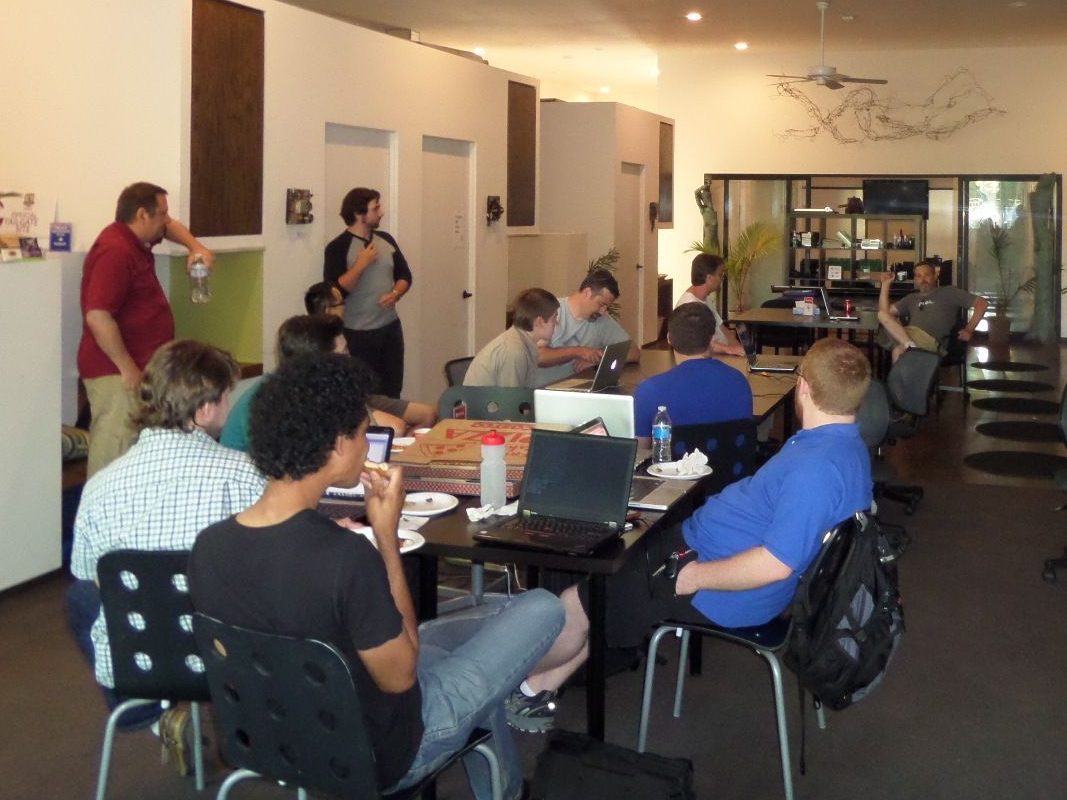
The Progressive Game Jam is a simple idea with an outsized impact. Instead of cramming a whole project into a weekend, developers meet month after month, building the same game with the same team, and moving through a full development cycle. That long runway is what makes it special. It turns “someday we should make a game” into “we made one.”

Why It Started

Sacramento’s game-dev scene grew from a small meetup into a real community, but the standard 24- to 48-hour jams left many creators wanting more. In May 2014, a small group met to rethink the format. The goal was clear: give people enough time to design, iterate, test, and actually finish something. During that meeting, the phrase “progressive game jam” landed, and the first season launched soon after. The History of the Progressive …

How It Works

PGJ runs across many months, not days. It starts with pitches and team formation, then rolls into regular sessions where teams build in public. That cadence creates a natural rhythm: set a milestone, show it, get feedback, repeat. By the time showcase season arrives, teams have playable builds and a story to tell about how they got there. The format encourages good scope, shared ownership, and steady progress rather than crunch. The History of the Progressive …

What It Produces

Across its seasons, PGJ has incubated dozens of projects and shipped multiple public releases. Titles developed through the program include Bike Route: Sacramento, Overtime, and Raining Snakes, alongside a long list of in-progress games that kept momentum beyond the jam. Participation has spanned well over a hundred developers across dozens of teams, with roughly two-thirds of projects finishing or continuing after their season ends. PGJ History

How It Helps Developers

You learn the full cycle. Weekend jams are great for experimentation, but PGJ lets you experience concept, vertical slice, playtesting, polish, and handoff. That end-to-end view is what studios look for.

You build a real portfolio. Showing a playable build at a public showcase beats a bullet point on a resume. It proves you can scope, collaborate, and deliver. The History of the Progressive …

You find your team. Artists, programmers, designers, audio folks, and producers meet and make things together over months, not hours. You learn each other’s strengths and communication styles, which often leads to longer-term partnerships.

You get accountability without burnout. Monthly milestones keep you moving, but the schedule is realistic. That steady pace is motivating and sustainable.

You connect to the local scene. PGJ projects regularly appear at Sacramento developer showcases, putting teams in front of players, press, and potential employers. Those reps help with feedback, confidence, and visibility. The History of the Progressive …

Where It All Leads

The program’s structure creates a pipeline from idea to public demo, with many teams continuing past the jam to refine, publish, or spin up new projects together. Even when a game doesn’t ship, participants walk away with practical skills, credits, and connections they can carry into studios or indie ventures. That’s the real win: a healthier developer ecosystem with more people finishing what they start.

Sources: Last Token Gaming

A New Era for SDC!

A New Era for SDC! Hey everyone! We’re excited to share some big updates with you. The SDC website has been updated and refreshed to better reflect who we are, what we do, and all the amazing things happening in our community. Take a look around—you’ll find it easier than ever to stay up to date on events, programs, and opportunities. But that’s not all! We’re also welcoming our new Social Media Director, Frank Lourence (you might recognize him from Geek Freaks). With Frank onboard, our social media is about to level up in a big way. Expect more frequent updates, behind-the-scenes looks at what our community is working on, and highlights of the incredible games being made right here in Sacramento. This is the start of a new era for SDC. We’re putting a stronger focus on spreading the word about our community—whether that’s through interviews, game spotlights, event coverage, or just celebrating the awesome things you all are building. We’re here to support local developers, and now more than ever, we want to shine a spotlight on you and your games. Stay tuned—it’s going to be a fun year!