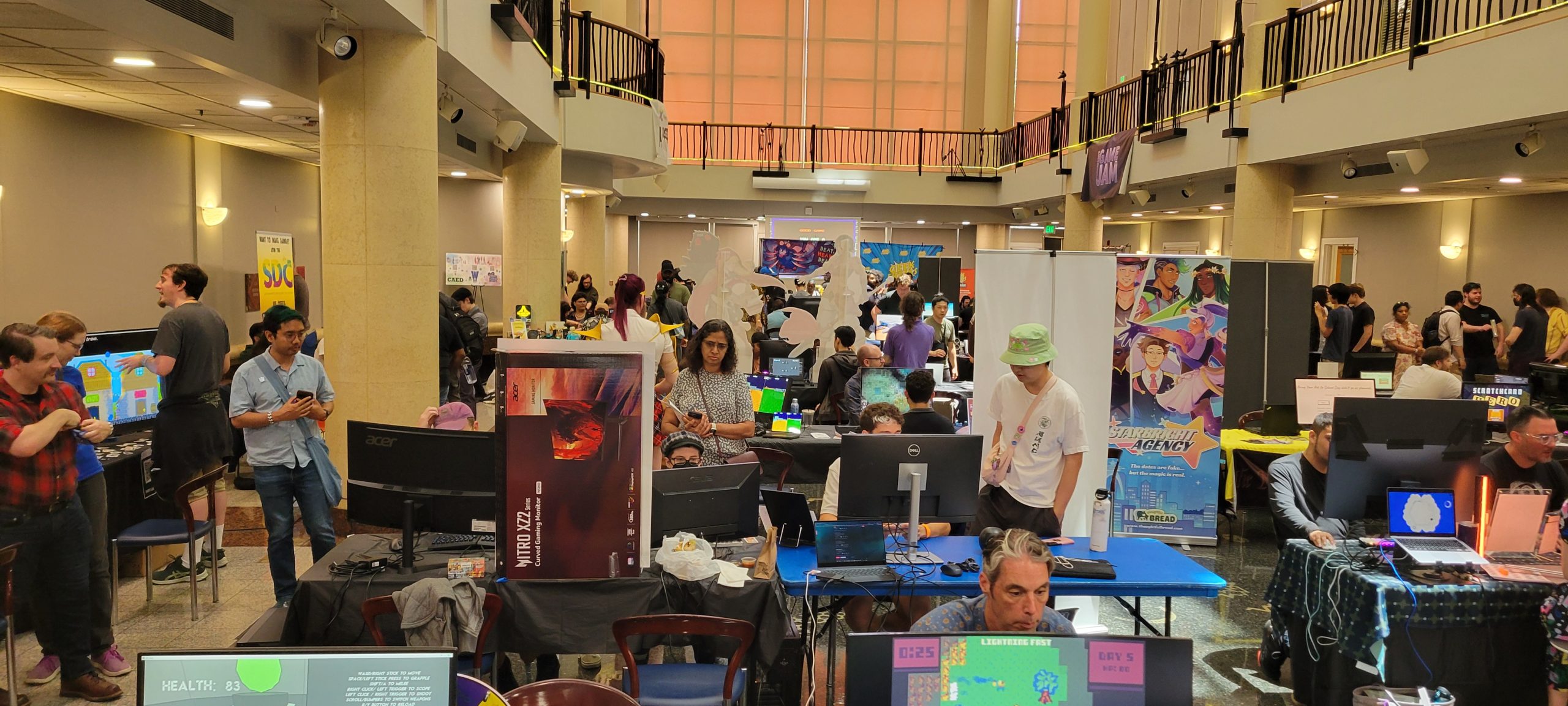
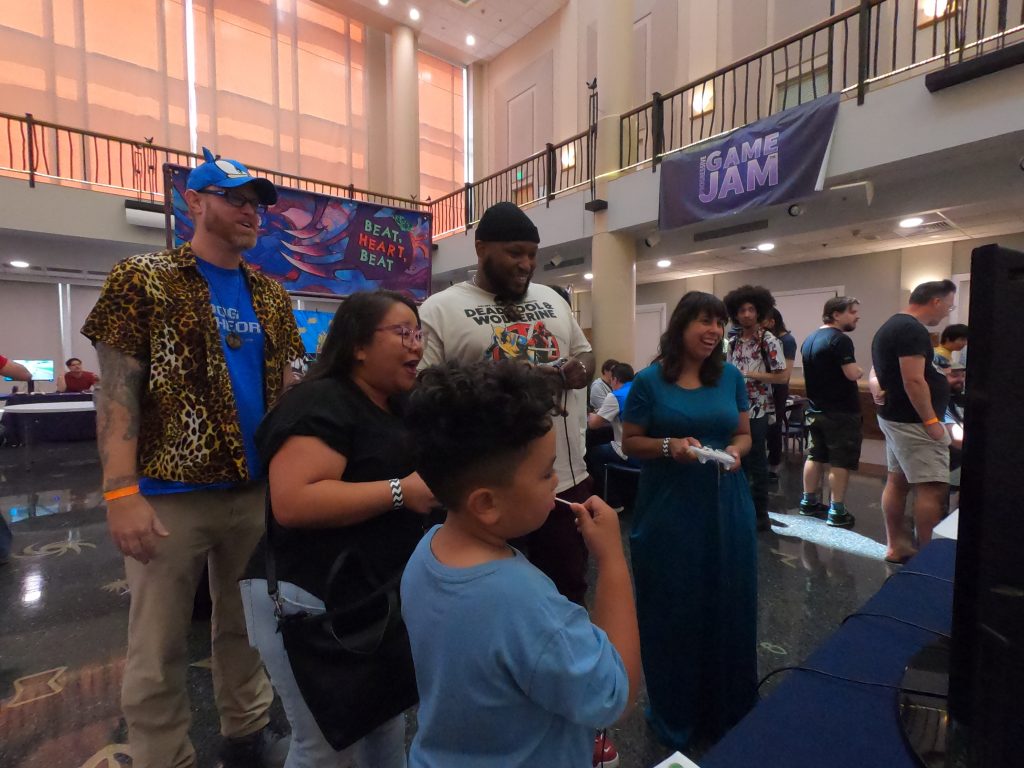
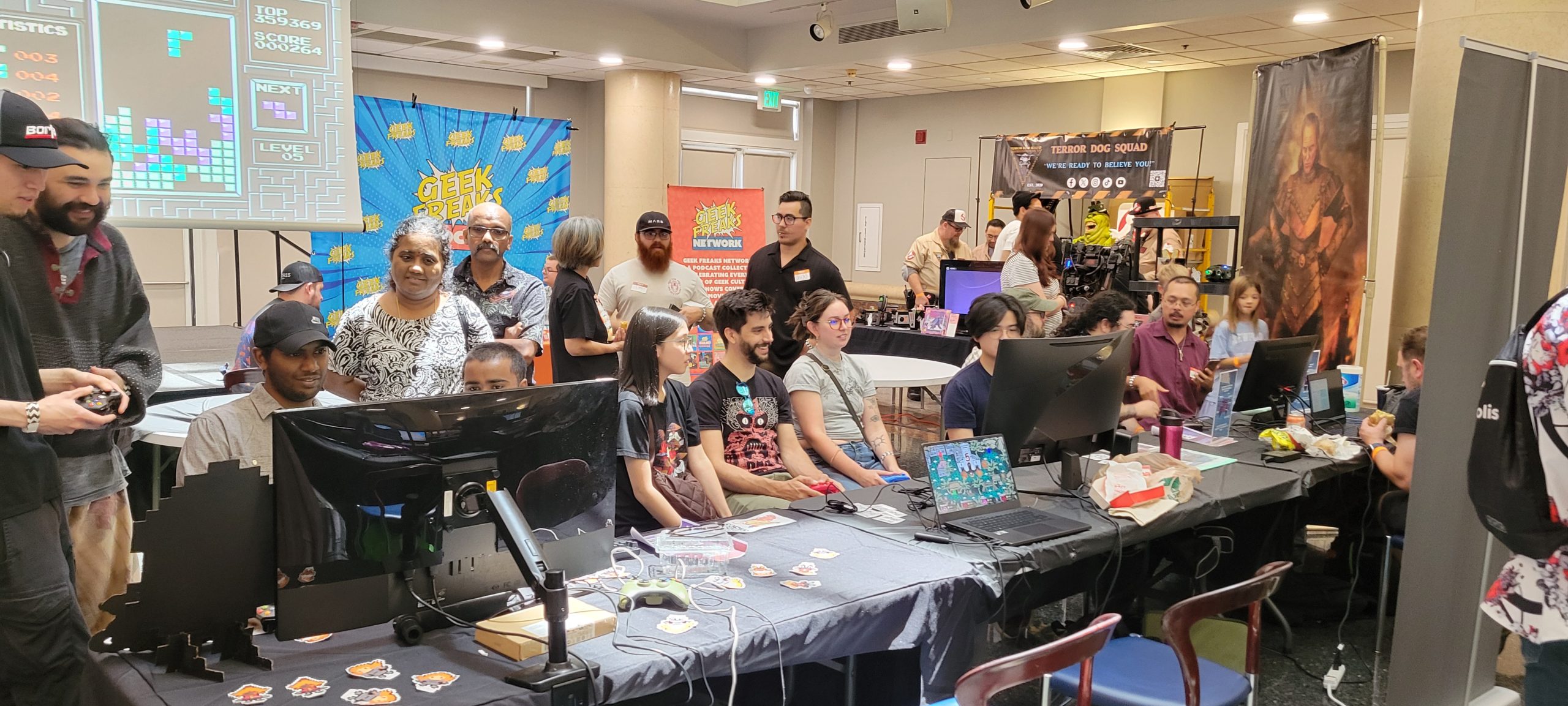
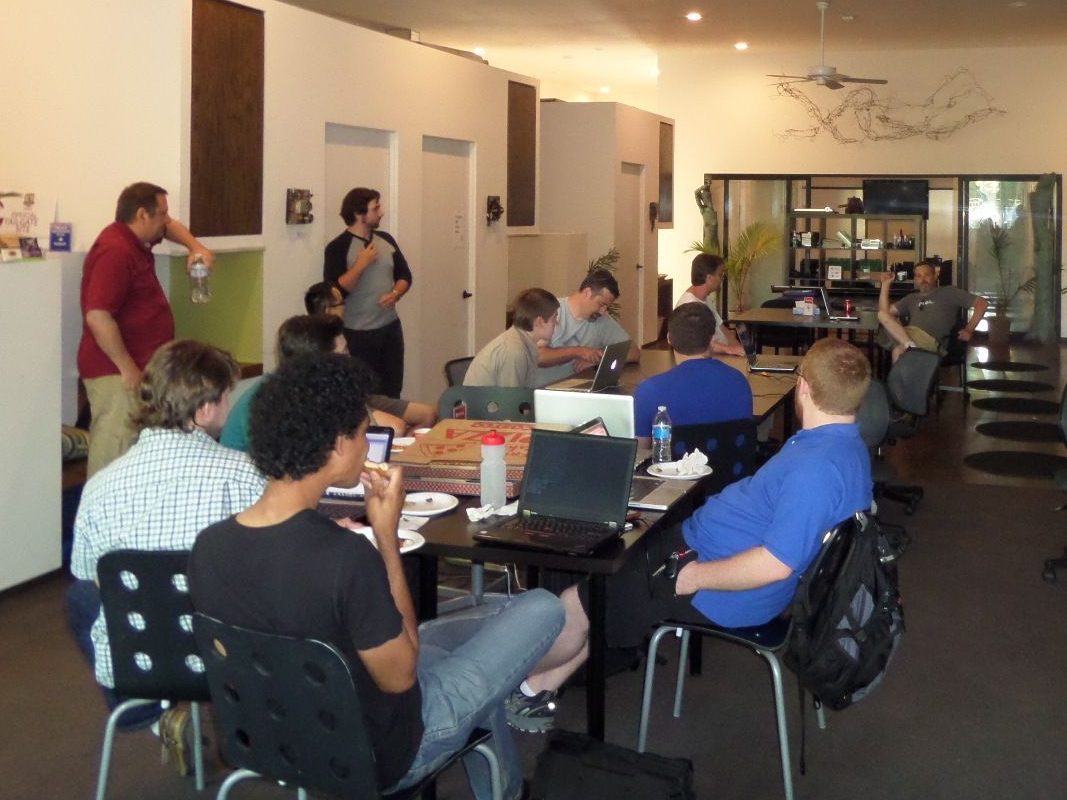
The Capital Creative Showcase is coming back on Saturday, May 9, 2026, and that return matters because CCS has a real track record of putting Sacramento area indie creators in front of people who will actually play their games. Over the past several years, the event has worked like a big community amplifier: not a corporate expo, but a place where small teams can show what they are building, get feedback on the spot, and connect with players, fellow devs, and potential collaborators.
From the start, CCS has been built around hands-on discovery. The whole format is “play first, talk to the dev second,” which is exactly what indie games need. Instead of being buried online, projects get a physical space where attendees can sit down, try a build, and give real reactions. That feedback loop has been one of the show’s biggest values for returning teams. People show up with early versions, watch what lands, then take those notes back into production.
CCS also doesn’t just showcase polished releases. It highlights works in progress, especially games coming out of the Sacramento Developer Collective’s Progressive Game Jam. Each season of the jam funnels into CCS, so the showcase becomes a kind of graduation day for new projects. Teams that formed months earlier get their first public audience at CCS, which is often the moment their game shifts from “cool idea” to “something we can finish.”
When COVID hit, CCS didn’t lose that mission. It transitioned online for a year, evolving into a streamed showcase featuring game spotlights and developer segments. That pivot kept local games visible during a time when most small events went quiet. It also left an archive of featured projects that helped newer audiences find Sacramento teams long after the livestream ended.
As the event returned to in-person shows, CCS expanded who gets the spotlight. Recent showcases have added a sharper focus on students and first-time creators, with dedicated areas like the Student Showcase and Creators’ Corner. That matters because it lets people in the early stages share the floor with more established indie studios. It’s a built-in bridge from classroom projects and hobby teams into the wider local scene, and it helps the audience see how deep the region’s talent pool really is.
CCS has also steadily widened the creative lens beyond just video games. Tabletop projects, art, film, and other interactive work have been part of the mix, which keeps the show feeling like a true “creative showcase” instead of a single lane convention. For indie game developers, that broader crowd is a win because it brings in curious attendees who might not normally hunt down a game expo, but will happily stumble into a booth, pick up a controller, and discover something new.
So with CCS returning in May 2026 at The Grounds in Roseville, you’re not just getting another fun day on the calendar. You’re getting the next chapter in an event that has consistently shared indie work the way it should be shared: on the floor, in people’s hands, with the creators right there to talk, learn, and grow with their community.
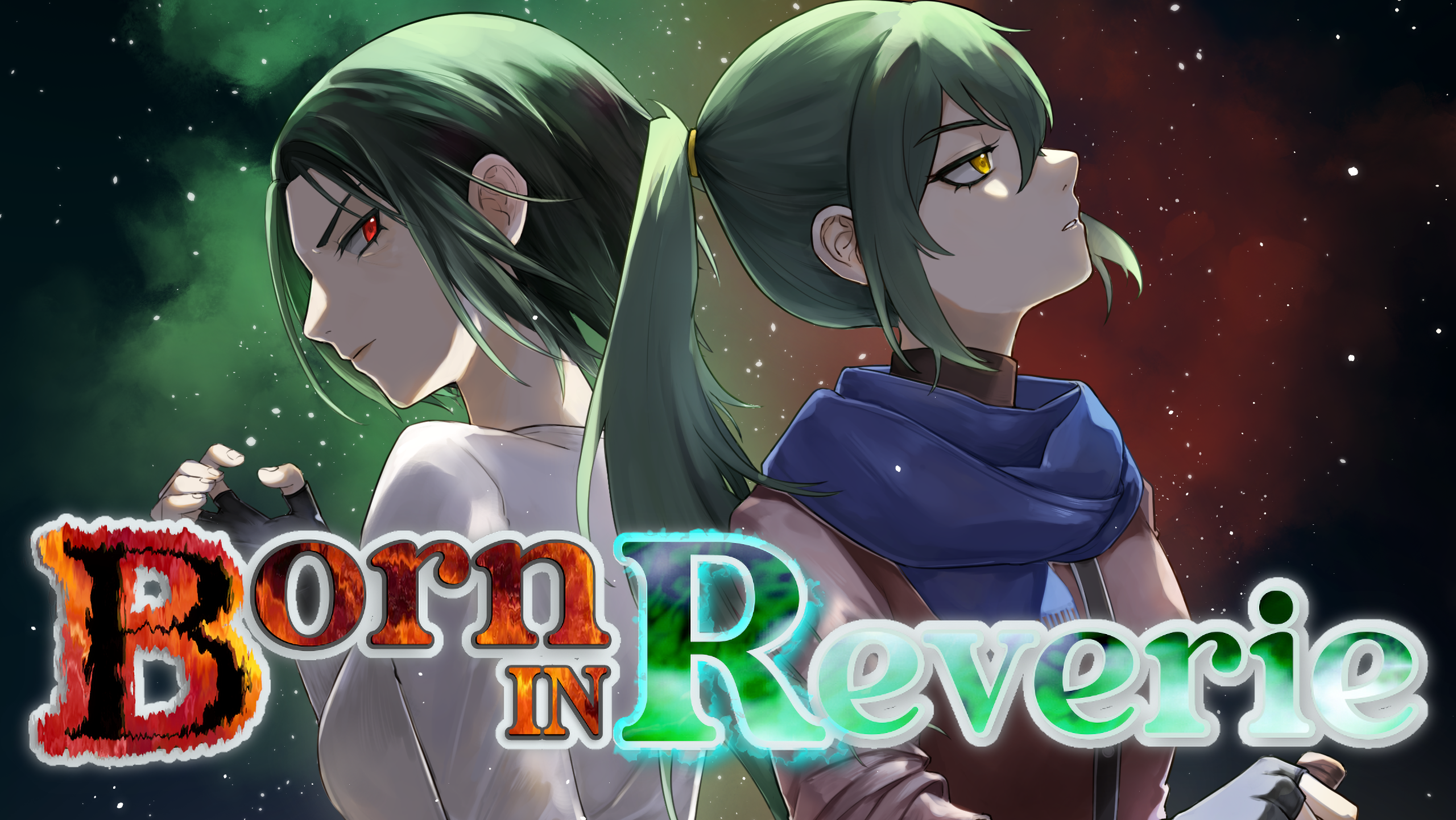
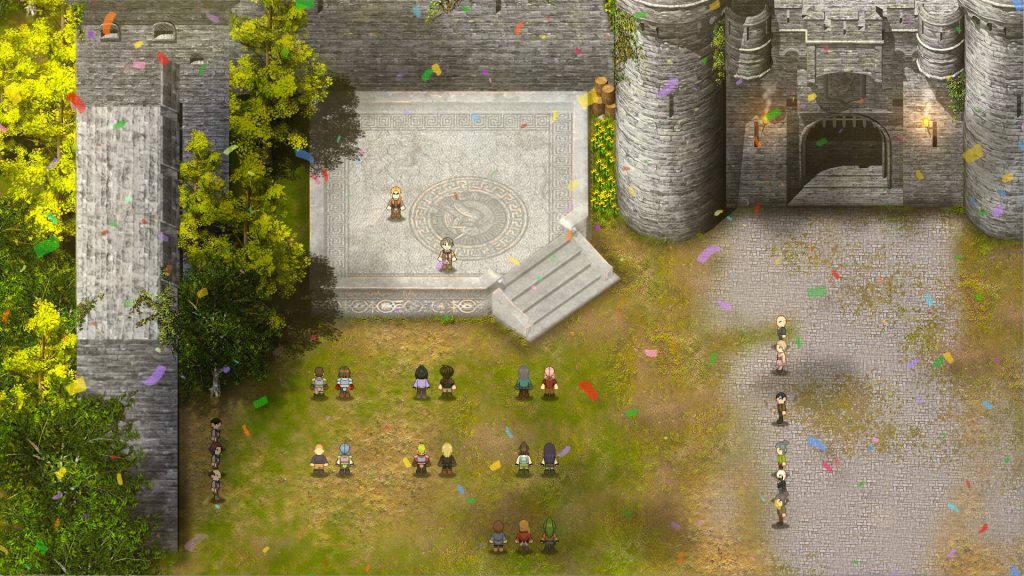
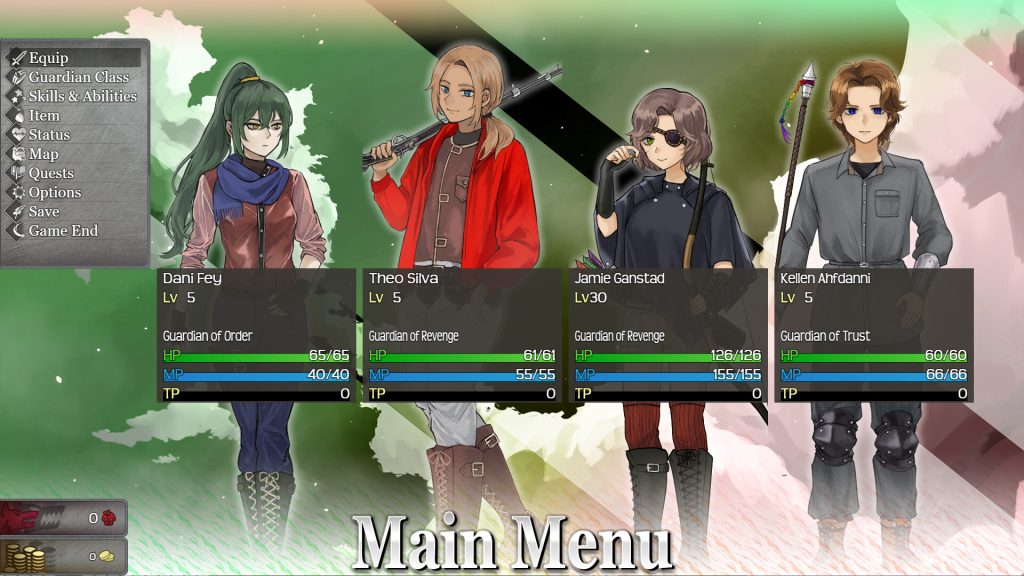
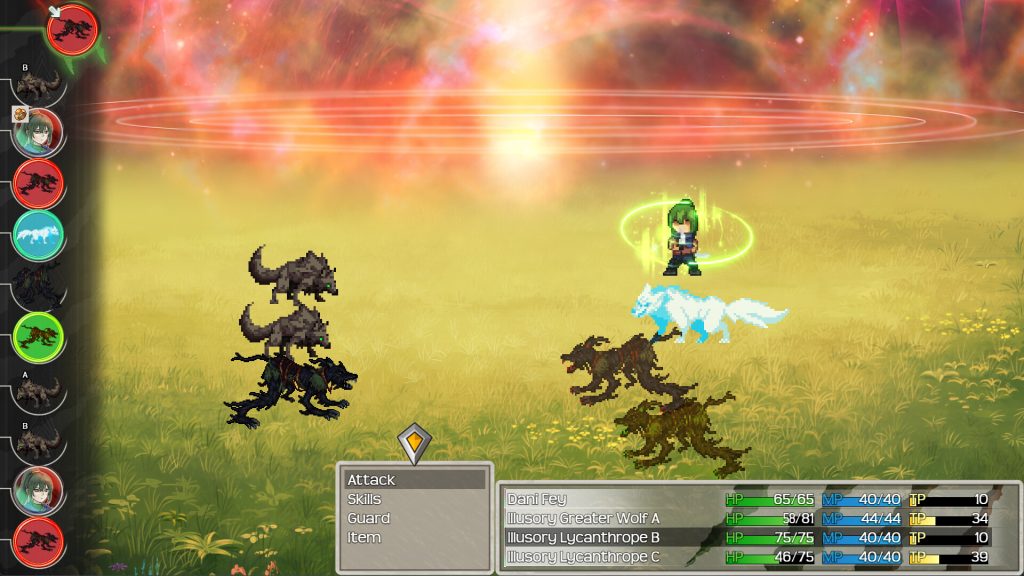
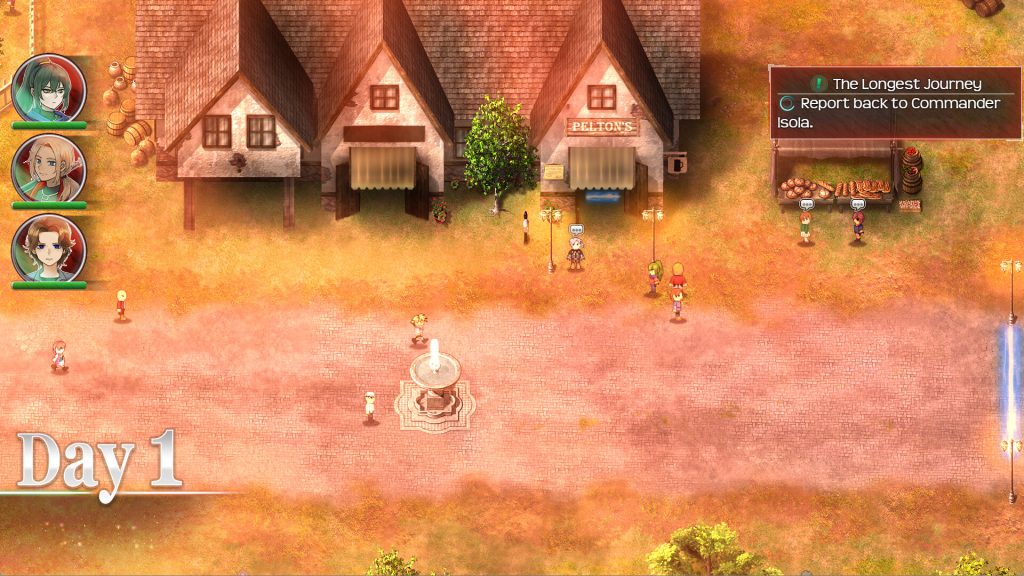
Born In Reverie started as a classic JRPG love letter and turned into something a little more personal. In this SDC Spotlight interview, the game’s creator talks about building a turn-based, narrative-driven adventure with deep lore, evolving character arcs, and a critical hit system that doesn’t just add damage, it changes the whole rhythm of battle. The result is a demo that feels familiar in the best ways, but clearly has its own identity.
You’ll also hear the story behind why this project exists at all. What began as a post-college tech career quickly turned into a bigger “what am I doing with my life” moment, and that push led straight into game development. The developer walks through how those feelings shaped Born In Reverie’s themes, tone, and characters, and why making something emotionally memorable became the real goal.
Along the way, we get into the practical side too, from the surprisingly wide toolset behind the project to the day-to-day workflow of solo indie development. They break down key inspirations like Attack on Titan, Nier Automata, and The Legend of Heroes, explain the pixel-sprites-meet-semi-realistic-world look, and share what they’re most excited for players to discover in the full release. If you’re into story-heavy RPGs, or you like hearing how a game goes from late-night idea to real, playable world, this one’s worth your time.
How would you describe Born In Reverie in a single sentence for players who haven’t yet tried the demo?
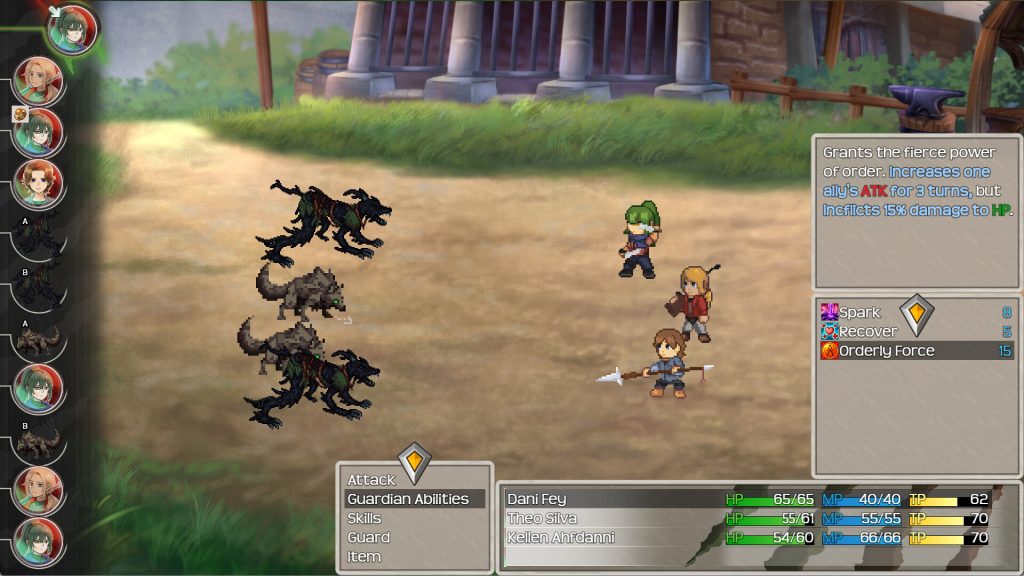
Born In Reverie is a turn-based, narrative-driven JRPG with a new twist on critical hits in RPG combat, dozens of evolving character storylines, and deep lore.
What was the spark that led you to create Born In Reverie?
I think I did a bit of a speedrun on mid-life crises. I graduated from college with a bachelor’s degree in winter 2019. I initially was going to get a master’s degree in applied mathematics, and I got accepted into a university in California for it, but then the pandemic hit. I decided I’d rather stay local and do a 6-month data analytics bootcamp program rather than take on more debt and leave behind my friends. So I did the bootcamp, where I learned how much I really enjoyed coding and how I was actually pretty decent at it. After the bootcamp and many months of job hunting, in early 2021 I landed a job at a tech startup in my hometown. The people at the company are really great and they’re one of the main reasons I stick around to this day, but it took me less than a year to have the “is this all life’s gonna be from now on?” realization.
You spend over a decade in K-12 education getting told how important having an education and getting a college degree is for your long-term happiness and success. As a child naturally does, I obediently listened to my parents, teachers (and really Western society as a whole) instilling this idea in me, and I got good grades, stayed out of trouble, played some sports, and just did what I was told would make me successful in the world. I felt pretty good about myself getting lots of praise from the adults around me for my academic performance and how smart I was. On the whole, I had good friends, good grades, high self-esteem, and felt like I had it all “figured out,” so to speak. I was gonna get a degree in math, land a technical job making lots of money, and be happy and proud for the rest of my life. The American dream! Sadly, in my opinion, that dream is just that these days, a dream. And like all dreams, you wake up from it eventually and you slowly realize that your decades of education weren’t designed to make you happy, but were simply designed to make you an effective contributor to the economy. Teachings on emotions, purpose, love, or relating to myself in a meaningful way were very scant growing up. It was deeply instilled in me that success and happiness were objects to be won in the “game of life” rather than my birthright. Sadly, I know I’m far from alone in those ideas. In the end, it’s pretty innocent, I think. You get taught how to be a good worker in the economy so you can survive, but certainly not to thrive. So after an exciting few months at my new tech job, feeling so cool and proud for utilizing my math and coding skills to make slick data visualizations and charts and do “badass” data transformations, it quickly dawned on me how routine and pointless this all was.
As a child, being an adult sounded like the promised land. Freedom to spend my money how I wanted to, play video games all day, eat whatever food I wanted to, live by my own rules with nobody telling me what I should do, and so on. And then when I finally “got there,” I realized most of my adult life was actually going to be me mildly underslept, sipping coffee, sitting at a desk alone at home, making pie charts, and making sure I carved out enough time after work to go grocery shopping and lift weights. Oh, and find some time to play games, of course. Hooray, this is what I was made to do. I started getting pretty anxious and lonely as the months went on. For the first time in my life, there was really no purpose anymore. I had done everything my upbringing told me to do and finally landed a well-paying, cushy work-from-home job. So this is it, just working and scrounging for whatever free time I could to distract myself from the emptiness and pain I felt inside.
As the months went on, it finally reached a tipping point one Sunday afternoon. I remember it being late January 2022, and I was at my apartment feeling horribly lonely, anxious, and empty. I think I had a pen and paper and I was trying to write down what things actually mattered to me in life, what I truly cared about. It didn’t take long for me to realize video games were at the core of my life and had been for a very, very long time. Some of my most treasured memories in life were playing The Witcher 3, The Legend of Zelda, Nier Automata, The Legend of Heroes, Dark Souls, Fire Emblem, and hundreds of other amazing experiences. That’s what I actually cared about. I broke down crying and realized that I wanted to give to the world what it already gave me a hundred times over: something truly memorable and emotionally impactful in video game form.
What is your workflow for Born In Reverie, and what tools are you using to help make it?
In no particular order: RPG Maker MV, Excel, Word, Visual Studio, Photoshop, GIMP, JustSketchMe, Gmail, Python, JavaScript, ChatGPT, Fiverr, and my brain. Those are the main tools that have been used to bring Born In Reverie from a concept to a real, tangible game.
To me, one of the beauties of being an indie dev with no publisher or major deadlines is having the ability to work on whatever you’d like to, so my workflow tends to bounce around a fair amount. I always keep the big picture and larger roadmap in mind, but on any given day I tend to wake up and work on whatever appeals to me the most that day. Oftentimes it’s NPC writing. Some days it’s design work in Photoshop. Some days it’s listening to music from other media for inspiration and references to provide the composers. Some days it’s making custom plugins and coding. Some days it’s playtesting. Some days it’s reading over all my documents to remember what the hell the larger story and history actually is in the first place. Some days it’s watching talks from GDC on how to market indie games. Some days it’s writing tweets. Some days it’s updating my website with new content or pages. Some days I justify playing and analyzing other games as “working on my game,” which I do think is a funny justification in my brain. At this point, you probably get the idea!
It’s worth noting that although I describe the process as haphazard, I’m aware that for anyone on the outside looking in, the whole process probably looks very clean and organized. I tend to be a very big-picture thinker and I plan for the future very well, so what I might describe as a scattered workflow could actually be pretty clean and linear to others. I do think it’s important to balance working on what needs to be done and what’s fun to do. In a shocking surprise to nobody, not all aspects of game development are super enjoyable. Some days I know I just need to grind a relatively mundane scene out in the script so that the plot can progress. Other days I know I need to spend time proofreading and ensuring character tones are consistent across scenes. Some days I begrudgingly retool aspects of code or in-game events to be more consistent and scalable for the long haul. For me, Born In Reverie is a mix of “I have to do this today” and “I get to do this today.” The “I get to” items get me out of bed in the morning, and the “I have to” items ensure that Born In Reverie will actually reach completion one day.
My very cleverly named “Game Work” folder contains all assets even remotely related to Born In Reverie’s development. Currently it sits at 69 (nice) GB, slightly over 100k files, and nearly 3.5k folders.
The game mixes lore, character dynamics, and dungeon exploration. Were there particular games, novels, films, or even life experiences that shaped its tone and world?
As you might expect, there are a lot of events and media that influenced the game. Just to touch on a few of the bigger ones, I’ll say Attack on Titan, Nier Automata, and The Legend of Heroes are big influences. I’d like to be careful when mentioning exactly how those titles influence Born In Reverie, so nothing too spoiler-y is revealed. I’ll stick to just naming what I liked about those titles.
I really appreciate how well planned AoT’s story was. You get the sense that the entire story had already been written from end to beginning before the first chapter of the manga was even released. It makes the experience so much more gratifying and awe inspiring to see how everything that happened in this story actually “makes sense” and had multiple reasons for occurring. Hardly anything feels retroactive.
The Legend of Heroes is a more niche JRPG franchise, and it has some of the best world building and lore I’ve experienced. More so than any other franchise I’ve played, those games really capture the feeling of being a visitor to a tangible world. The depth of the NPC characters plays a big part in that. You get the sense that the world exists with or without the protagonists present. I think this is pretty unique compared to most games, where there’s often such a stark contrast between the “main characters” and “everyone else.”
Nier Automata taught me how amazing game soundtracks could be and how emotionally impactful the narratives could be. That game hit me like a freight train.
Much of my own personality and personal struggles are interwoven into the characters themselves, naturally. I do think those aspects are best left to the player to experience as opposed to me spoiling things. But it’s an accurate statement to say that anyone who experiences the game in its entirety will learn a lot about my own philosophies, likes, dislikes, struggles, et cetera.
How did you land on that look and feel of the game, and were there styles you experimented with but abandoned?
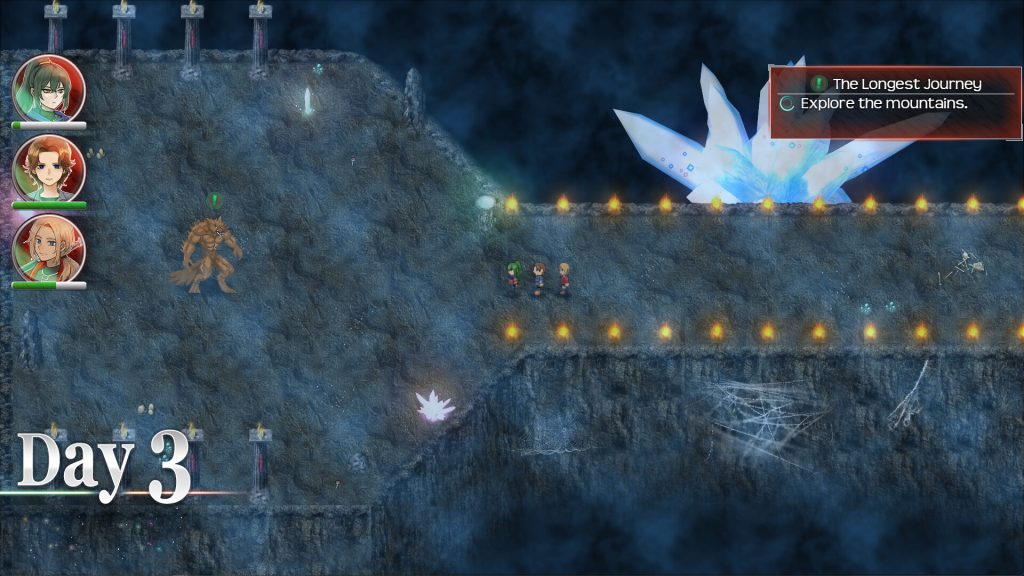
From the beginning, I liked the idea of juxtaposing pixel art sprites against semi-realistic backgrounds and environments. I believe it helps encapsulate the tone of the game as equal parts lighthearted and fun, mixed with maturity and complexity. There were, of course, revisions to certain character designs and sprites, as well as iteration on saturation levels, vibrance, color depth, et cetera when it came to the backgrounds and environments. But fundamentally I knew what I wanted the game to look like at its core from the beginning, and there haven’t been any major shifts in design or look.
As far as the character designs themselves, I knew I wanted anime and manga inspired illustrations. The artists I work with to produce the character art have done an amazing job so far. Even as an enjoyer of anime and Japanese culture, there’s still the innocent part of me who thinks it’s a bit cringe and cheesy, but that’s part of the fun. There’s nothing wrong with enjoying things that others perceive as cringe.
The “feel” took a while, and still changes. The main challenge is creating a good combat feel. Although Born In Reverie is primarily a narrative-driven experience, I don’t think in this modern era we as developers can reasonably expect players to engage with our stories if we don’t give them sufficient dopamine hits. The game needs to be fun to play, plain and simple. There are so many aspects to consider when it comes to animation length, speed, sound effects, gamepad vibration levels, UI design, the quantity of enemies in each battle, how difficult they should be, et cetera. The word “balance” comes up a lot in games, and I think it’s especially true in the feel of combat. I want it to be challenging but not rage inducing, fast but still deliberate, weighty but not overdone, rewarding without being trite. I’m sure the feel will still evolve over time as I continue playtesting and iterating.
How did you approach balancing personal character arcs with larger stakes?
That’s a really good question and hard to answer. To be honest, I’ve never fully thought about how I balance these. I do fundamentally think they are intertwined, and my natural inclination is to keep larger stakes and character arcs pretty in sync. Both carry emotional weight for the story, and it’s important to have proper build up, but I also don’t want to string the players on for too long. In some respects, the personal character arcs are the larger stakes when I think about the overall story. So these elements are often indistinguishable in my mind.
The demo mentions an “Evolution of Critical Hits” in turn-based combat, where landing criticals triggers the Inspired state. How did you design this system to feel meaningful and engaging?
As far as I recall, the idea for this system struck me randomly one day. It’s sort of a marriage of ideas that I already find appealing in many turn-based games, where the music changes throughout the experience to make it more dynamic and exciting. Modern Fire Emblem games do that with their map themes, and I think it’s super cool and adds a lot of perceived build up and tension to turn-based battles. Bravely Default does something similar where each character has their own theme that can get triggered in battle. So the Inspired system originated from the desire to create more excitement in battles, just like those titles do. From there, I started thinking about how critical hits have largely stayed the same in RPGs for a while. There’s usually some low base chance of landing one, and oftentimes there are abilities and items that increase critical hit rates. I thought it’d be fun to make that a core mechanic, give the player a lot more incentive to increase their critical hit chances, and create an ebb and flow to battles bouncing back and forth between the Steady state and the Inspired state.
In order for it to be meaningful, there has to be clear incentive for the player to use the system. There needs to be perceived value. So when the party lands a critical hit and becomes Inspired, they are immune to most status effects, they deal more damage, act faster, regenerate HP slowly, and gain more EXP when they kill enemies. Gaining more EXP is an interesting incentive, I think. It allows the player to really target which party member they want landing final blows to gain the EXP for a kill. So there’s potential for some “self-inflicted” strategy in each battle, where you may choose to prioritize certain party members getting kills over others to speed up their level ups. And of course, the party is only Inspired for a few turns, so this is the player’s best chance to go on the offensive and deal a lot of damage.
For it to be engaging, I think I rely a lot on the “feel” side of things. I want it to trigger those dopamine hits in players when they land a juicy critical and get to wipe out tons of enemies afterwards. So I continually work on character cut-ins, animations, volume levels, soundtrack elements, gamepad vibrations, and tuning critical hit rates themselves to try and make it always seem enticing to land a critical hit.
What was the hardest part of balancing systems so the gameplay supports the story?
Luckily this turned out to be pretty easy as the story got locked into place. I think for players who experience the full game, they’ll get a good understanding as to why the gameplay is the way it is from a lore perspective. I guess the hard part can sometimes be where and when to compromise. If I want to introduce X mechanic into the gameplay, I then have to ask if it conflicts with any existing part of the story. If it does, then I have to decide if I want to rewrite parts of the story or introduce new explanations for things. Or on the other side of the coin, I could decide to alter the gameplay mechanic slightly to better mold it into the existing narrative structure. So there can be a push and pull element there. I don’t think I’ve ever had to seriously rewrite parts of the story to fit with the gameplay, however. The story is designed to be an RPG, and the gameplay is designed to support that story at the end of the day.
For players who’ll experience the full game: what are some mechanics you’re particularly excited for them to discover?
From a gameplay perspective, I’m excited for players to mix and match the Guardian Classes for their various skills. I almost hope there ends up being some overpowered strategies that players discover. At least in moderation, I think having some busted combos is really fun, especially when you discover them using your own creativity and intelligence. Unless I enlist a full team of playtesters (which will definitely not be happening at this time), I doubt I’ll be able to test all the possible character builds.
From a story perspective, I’m excited for players to find some of the hidden gems and character narratives. I want players to have lots of “aha!” moments that reward them for paying attention, even if something appeared trivial at the time. I hope to make the narrative very deliberate and satisfying for any fellow gamers who spend a little too much time thinking about dialogue and characters.
When building enemy encounters (especially the “Beasts” you defend against), how did you approach creating variety and maintaining tension throughout?
Creating variety is hard for this project at times. The scope demands a lot of different enemy types and skills to keep things interesting. This is an area I’ve done my best to keep engaging, but also something I’ve compromised on. I love working with artists to produce new sprites based on my ideas, and if $50,000 dropped into my wallet today, I’d definitely spend a lot of it creating a bunch more enemy types and animations. But I’ve had to prioritize what areas need the most attention for the overall vision, so creating super fleshed out and complex enemy encounters doesn’t always take center stage.
None of this is to say that the enemy encounters are stale or boring in my mind. I think they’re quite fun and intriguing. If anything, I think most of the variety in battle comes from the player party’s side of things rather than the enemies. Mixing up Guardian Classes and acquiring new skills provides a good amount of creativity and experimentation that allows gameplay to naturally change over time.
As far as maintaining tension goes, I obviously try to balance the enemy encounters so that it is easier at times, and then very challenging at other times. Tension will naturally arise during stressful combat scenarios, regardless of any story stakes involved. I also think that tension is not always required for the tone of any gaming experience. It’s okay if it deliberately feels easygoing and safe at times. Those moments help contrast the moments where real tension and stakes arise. If everything is tense all the time, then nothing really is. Things only get scary and exciting when you’ve been afforded ample time to breathe in a real (or false) sense of security.
From your perspective, what’s a moment or mechanic that surprised you during development, something that worked out differently (for better or worse) than you expected?
Some days I’m just surprised and amazed the game even works at all. Somehow all the files and code make a whole video game that actually runs and is largely devoid of game breaking bugs. That’s the biggest surprise of all, in general.
Honestly, I can’t think of a concrete example where something really ended up a lot better or worse than expected. There have been small things over the years that caused some issues, but nothing major. Is that strange? I also can’t think of anything that really turned out to be way better than anticipated. Almost everything has been “within reason” or “about as expected,” which is maybe a really lucky thing in game development. I honestly don’t know. I certainly don’t attribute that to my own prowess or intelligence since those were sorely lacking early in development, especially. But regardless, things have largely worked out well for Born In Reverie.
How long has Born In Reverie been in development, and how has your vision for it evolved since you started?
Born In Reverie has been in development since late January 2022. I definitely know that some of the edges have softened since the early days of development. The project spawned equal parts from inspiration and love, and also a deep sense of resentment and dissatisfaction towards modern life. Early story and design ideas carried a lot of that hurt and dissatisfaction with them. Over time, I’ve mellowed certain characters and story ideas a bit as I’ve had the clarity of different perspectives over the years. The original vision and philosophy for the project remains largely intact, however. The core guiding principles remain the same.
I’ve definitely put more effort into the “game-y” aspects of Born In Reverie in recent times. Ensuring tutorials are well placed and simple, changing pacing to make sure nothing drags on for far too long, adding fun item descriptions, playing with different sound effects, and other small touches. I’ve had very passionate ideas for story and characters for a long time, but I didn’t always know what would be interesting or fun to actually keep the player coming back to play. My experience has largely been that even when you think an idea could be super fun and interesting, playtesting is king on that front. The only way to know if a game is fun is to play the whole damn thing and see if anything is actually good, to see if all the systems coalesce into a cohesive experience that is enjoyable. And like I mentioned in an earlier question, especially for narrative heavy experiences, I think a game really needs engaging gameplay to keep players’ monkey brains happy. No judgment, by the way. My brain also enjoys bright colors, flashy action, and pure hype just as much as anyone else. We’re wired to seek pleasure and enjoyment.
As an indie developer, what have been the key lessons from carrying this kind of project forward?
For better and for worse, it’s useful to be a bit obsessed with your project, in my opinion. A fair amount of people have asked me how I stay consistent with the project throughout the years. I work on it in some fashion nearly every day, save vacations and special holidays or occasions. It’s just a habit that has to be formed, and being pretty obsessed with the project for the first year or so definitely instilled some long-lasting habits.
There are plenty of days where I’m not super enthused to work on part of the game, but I just know something needs to get done. I try to balance that with finding fun parts to work on. I think it’s important to work on aspects that are satisfying in the moment, and if nothing feels fun at all, to maybe consider adding something new that does sound fun. It’s your project, after all. We all want our games to be received well by others, of course, but it’s not worth sacrificing your own enjoyment of the process just to do that. I’ve really enjoyed making this project from the beginning, so motivation has luckily never been an issue for me. There are so many aspects to game development that I find it hard to get bored. You can make assets, write story, rebalance gameplay, write code, work on marketing and advertising, or even just sit down for an hour and play your game with no real motive. Just play and see how it feels, see if you enjoy it.
I also think I’m continually learning how much to share and how much to keep to yourself. Like I mentioned earlier, we all hope people like our games and help validate our ideas, but it can be problematic seeking too much external validation and sharing tons of details about your project. There have been a few times where I’ve shared a lot of details about the project and felt relieved but also quite unmotivated afterwards. I’ve heard game developer legend Masahiro Sakurai talk about this concept as well. It always seems to be more motivating and satisfying to work on your game largely in a bubble for a long time before showing new pieces off. It helps keep you immune from too much social pressure and influence. I’m naturally pretty secretive about my project, so this has helped me carry the game forward each day.
What feedback from players or testers has you most excited (or rethinking something)?
Some positive feedback on the Inspired gameplay mechanics has been exciting for sure. It’s always good to hear that an idea is actually pretty fun and interesting from an outside perspective. I’m excited to continue iterating on that and balancing it further.
I’m always a little iffy on the prologue, at least in certain areas. I’ve heard scattered bits of feedback echo my own thoughts on this. It can be a lot of information and story to jump right into, even for players accustomed to that in games. There are pieces to the prologue that definitely feel a bit coarse and rough around the edges, at least in my own eyes. I’ve done a lot of work to retool and improve the prologue over the years, but there are parts that are still sore spots, I think. It’s TBD if I will actually continue retooling it anymore, though. Much of the story depends on events that occur then, and those ideas are pretty locked into place at this point.
What’s your roadmap for the full game moving forward, more classes, deeper lore, post-launch content? I have the big-picture roadmap in mind. I want this to be a whole complete experience when it’s released properly, so at this time I don’t envision adding DLC or anything brand new after the full release. Nothing’s entirely certain, however. I value games that are released as completed products, but I also am coming around to the benefits of early access titles, depending on the circumstances. I would hate to deliver a half-baked experience to players. I want them to know their time is valued and that they deserve good quality. So I’m thinking of ways to strike a balance on these fronts. Making a big epic RPG is very time consuming, I’ll say that much.
My roadmap involves just completing the game that I have outlined. There will be some more classes, different party members, more story elements resolved, different acts, character arcs completed, lore explained, et cetera. Maybe it’s a simple and redundant answer, but the roadmap is essentially just: “finish the game.”
I don’t have anything locked in, but I hope to have some news in 2026 or 2027 for people looking forward to Born In Reverie.
How can players support you, follow your journey, or get involved in shaping Born In Reverie as it grows?
All feedback is immensely appreciated and welcome, although nothing is guaranteed to make it into the game as a result of said feedback, of course. My website is the hub for links to my socials and Steam page. A demo is also available on Steam and Itch.io. I would love to hear people’s thoughts and experiences, and both platforms have dedicated comment and review sections. If you’re an artist and are interested in helping me with the project, I’d love to hear from you via email as well.
Our next question comes from Bugzsteaks, developers of our previous SDC Spotlight game, Bottom-up Beatdown! They asked: How does your level design process go?
My level design process is pretty strict and regimented, perhaps in part because of the RPG genre itself. After some iterating, I landed on a set of rules and guidelines for each dungeon’s design, size, quantity of enemies, chests, items, and estimated length.
I open up a canvas in Photoshop that is the size I decided on (3168 x 3168 px), and then I work on designing discrete “chunks” or “pieces” that I can connect together to create pathways and backdrops. Basically creating some template designs. After I have the templates in place for a new dungeon, I can get to work actually designing each map in the dungeon using the templates.
Once the design work is done and the assets are placed in-game, I go to work placing enemies, chests and items, entrances and exits, et cetera. After that I will do some additional design work in-game with post-processing effects and animations. Then it’s time for playtesting to make sure everything works as intended, and move on to the next map in the dungeon. Rinse and repeat.
What question would you like to ask the next SDC Highlight developer?
What is your favorite part of developing your project, and what aspect do you most dread having to work on?
Born In Reverie feels like the kind of project that grows out of equal parts love for the genre and a real need to say something through it. Hearing how the game came together, from the personal spark to the nuts and bolts of building dungeons, combat systems, and character arcs, makes it clear this isn’t just a nostalgia play. It’s a world the developer is trying to make worth living in, and inviting players to help shape along the way.
If you want to see what they’re building for yourself, the demo is up now on Steam and Itch.io, with more to come as development keeps rolling forward. Whether you’re here for the story, the combat twist, or just to watch a solo indie RPG take shape in real time, Born In Reverie is one to keep on your radar.
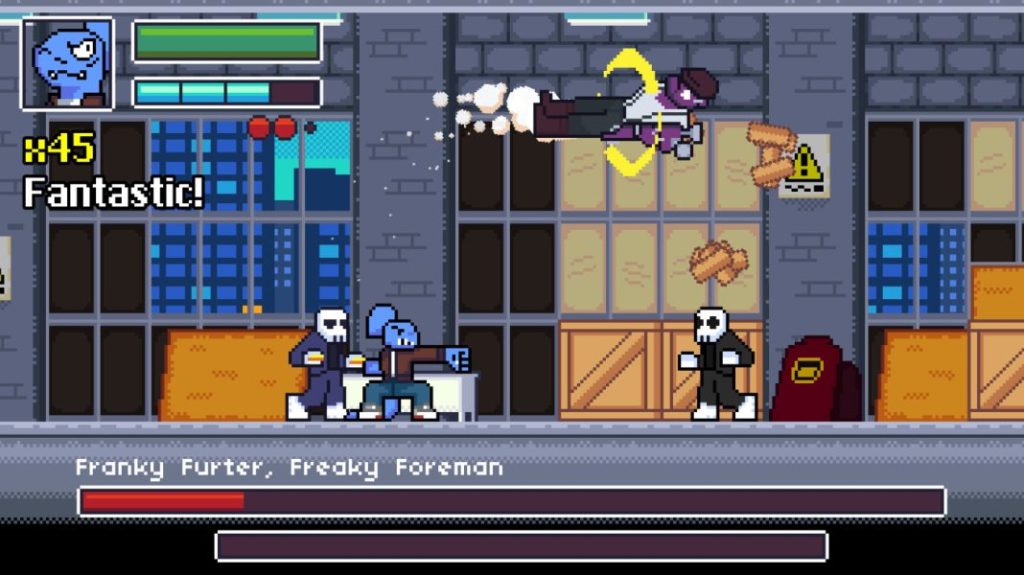
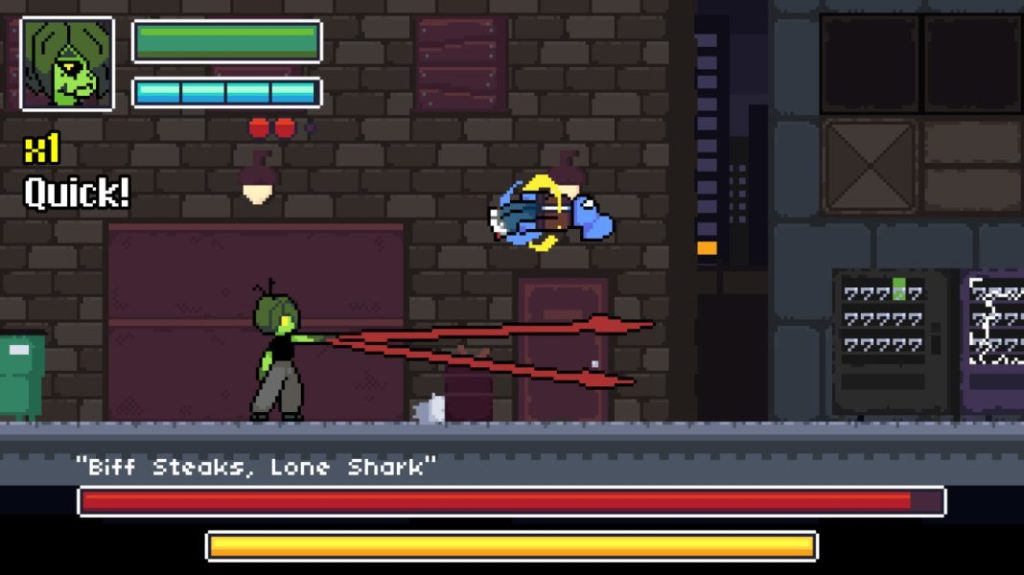
Bottom-Up Beatdown: Hostile Takeover feels like it was ripped straight out of a hyperactive Saturday morning lineup and dropped into a modern character action game. It is a fast, combo-heavy beat ’em up set in a world overrun by monsters, built with the crunchy impact of arcade brawlers and the expressive flair of Nintendo DS era sprites. Behind it all is a solo developer who took post-college boredom, a love of No More Heroes and Castlevania, and a deep appreciation for tokusatsu weirdness and turned it into a full-on project.
In this SDC Spotlight, we talk with the creator of Bottom-Up Beatdown about where the game came from, how classic fighting games and action titles shaped its combat, and why making bosses feel like anime rivals is just as important as making them challenging. We also touch on the realities of building a game mostly alone, what early playtesters are asking for, and how the dev is trying to balance personal artistic goals with making something people will actually want to buy.
For readers who haven’t yet tried out the demo, how would you describe Bottom-Up Beatdown: Hostile Takeover in one sentence?
Beat ’em up meets character action in a modern world filled with monsters!
Where did the core inspiration for Hostile Takeover come from?
To be honest, I was half a year out of college and I was extremely bored. I figured I was only getting older, so making a dream project before I found a full-time job or the world ended would be nice. After playing No More Heroes, the idea stirred in my head for a couple of years, so that’s probably where the core inspiration comes from.
When I was playing the demo, I was reminded of early Nickelodeon shows and Game Boy Advance games from my youth. Were there particular games, comics, or films that influenced the tone, art style, or combat feel of this project?
Actually, before I started on the game I got really into Castlevania, so there’s a lot of influence there. Specifically, after playing Portrait of Ruin and seeing how amazing that looked, I wanted to design the game as if I were creating it for the Nintendo DS.
Art style and tone wise, the game is heavily inspired by Astro Fighter Sunred, a parody show about a washed-up sentai hero. That show was life-changing and really got me into traditional tokusatsu like Kamen Rider and the Godzilla series. While many of the monsters in the game are inspired by classic Hollywood movies, I wanted to take that and put a silly spin on it similar to what games like Darkstalkers did.
Gameplay-wise, it’s really hard to pick just one influence, as I blended a lot of ideas from different games into this one. Devil May Cry and God Hand stand out as big influences, but mechanics like the juggling system are more Tekken or King of Fighters.
How did you settle on that aesthetic, and were there any visual styles you experimented with but decided against?
The DS aesthetic was the perfect resolution for the game I wanted to make, as it offered just enough sprite detail to make really expressive sprites, but not so much that I’d be spending a year animating one character. The original Bottom-Up Beatdown had a much higher resolution, and while I’m definitely proud of the work I did back then, I think the art quality was a little scuffed, and animating took way too long. Also, I would’ve loved to go 3D, but my protagonist, Biff, kinda looks funky in 3D. I’ll try again one day.
How long has the game been in development, and how has your vision for it evolved?
The game’s been in development for a little under a year now, but the original idea came to me years ago while I was still in school. I ended up making the very first Bottom-Up Beatdown three years ago, and that game was just a boss rush with more traditional beat ’em up elements. I found that the way I designed bosses for that game really didn’t need that third dimension, so I cut it out for this game.
Is this a solo project or a small-team effort?
Solo project, but I’ve had a ton of support from friends. I’ve also hired some composers for the music. Maybe in the future I’ll have a team of voice actors as well.
What have been some of the biggest lessons you’ve learned during development?
The game is always twice as difficult as you think it is. I’m always playtesting bosses and I’m extremely familiar with their movesets (especially after animating all their moves), so it’s pretty easy for me to perfect bosses. Because of this, I’ll end up raising their health or increasing their speed, but then watch as players lose to Franky, or even just the bat goons, way too many times. Playtesting early and often is definitely the biggest lesson I’ve learned so far. Also, gamers will make it their mission to never read any tutorial prompts, even if you put pictures.
Blending classic 2D beat ’em up style with “character action” mechanics like wall-bouncing and juggling sounds tricky. What was the biggest design challenge in making that work?
I think the key to adding these character action mechanics in a beat ’em up is to put less focus on the combo game and more on what makes these options meaningful outside of combos. Abilities like wall bouncing reward players for cornering enemies with a longer stun, and juggling removes the potential for counterattack from enemies like the bat or sword goon. That way, while these features help with creating stylish combos, their purpose isn’t just combo filler but enemy management.
Combo-heavy gameplay can be tough to balance. How did you fine-tune the difficulty so both casual players and score chasers could have fun?
Doing sweet combos is nice, but I made sure that even button mashers have a lot of fun. The combo game is there for players who have mastered the system, but casual players can pull off moves like the reversal pretty easily. I’m hoping there’s a low barrier to entry and a high skill ceiling.
For players looking forward to the full game, what are two or three mechanics you’re most excited for them to discover?
Though it’s not in the demo yet, there’s going to be a sweet grappling system that’s an iconic part of any beat ’em up and will help with those crowds of enemies. Also, I hope players can enjoy the progression system, where you’ll be able to chill at your friend’s house between missions and train with Sue Flay to unlock new abilities.
Bosses like Franky Furter are pretty memorable. How do you design boss fights that reflect personality and theme?
I’ve played a lot of fighting games and watched a ton of anime, so making characters with strong personalities is really enjoyable for me. I like to think about their fighting style, special moves, and especially how they’d taunt you mid-battle. Mainly, I’m just thinking about how it would look if it was a shonen anime.
For you personally, is there a particular level, mechanic, or moment from development that stands out as your favorite?
I love the Sue Flay boss fight, because I love rival battles in action games with characters like Vergil or Henry Cooldown. Since it’s the first one, her moveset’s a little limited, but I can’t wait to work on her fights later in the game.
What’s the most broken combo or bug you discovered during playtesting that secretly made you laugh before fixing it?
If you press dash and jump on the same frame as Biff, you do a crazy fast super jump. It’s pretty fun, and to be honest, I haven’t even patched it out.
What kind of early player feedback from the demo or playtests has surprised you the most?
A lot of people have told me they want a versus mode, which isn’t that surprising, but the number of folks who have requested it was a lot higher than I anticipated. It’s on the way.
Looking ahead, what does the roadmap for Bottom-Up Beatdown look like? Are you planning more levels, characters, or post-launch updates?
The full game will have at least nine full levels, with bonus levels and co-op available for all of them. It will also include multiple game modes like Overtime Mode, Boss Rush, and Versus Mode. By the end, it would be great if all the bosses were playable in some form as well, even if with limited movesets. Finally, after launch I would love to continue working on the game, especially by adding a full campaign for Sue Flay in the future.
If you could have any other video game character join as a guest fighter in Bottom-Up Beatdown, who would it be and why?
I’ve thought about this a lot even before this interview because I love crossover characters in games. While I’d love to put one of my idols in like Travis Touchdown or Dante, I think they’d look a little out of place. If I had to seriously choose just one, I’d put in Nemesis from Resident Evil 3, because I love playing him in Ultimate Marvel vs. Capcom 3 and he’s just such a cool monster.
We’ve got one more question for you, coming from the devs of our previous SDC Spotlight, A La Card: How do you balance the art you want to make with the product you want to sell? And finally, what question would you like to ask the next SDC Highlight developer?
This question is tough because this is the first game I’m planning on selling for real money. I definitely have had to sacrifice some ideas in order to make completing this game viable, but I’m honestly just happy to finally put these thoughts in my head out in the open as something legible. However, I absolutely want to make the game a lot more difficult, so balancing that with being an accessible game for all ages is extremely tough.
For the next developer, I’d like to ask how their level design process goes.
As Bottom-Up Beatdown: Hostile Takeover heads toward a full release, it already feels like the kind of passion project that could turn into a cult favorite. There is a clear love for fighting games, anime rivals, and old handhelds baked into every choice, from the DS-style sprites to the “broken but fun” tech the dev secretly hopes players will find.
If you want to keep up with development, share feedback, or eventually lab your own wild combo routes, you can follow along on X, hop into the Discord, and watch for future devlogs. And in true SDC Spotlight fashion, we will pass the torch with the dev’s question for the next highlighted creator: how does their level design process work, and what does it reveal about the kind of game they want to make?
For this year’s Capital Creative Showcase, SDC is doing something completely new — a concurrent Steam Event!
The inspiration came from our friends at OffBrand, who ran a similar Steam Event alongside their in-person game showcase. When we talked to some of the developers who participated, they all said the same thing: the Steam event was a huge boost to their visibility and wishlist numbers. We immediately saw the potential.
Increasing a game’s visibility on Steam is one of the most effective ways to grow your audience and turn convention hype into real, long-term momentum. And that’s what CCS is all about — helping developers get more eyes on their work and giving them every opportunity to succeed. The Steam Event will run during the same weekend as CCS, allowing people all over the world to experience what’s happening here in Sacramento.
If you’d like to be included in the CCS Steam Event, all you need to do during booth registration is select that your game has a Steam page and paste the link to it. Once everything is submitted, you’ll later receive a confirmation email directly from Steam regarding your participation.
Even better — you don’t need to be an on-site exhibitor to join the Steam Event! Developers who can’t attend CCS in person are still welcome to submit their games for inclusion. The more games we have in our submission list, the better our chances of being approved for the Steam event — and the stronger our local dev scene looks to the global audience.
SDC has proudly offered free booths to students, high school-aged and below, at the Capital Creative Showcase and this year we are continuing that mission! When we first started CCS, our mission was simple — to celebrate the creativity, talent, and passion of local developers and to help them share their work with the world. The event quickly became Sacramento’s biggest celebration of indie games, art, and interactive experiences, providing a stage for developers to connect with fans, publishers, and each other.
However, as CCS grew, we realized that we were leaving out a vital part of our creative community — young, aspiring developers and creators who hadn’t yet reached college. These students are the next generation of innovators, designers, and storytellers. Many of them are already building impressive projects through school programs, coding camps, and independent efforts, but they often lack opportunities to share their work publicly or gain feedback from real players and professionals. We wanted to change that.
That’s why this year, we’re massively expanding our Student Showcase! We’ve reached out to even more local high schools, after-school programs, and coding education camps, inviting them to take part in CCS 2026. This expansion is about more than just giving students free booth space — it’s about giving them a platform to be recognized, to network with working developers, and to see firsthand that game development and creative technology are viable, exciting career paths.
At SDC, we’ve always believed in fostering the next generation of creative talent, not just through CCS, but also through our PGJED (Progressive Game Jam Education) program — a hands-on educational initiative that introduces students to real-world game development practices. Through PGJED, students get to experience what it’s like to plan, build, and iterate on games in a collaborative environment, guided by experienced mentors from the industry. The Student Showcase is the natural extension of that mission — a chance for these young creators to step into the spotlight and share the results of their hard work.
Whether you’re a teacher, a program organizer, or a student developer working on your first big project, we’d love to feature you at CCS! This is your chance to share your creativity, learn from peers and professionals, and be part of Sacramento’s growing creative community.
If you are a student developer still in high school or below, or if you’re submitting on behalf of multiple students as part of a school or organization, please contact: 📧 ccsregistration@sacdevcollective.org
You’ll receive instructions on how to proceed with your application and your 100% student discount code.
When emailing:
For organizers: use the subject line: Student Showcase – [Your Organization Name]
For individual students: use the subject line: Individual Student – Student Showcase – [Your Name]
Reminder: This discount code is available for students in elementary through high school, as well as for student organizers, per certain conditions.
We can’t wait to see what you’ve been working on and to celebrate your creativity at Capital Creative Showcase 2026, happening May 9th at The Jones Hall @ The Grounds in Roseville!
For more information about CCS, check out the website here!
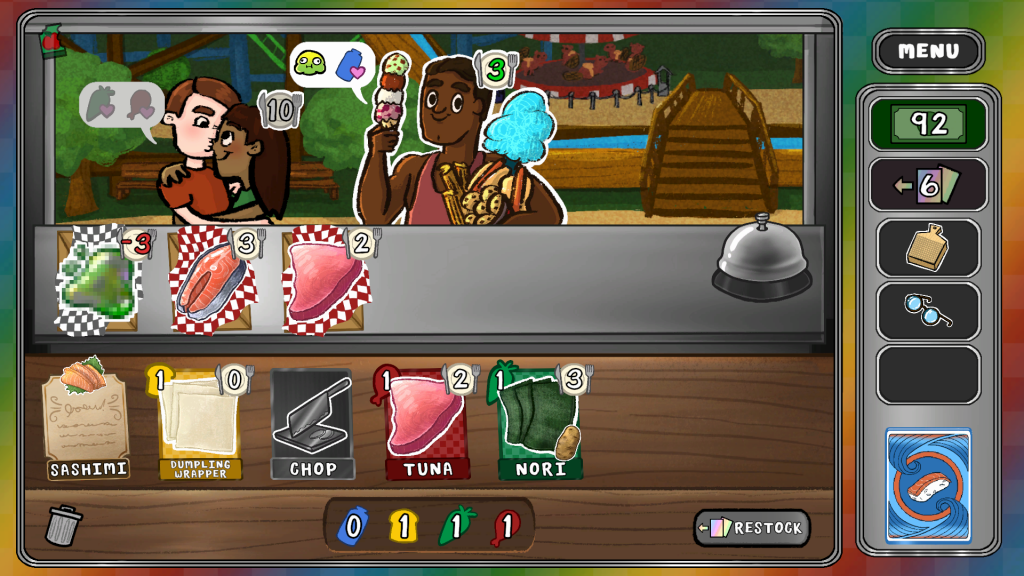
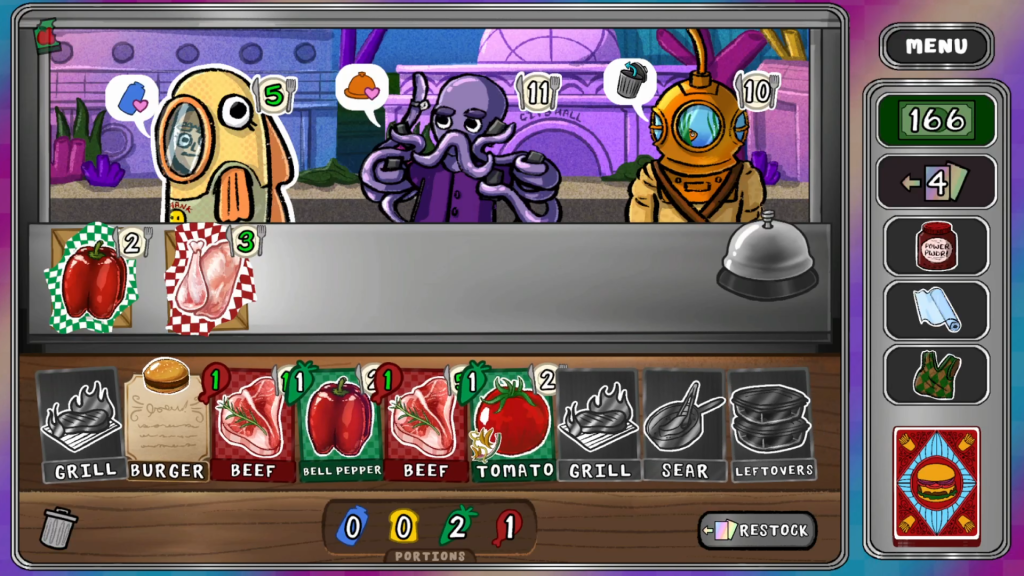
Cooking and deckbuilding shouldn’t fit together, but A la Card makes the pairing feel obvious. Shook Loose turns ingredients into cards, recipes into combos, and the serving window into a tight little puzzle where order matters and wild mutations can flip your plan in an instant. The team chases the fun of “breaking” a run without letting any one card solve the game, and they’ve rebuilt core systems to make that depth easier to learn.
In this interview, SoBad and Ash talk about tuning outrageous synergies, designing bosses that test your build without hard counters, and why onboarding exposed a bigger design choice than any tutorial could. We also get into trinkets, mid-run edits, the Unity toolchain they rely on, and Josh Whelchel’s score that ramps up as your kitchen heats up. A la Card is heading toward launch with hundreds of cards, a pile of trinkets, and the kind of discovery that keeps roguelike fans coming back for “just one more meal.”
What was the original spark for mixing cooking with deckbuilding, and how did that idea evolve from prototype to what we see now?
Cooking is very piecewise. You can take a bit of this and that and adapt based on what you have on hand, which is exactly how A la Card works! Food also naturally lends itself to categories, so very little effort is required to think up distinctions between different types of cards. Want colors? Use food groups!
Each ingredient card has a unique effect you can use to make interesting plays, just like how every ingredient brings its own unique flavors to the pot.
We lean into the framing device as much as possible. The familiarity makes it easier to communicate the design, and you don’t have to learn 300 fantasy character names!
The Steam page mentions wild card mutations and “absurd synergies.” What’s an example of a combo that went from broken to balanced during playtesting, and how did you tune it?
The most fun thing you can do in A la Card is discover something completely broken. Whether something is too broken is centered around that discovery: How hard is it to break? How hard was it for the player to figure that out?
Uncovering a crazy synergy makes you feel smart and accomplished and excited to call your parents, but stumbling onto a single card that wins the run for you is boring. During the card design process, the only question we allow each other to ask is, “Without ANY mutation, is this card broken?” If the answer is no, we’re in the clear.
One example of something we try to watch the power level of closely is cards that clone themselves, since they can sort of be the whole machine on their own.
We’ve rebalanced almost everything continually while sharpening the systems and mechanics. There was a trigger in the first demo that would go off when ANY other card was played, up to 15+ times per round if you were maximizing it. We’ve adjusted it so it only goes off when another food is prepared, which limits the number of triggers to the spaces available in the window (6 or fewer, unless you discover a different way to break it). It’s a slight adjustment that still lets you scale like crazy, but it’s not a surefire way to win the game.
How do the “sequence your cards” mechanics shape moment-to-moment decisions? Any lessons you learned about teaching sequencing without a long tutorial?
When the order of the cards matters, it introduces a second arm of gameplay and decision-making beyond the deckbuilding. There’s no way to build a deck that will win for you. Every ingredient you pick up is like a flexible puzzle piece that you get to work into your solution.
A friend of ours described his experience with the card-play sections of the game like “trying to find lethal in Hearthstone,” and we think that really does capture the agency the player has over stealing a win from (into?) the jaws of hungry customers.
It’s a dense game, so we’ve done our best to keep the tutorialization as short as possible. We have a few sentences at key moments instead of a dedicated tutorial level. No one wants to sit through a tutorial anyway! Doing (and failing) is the best way to learn, so prepare to upset a few customers along the way.
Bosses act like small puzzles. How did you design them so they test flexibility without hard-countering certain decks?
We’ve drawn a lot of inspiration from lots of games, but we love how Balatro’s bosses can throw a wrench in your build. We’ve structured our levels so that every boss is designed to test a specific weakness, and some customers that come before the boss have a similar effect as a forewarning to what’s coming. You’ll have lots of time to adapt!
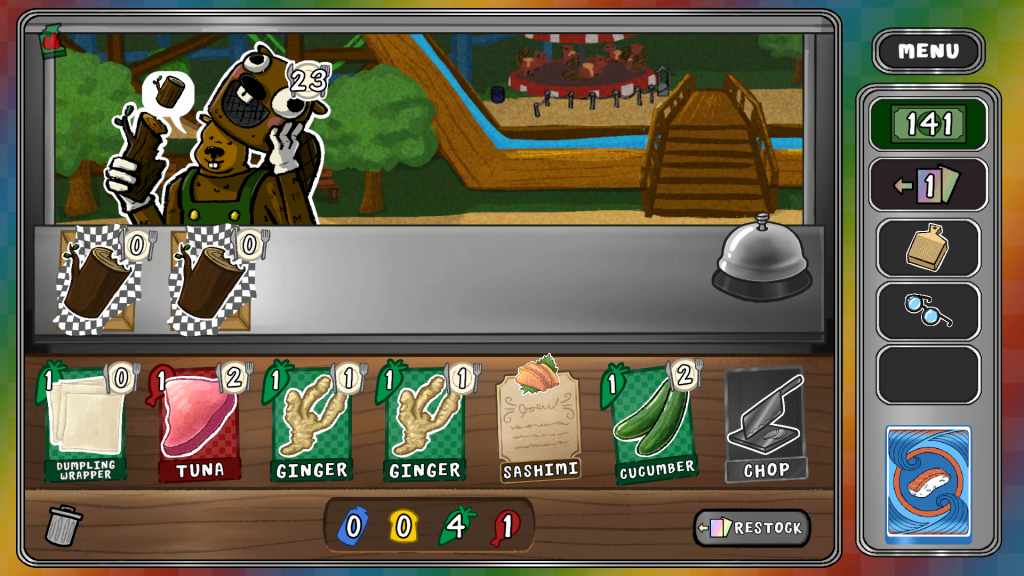
One of our favorite levels is Biff’s Cliffs and Rapids (a beaver-themed water park, if you haven’t made plans for next summer). There, some customers take away a precious window space by vomiting into it. It’s very gross, and you’ll feel motivated to come up with a solution. Once you get to Biff at the end of the level, he beavers it up and jams the window with logs. If you prepared a counter for the customers, you should be equipped for the boss fight too!
Our ultimate goal with our boss design is to highlight the strengths that benefit all decks, like being able to manage space in the window, without forcing any deck to be generally flexible.
Trinkets seem to define starting decks. What design rules do you use to keep trinkets powerful but not prescriptive?
Trinkets are definitely designed to be powerful, but they’re also meant to be a divining rod for a general build direction.
For example, the Burger deck has Protein Powder as the starter trinket, which gives all your red cards a +1 boost. With this deck, you’ll have a stronger preference for taking red cards than you normally would, which results in the player being willing to try certain cards they might otherwise undervalue. For contrast, the starter trinket for the Sushi deck turns your recipes into a draw engine, which incentivizes the player to support a larger number of recipes in their build.
Because you can hold six trinkets, there are lots of ways to expand into different paths. The trinket offered is intended to be built upon with lots of other trinkets, techniques, and skillfully built plays designed by the players themselves.
From a design perspective, there’s a bonus to making the most powerful objects in the game extremely niche: it balances them. If you’re offered something insanely powerful, there needs to be a reason to turn it down. Being able to make the right choice (and occasionally, the wrong choice) is an important part of that feel-good discovery process.
Random events let players swap colors, stats, and triggers. Where did you draw the line on how much mid-run editing is too much?
This is a conversation we’ve had in depth. The deckbuilding component of the game hinges on trying to nudge your deck in the right direction while it mutates more and more, and it’s definitely possible to fumble with the extent of this. We’ve actually found that we have competing philosophies:
SoBad, being bald but otherwise of sound mind and body, prefers only the smallest incremental changes at a time, the summation of which yields variety run to run. No two final decks could ever be identical because no two players will make the same 25 incremental changes in a row.
Ash worries that small changes feel less meaningful over time. Adding yellow to one of your thirty 3-color cards has way less impact than making your first 2-color card in a 5-card deck.
Ash prefers consistently significant change. As your deck mutates more and more, it requires a more drastic mutation to make player decisions interesting: big risks, big rewards (it’s worth noting that Ash doesn’t have to program any of it).
SoBad worries that too-large changes can cause deck designs to converge. A late-game event that makes every card in your deck yellow would cause different players to frequently end their runs with all-yellow decks.
Where we agree is that card-mutation events are only fun if the player feels like their choices are meaningful. There’s also less fun to be had if you have to win 3+ meals in a row using the exact same strategy every time. You already proved it works! Consistently weaving between meals (the card-playing portion) and mutation events (the deck or card-modifying portion) keeps your gears turning while still testing your decisions as often as possible. And gradually increasing the severity of the mutations offered keeps each change feeling impactful.
The soundtrack is called out on the page. How early did audio get involved, and did any track inspire a mechanic or encounter?
We have enough respect for the art form to have known very early on that we wanted an experienced composer to tie the game together rather than amateurishly try to make something ourselves. Josh was our first choice, and we can no longer imagine A la Card without his influence.
He brings such a spirited energy and willingness to help with whatever he can. It was his idea to design the tracks to seamlessly blend into more intense versions of themselves as the player progresses further into each area of their run, which honestly adds so much. We also think that without him, we wouldn’t have considered including vocals in one particular boss-intensity track to pair with a superstar songstress.
He’s a phenom and a pillar (and some sort of creativity fae creature). And you can check out his stuff here!
What are your goals for launch and beyond in terms of new cards, trinkets, or modes? How will you keep the meta fresh without power creep?
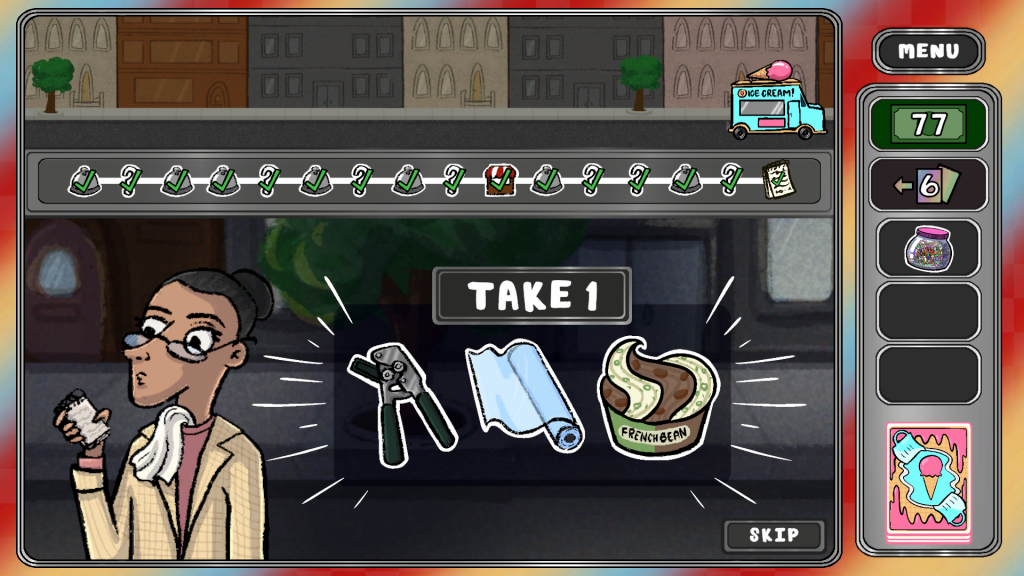
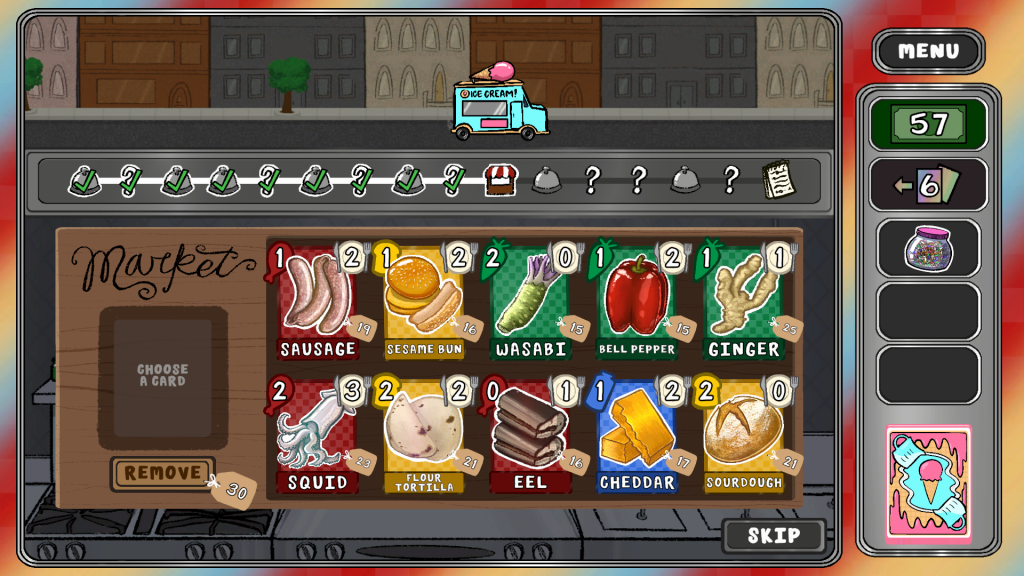
At launch, the game will have well over 200 cards and more than 50 trinkets.
For a stretch of time after release, we plan to frequently and consistently add more to keep injecting freshness into the game. Maybe even multiple times per week! We’re still having fun, so why stop?
The base game also has 8 starter decks, and we’re having discussions about how to add more, whether in the form of a special rotating deck, a bulk drop in a DLC, or some secret third thing even we don’t know about!
We’re not really concerned about potential power creep so long as new cards follow our existing design philosophy of requiring other cards or mutations to become truly broken.
Accessibility and approachability for deckbuilder newcomers can be tricky. What options or onboarding choices are you including so more players can enjoy the game?
Onboarding is the single most overlooked aspect of essentially any game we’ve ever found ourselves complaining about. It is crucial. Not only for the player’s experience, but also as a means for the developer to evaluate their game’s core design.
Sure, there’s low-hanging fruit like your tutorial being too long or too text heavy, or neglecting to explain anything at all. But higher up in the tree, some pompous lemurs are deep in conversation: “Your onboarding is a microcosm of your entire design paradigm.” If you squint your ears, you can hear faint murmurs of, “If you think you have an onboarding issue, it might actually be the case that you have a core game design issue.”
In early tests, we noticed the mana system in A la Card was unintuitive for new players, despite how simple we convinced ourselves it was. (Like, really, if you draw a red card, you get a red mana. Easy peasy, right?) We worked hard to improve the conveyance with sounds and animations. When that didn’t solve it, we added an explicit tutorial.
Then we watched streamers and playtesters continue to misunderstand or fail to even notice it. So we climbed a little higher up the tree, and what we learned from this failure of onboarding was that this mana system does not make sense in our game.
A “you can’t just play all your cards” limiting mechanic already exists via the small number of slots for foods. The mana system was double-dipping this limitation, and having two competing systems caused them to distract from each other during those pivotal first few minutes of onboarding, making both harder to learn. As a player, if you already notice a reason you can’t do something, would you go looking for another?
After removing the mana system, we were left with a game that’s easier to learn, and the potential for depth stays the same thanks to the already existing limiting mechanic.
From a development standpoint, what does your toolchain look like? Engine choice, key plugins, build pipeline, and any custom tools you built to design cards or events faster?
We use what we’re already familiar with: Unity, Procreate, and Git. Sling code in any text editor with a “go to definition” function (which is all of them).
Plugins-wise, KyryloKuzyk’s PrimeTween has been effortless to use, and it’s always nice to have a tweening library on hand. We also enjoyed having mackysoft’s SerializeReferenceExtensions save us some time when it came to making a codeless card-effect editor.
These are not recommendations, and we’re not in the habit of recommending tools since we wouldn’t want new game devs to think that tooling is something they need to worry about before they’ve already made several games.
What was the toughest production challenge so far, and what did it teach you about scoping a systems-heavy indie game?
The least romantic answer is probably the most accurate one: There is no tougher production challenge than having no budget for your game. You can find clever workarounds for essentially any other problem you’ll ever encounter, but there is no avoiding the reality that games take time and effort to make, on the span of years, and even if you never pay a cent for assets, external talent, or marketing, you burn money via the opportunity cost of spending all of your spare time sanding away at your craft.
Indie devs frequently find themselves making their games for “free” this way and with no guarantee of getting a tangible return. If you aren’t already spending your time making games as a hobby, don’t try to spend it making games as a career.
With regard to scoping a systems-heavy game, one obstacle is the fact that individual systems are likely irreducibly complex. If you decide late in development that you need to scope down, you either can’t, or you have to cut entire systems wholesale, which can mutate your game into a different experience entirely. Whereas in a game with fewer systems, larger portions of your experience might be made up of other content that is easier to cull. Consider a narrative that can have a character or subplot removed without suddenly becoming not a narrative, or a world map that could have extraneous areas trimmed very late in development.
Maybe it would be fair to say that new entrants to game development as a hobby should focus on systems-light games first, so they can enjoy the safety of that last-hour flexibility while they develop the skill set of scoping their projects effectively. Game jams are great for this. You’d be shocked by what you can make in two days, and even more shocked by what you can’t.
When can we start playing?
We’ll be launching before the end of the year, and you can wishlist A la Card on Steam to get notified the moment we do!
(Eagle-eared superfans might even notice the bush-rustling of a final pre-launch demo! Oooo!)
Follow-Up Questions
How did Shook Loose as a team come together? We were each sharing updates on our solo-developed games in a Discord for game developers. Each of us thought the other’s solo project was really cool. We were meeting to work on our separate games, kind of as accountability partners.
After about a month or two of that, we’d finished up our solo games and tried a couple of game jams to test the waters. We ended up taking first place in Ludum Dare in the humor category (with a silly little game called Some Munnings, if you want to try it). We had so much fun with these game jams that it was easy to transition into bigger projects together.
Finally, our last question comes from zilard, developer of Raybounder, the previous game we highlighted here at SDC! They asked: What is the most memorable bug you encountered while working on your game? We actually kept our favorite bug in the game! In A la Card, every level has a unique multicolor background behind the UI elements. It matches the colors of the zone’s environment. Technically, this color should reset when you end the level. As is, if you go back to the main menu, the background color doesn’t revert to the main menu color scheme; it keeps the zone colors.
We found it charming, so we decided to keep it that way.
What question would you like to ask the next SDC Highlight developer? How do you balance the art you want to make with the product you want to sell?
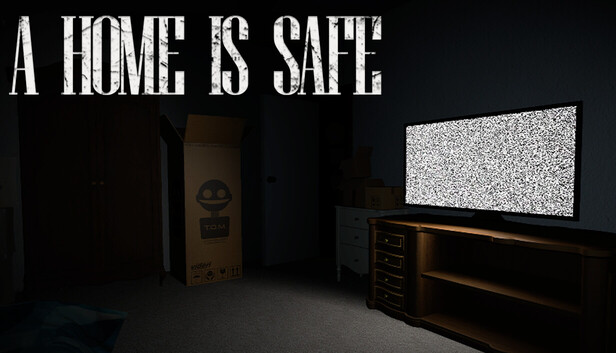
A Home Is Safe is out now on PC and it has a great hook for horror fans: your only hope against a murderous home-security bot is a clunky, retro firmware update you have to babysit in the dead of night. The game launched on October 28, 2025, and is available on Steam.
You play across multiple nights, splitting your attention between a tense terminal interface and first-person stealth in a dark house. While you route power to keep the update moving, T.O.M., the roaming security robot, stalks the halls. The goal is to rebuild its psyche before it decides you’re the problem. It’s a simple premise that leans hard on mood, sound, and that creeping feeling that the tool you bought to protect you is learning all the wrong lessons.
Moment to moment, you’re managing power, shutting down devices that siphon electricity away from your computer, and slipping through rooms without drawing attention. After 2 a.m., T.O.M. flags anything moving as a threat, which ratchets the tension as you push for the next progress bar milestone. The release ships with full English voiceover, single-player support, and a small set of achievements for completionists.
The project comes from California-based indie developer Beto Damian, who studied and taught game development at UC Berkeley before relocating to Los Angeles in 2024. That solo-dev DNA shows through in the focused scope and the “one big idea” design.
If you want to try it first, there’s a free demo on Steam. There is also a limited launch offer running through November 4, which makes this an easy pickup if you’re in the mood for a short, atmospheric scare and like the mix of terminal tinkering with first-person survival.
For the SDC crowd, this is a nice example of how a clear concept can carry an indie horror game. If you dig it, consider leaving a review and sharing notes with fellow devs on what works, from the power-management loop to the way the game teaches you to fear your own tech.
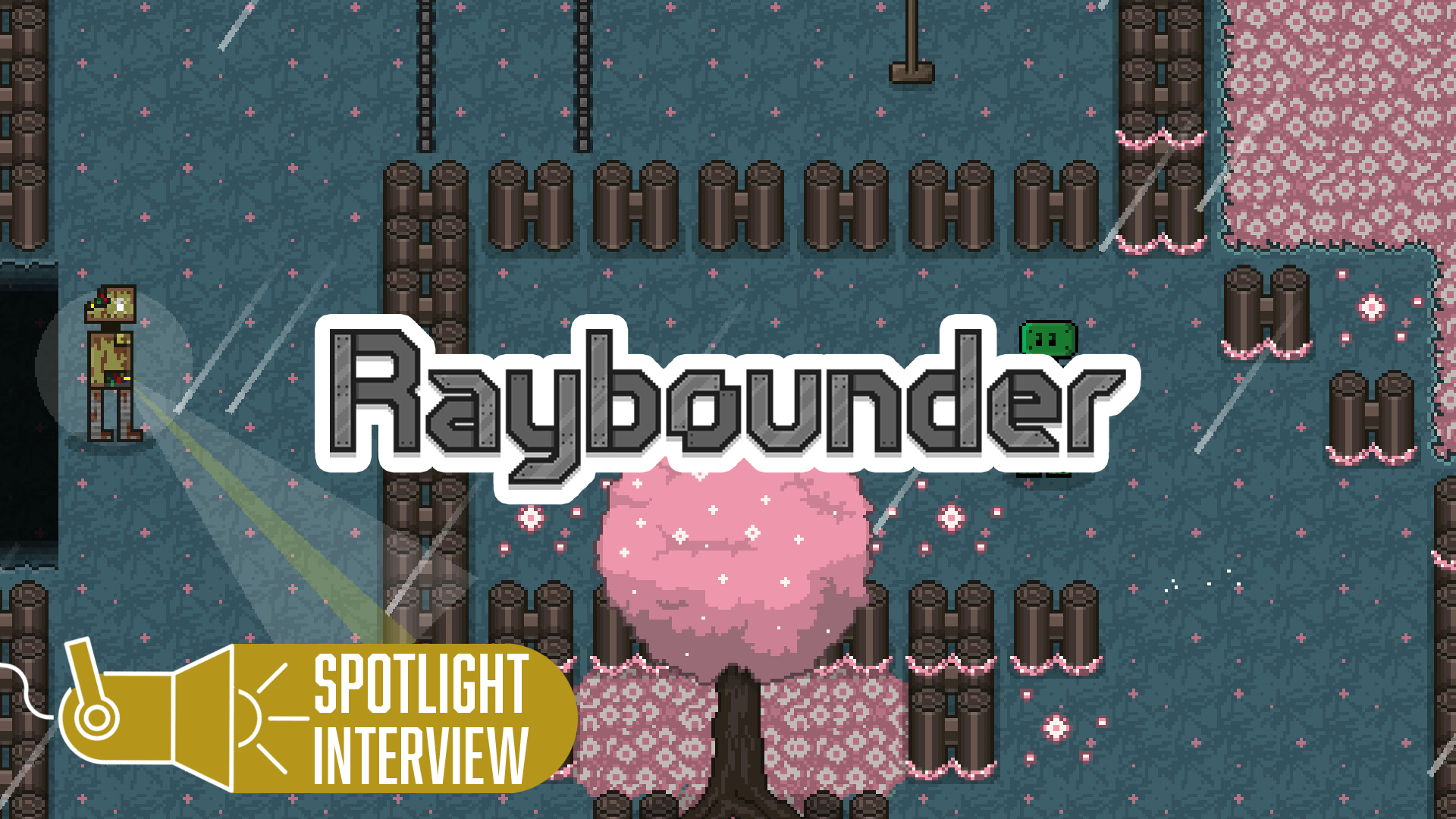
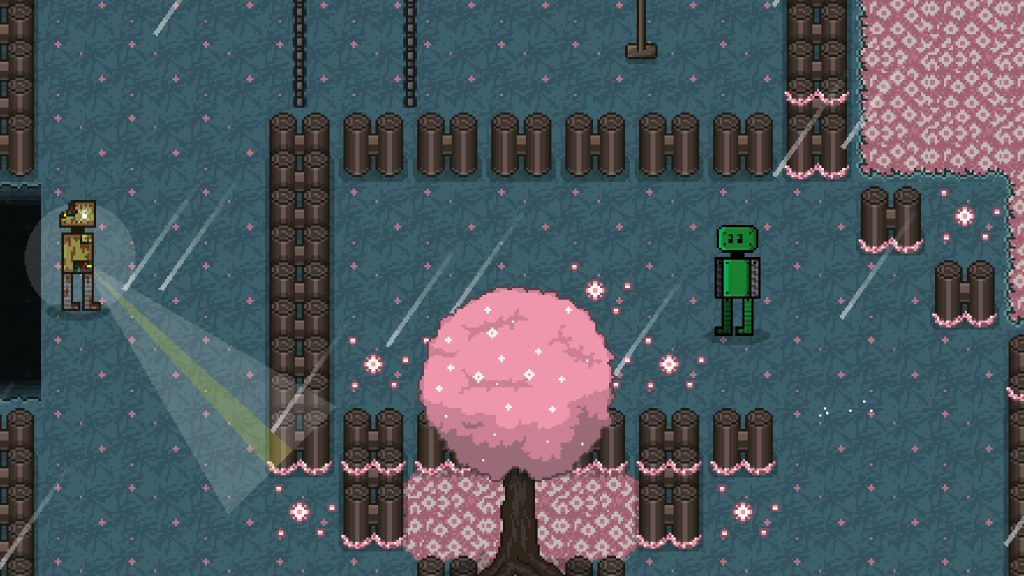
Hello! This week, we’re shining a spotlight on indie developer zilard, creator of the puzzle game Raybounder. What began as a GMTK Game Jam entry in 2020 has since grown into a fully fleshed-out project, featuring more than 60 levels of puzzle-platforming built around a unique mechanic: using laser recoil to move. In Raybounder, players control a robot armed with a laser gun, using its blasts not only to solve puzzles but also to propel themselves across increasingly complex and creative challenges.
We sat down with zilard to talk about the game’s inspirations, the challenges of solo development, and what’s next for both Raybounder and its creator.
For those who may not know, can you give us the quick pitch for Raybounder?
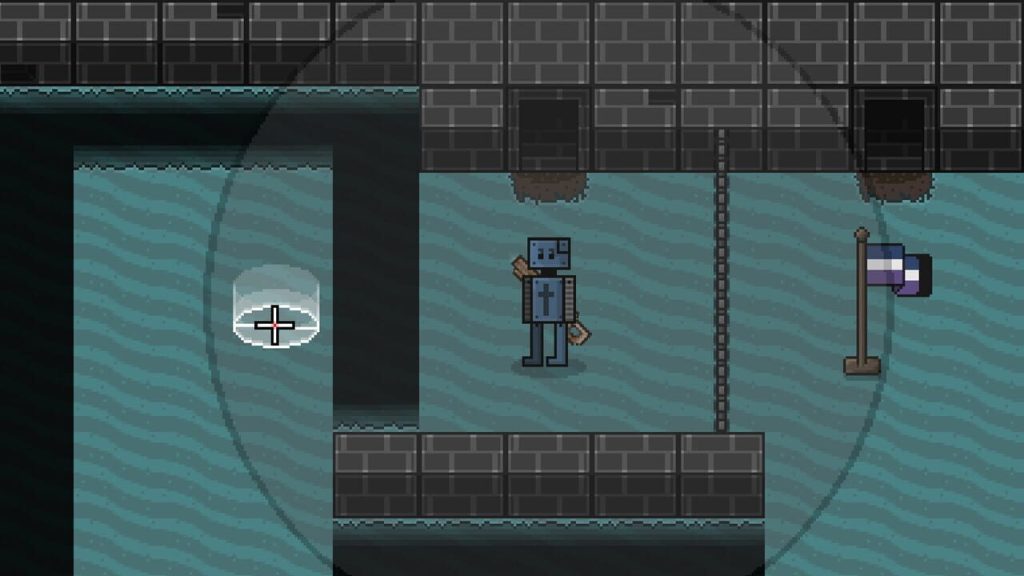
zilard:Raybounder is my passion project of about 2.5 years. It’s a top-down puzzle game where you play as a robot with a laser gun. When the gun fires, the recoil pushes you around the level. You need to use that movement to dodge obstacles, open paths, and ultimately guide both the robot and its laser safely to the end.
What inspired the game’s unique mechanic and puzzle design?
zilard: The game started as a GMTK Game Jam entry back in 2020 called Gun Control. At the time, I was going for something like “golf, but with guns.” Players enjoyed it and wanted more levels, so I decided to expand it. I’d also say old Flash games I played growing up definitely influenced the menus and presentation.
I definitely got those vibes—when I played, it reminded me of sites like Miniclip or Newgrounds.
zilard: Exactly. All those hours on Coolmath-Games must have stuck with me. A lot of playtesters mentioned the same thing.
Did any particular game or piece of media influence Raybounder more directly?
zilard: The art style owes a lot to my time making levels for Knytt Stories. You can see that evolution from my first game, Much Ado Mountain. Mechanically, I think Raybounder is fairly unique, but I’ll give a shoutout to Theyest Thou—the only other game I’ve seen with a somewhat similar concept, which actually came out right around the time I made Gun Control.
How did you first get started in game development?
zilard: Honestly, it goes back to when I was a kid discovering Roblox. Realizing that all these games I was playing were made with this weird language called Lua really piqued my curiosity. From there, I just loved making stuff for me and my friends—Roblox places, Minecraft mods, Scratch games, Knytt Stories levels. Eventually, I started joining game jams. It’s been a long journey, but Raybounder has definitely been the most rewarding project yet.
Were there any mechanics or ideas that didn’t make it into the final game?
zilard: Oh, plenty. Early on, I thought about adding different weapons and attachments—I leaned too far into combat before remembering it was supposed to be a puzzle game. I dialed it back and focused on doing more with less, like combining pushable, destructible, and hazardous objects into the TNT blocks you see in the final version. I’ve kept a lot of unused ideas in my pocket for future projects, though.
With over 60 levels, how did you keep the design fresh and engaging?
zilard: There are quite a few distinct mechanics—wind, ice, lightning, and more. Even with 60 stages, I feel like I only scratched the surface of what’s possible with them. I tried to avoid repeating the same combinations and made sure each area had a unique setting so that every level felt fresh.
A lot of stages also blend traditional logic puzzles with precision-based challenges. That mix kept things varied. My goal was always to have players asking for more, not wishing it was over.
How has the reception been so far?
zilard: Really positive! Making a game solo is a lonely process, and for years I wasn’t sure if what I had was even good. But the players who’ve tried it seem happy with it—even if some levels frustrate them a little, haha.
Raybounder has been such a great learning experience. I’ve grown as a designer and artist through it. While I’m excited to move on to new projects, I think the game deserves more love. I’m planning to release some DLC in the coming months.
Were there any levels you found especially rewarding to design?
zilard: Definitely. Once I made the level Scrap Metal, which features yellow robots, I realized I had something special. Before that, the game was entirely strategic—you could always repeat the solution once you knew it. But when I added time-sensitive situations, players had to execute actions under pressure. That layer of precision really changed the direction of the game.
As we wrap up, let’s end on something fun: what’s your favorite fast food meal?
zilard: I’m sorry to say, I have a really good answer for this… at Wingstop, a Spicy Korean Q Chicken Sandwich (with pickles), an order of voodoo fries, and a diet Dr. Pepper. TOP TIER!
Love it. And what question would you like to pass along to the next developer we interview?
zilard: My question for our subsequent interviewee: What is the most memorable bug you encountered while working on your game?
Finally, where can people follow your work?
zilard: You can check out my site at zilard.net—though it’s still under construction. On social media, I’m on X at @zilardian and on YouTube at @zilard. That’s about it—I’m not much of a content creator, haha.
Interviewer: Thank you, zilard! Best of luck with your next project, and we look forward to seeing what you create next.
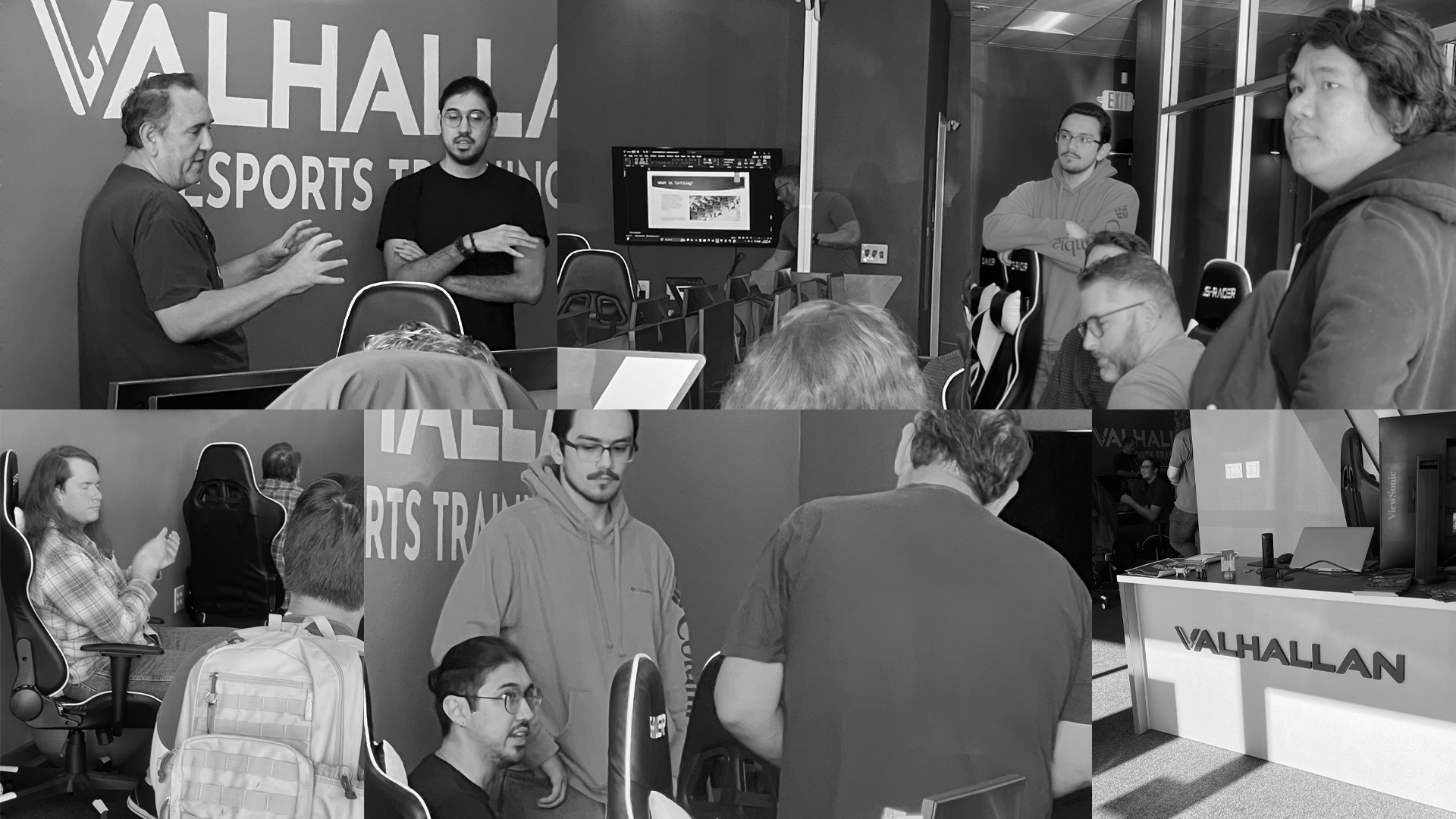
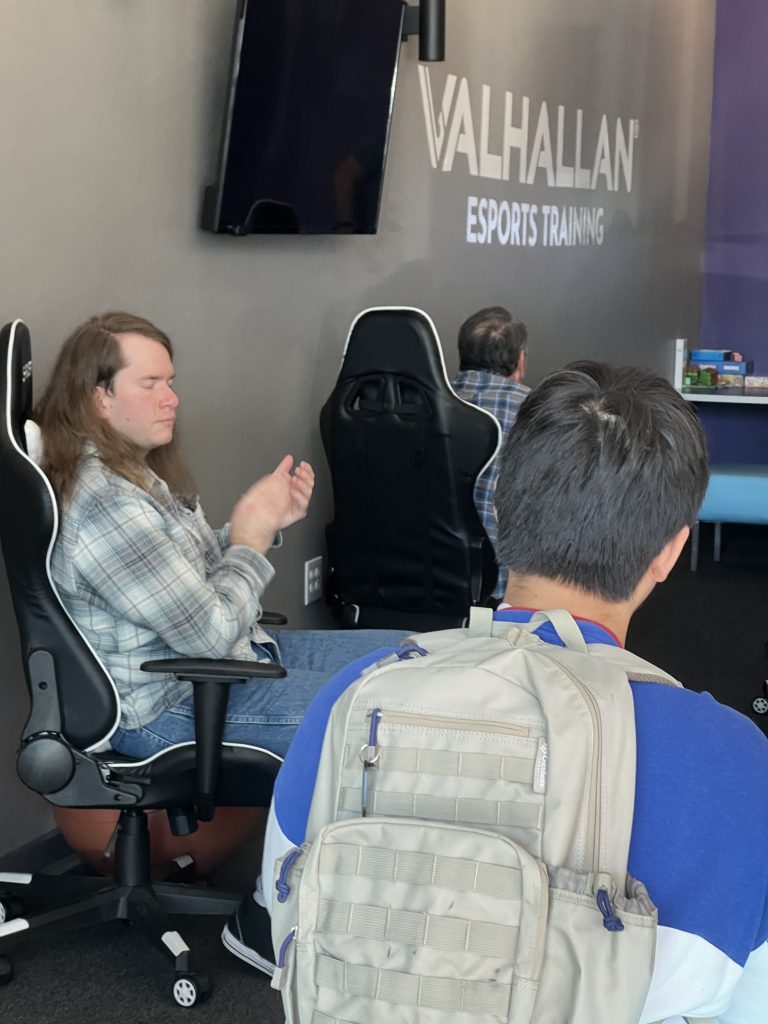
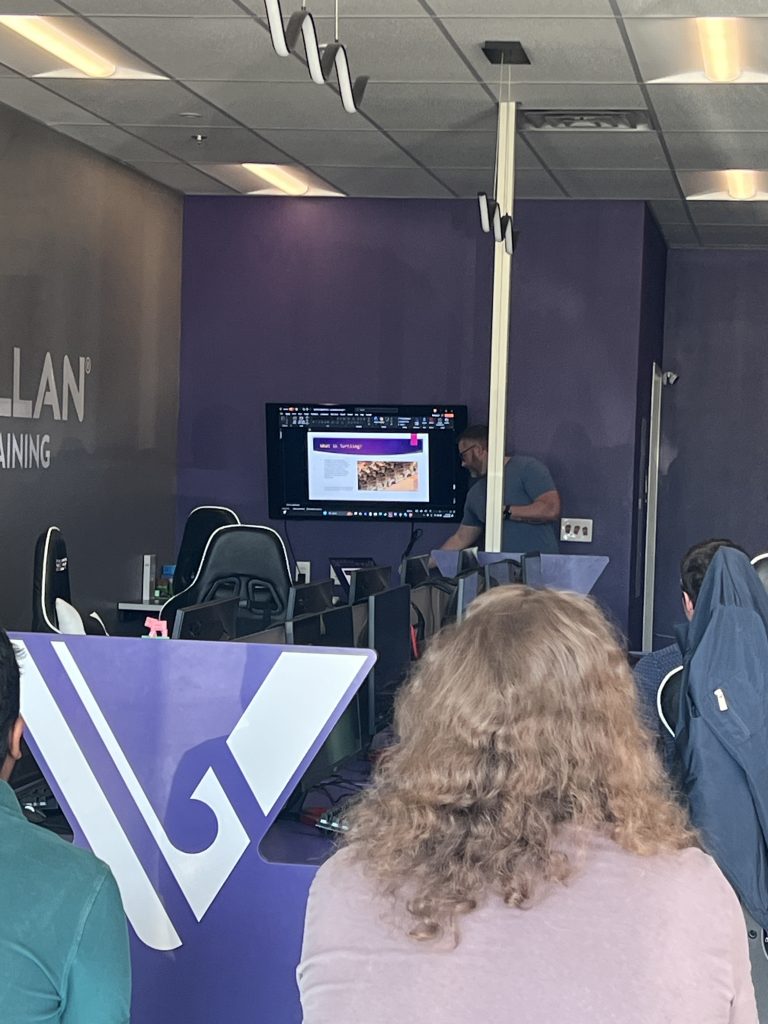
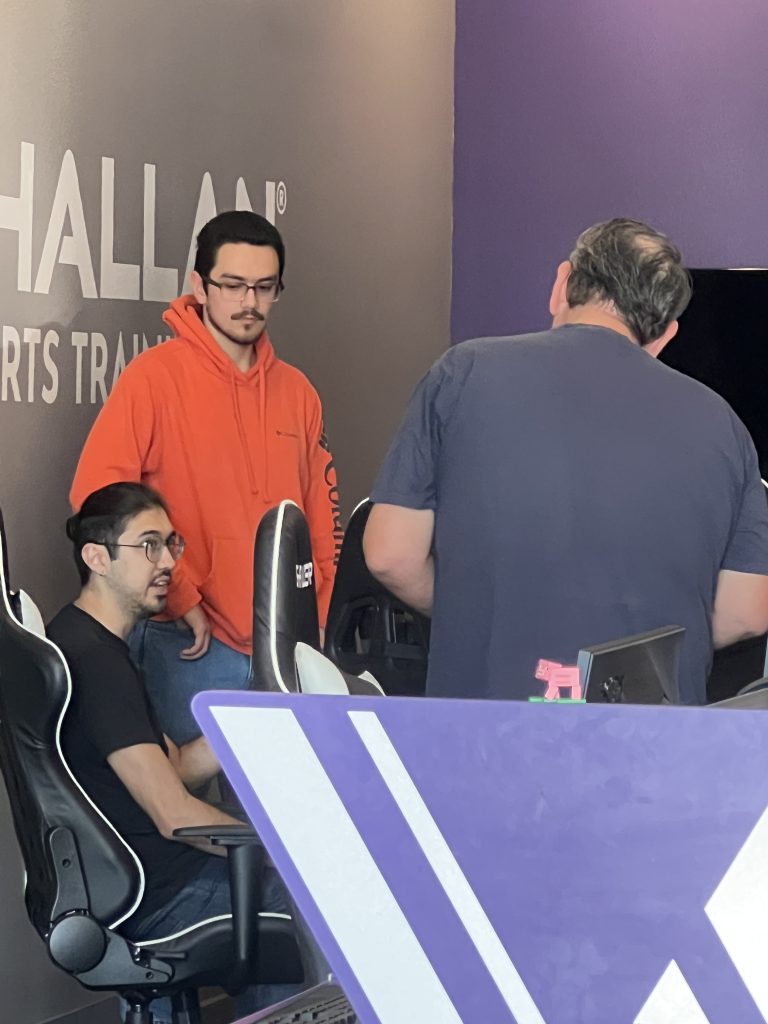
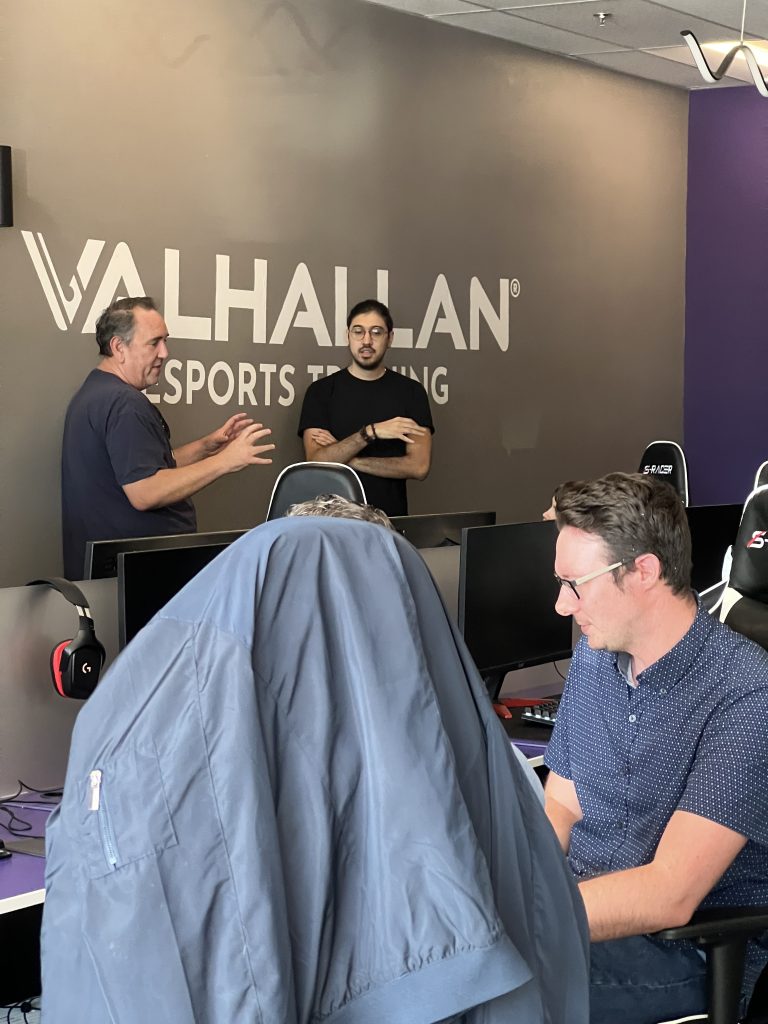
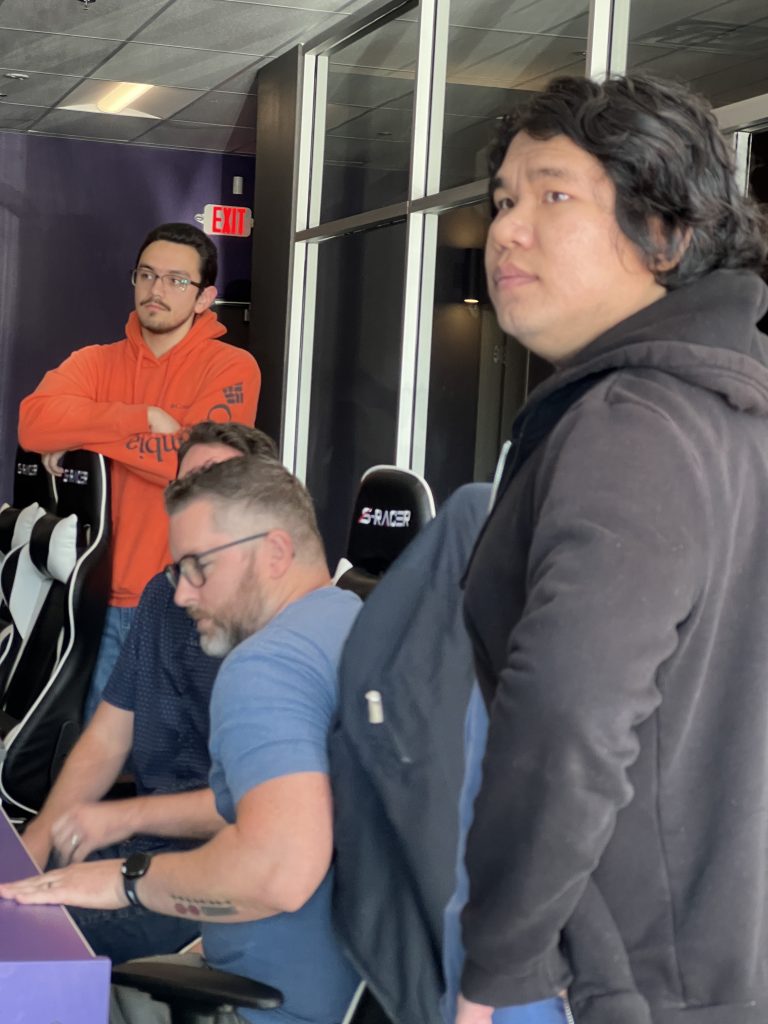
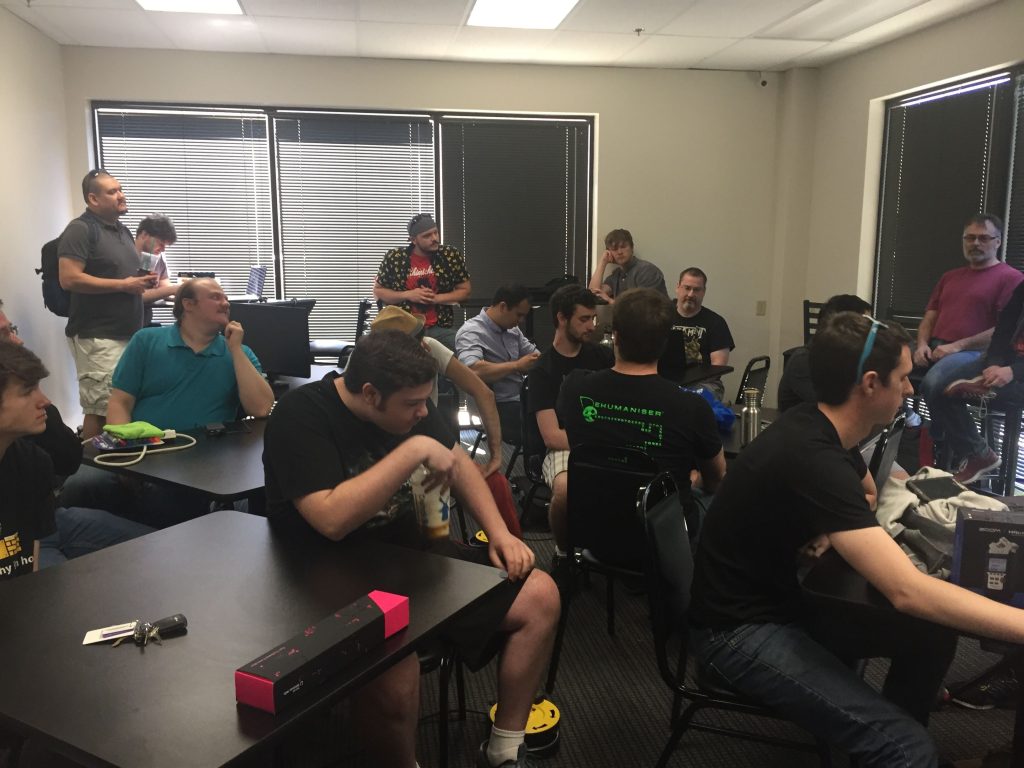
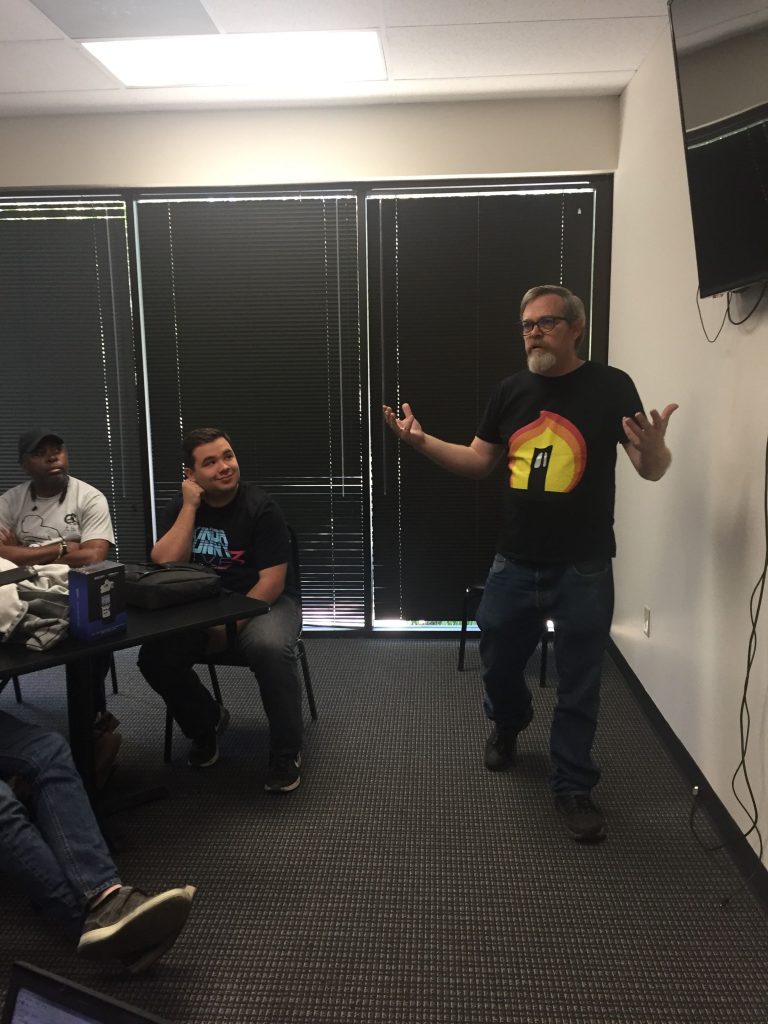
Progressive Game Jam returned with a full room and a clear goal: build together, learn together, and arrive at Capital Creative Showcase with projects the community can be proud of. Session 1 took place at Valhallan Esports in Folsom, where about twenty developers, artists, writers, and students gathered to pitch ideas, form teams, and set their plan for the season.
Two familiar faces helped get things moving. SDC veterans Brandon and Jim circled between groups, asked sharp questions, and encouraged anyone with an idea to speak up. That made the pitch round fast and friendly, which is exactly what you want on day one.
A few early moments stood out. One team is exploring a revival of the old school RTS feel, complete with clear resource loops and snappy match flow. It’s the kind of back-to-basics pitch that gets heads nodding. We also heard genuine passion from a couple of high schoolers who came ready to learn, contribute, and ship something real. PGJ thrives on that mix of experience and fresh perspective.
How this season works
Teams will collaborate online between meetups, then check in monthly in person as they build toward Capital Creative Showcase. The format keeps scope realistic, gives accountability, and leaves room for course-corrections as prototypes evolve. Expect each session to include quick progress updates, focused problem-solving, and time for informal playtesting.
Everyone is welcome. If you missed Session 1, you can still jump in to help a team with code, art, audio, design, writing, testing, or production support. PGJ is built for contributors at many levels. If you bring consistency and curiosity, you’ll fit right in.
Progressive Game Jam is where Sacramento’s game dev community meets momentum. It’s a low-pressure way to practice teamwork, finish a playable slice, and learn modern tools by doing. You’ll leave each month with something concrete to show, feedback to act on, and a clearer path to your CCS deliverable.
Get involved
Want in? Join a team, volunteer as a mentor, or stop by the next in-person session to meet the group and see what’s in progress. Share your role, what you’d like to learn, and how many hours you can realistically commit. That’s all teams need to plug you in.
The Progressive Game Jam is a simple idea with an outsized impact. Instead of cramming a whole project into a weekend, developers meet month after month, building the same game with the same team, and moving through a full development cycle. That long runway is what makes it special. It turns “someday we should make a game” into “we made one.”
Why It Started
Sacramento’s game-dev scene grew from a small meetup into a real community, but the standard 24- to 48-hour jams left many creators wanting more. In May 2014, a small group met to rethink the format. The goal was clear: give people enough time to design, iterate, test, and actually finish something. During that meeting, the phrase “progressive game jam” landed, and the first season launched soon after. The History of the Progressive …
How It Works
PGJ runs across many months, not days. It starts with pitches and team formation, then rolls into regular sessions where teams build in public. That cadence creates a natural rhythm: set a milestone, show it, get feedback, repeat. By the time showcase season arrives, teams have playable builds and a story to tell about how they got there. The format encourages good scope, shared ownership, and steady progress rather than crunch. The History of the Progressive …
What It Produces
Across its seasons, PGJ has incubated dozens of projects and shipped multiple public releases. Titles developed through the program include Bike Route: Sacramento, Overtime, and Raining Snakes, alongside a long list of in-progress games that kept momentum beyond the jam. Participation has spanned well over a hundred developers across dozens of teams, with roughly two-thirds of projects finishing or continuing after their season ends. PGJ History
How It Helps Developers
You learn the full cycle. Weekend jams are great for experimentation, but PGJ lets you experience concept, vertical slice, playtesting, polish, and handoff. That end-to-end view is what studios look for.
You build a real portfolio. Showing a playable build at a public showcase beats a bullet point on a resume. It proves you can scope, collaborate, and deliver. The History of the Progressive …
You find your team. Artists, programmers, designers, audio folks, and producers meet and make things together over months, not hours. You learn each other’s strengths and communication styles, which often leads to longer-term partnerships.
You get accountability without burnout. Monthly milestones keep you moving, but the schedule is realistic. That steady pace is motivating and sustainable.
You connect to the local scene. PGJ projects regularly appear at Sacramento developer showcases, putting teams in front of players, press, and potential employers. Those reps help with feedback, confidence, and visibility. The History of the Progressive …
Where It All Leads
The program’s structure creates a pipeline from idea to public demo, with many teams continuing past the jam to refine, publish, or spin up new projects together. Even when a game doesn’t ship, participants walk away with practical skills, credits, and connections they can carry into studios or indie ventures. That’s the real win: a healthier developer ecosystem with more people finishing what they start.